When you book a stay at Kodiak Island Resort, you’re not just arriving at a fishing lodge. You’re stepping into a landscape that Alutiiq families have called home for over 7,000 years. Understanding a bit of Alutiiq culture on Kodiak Island gives your trip a context that most visitors never get, and it deepens what you’ll see on the water and in the villages around Larsen Bay.
This isn’t a history lesson locked in a museum case. Alutiiq traditions here are lived, practiced, and passed down today, from the way families gather food to the dances performed at community events. Here’s what’s still active, and why it matters for anyone fishing or exploring this part of Alaska.
Who the Alutiiq People Are Today
The Alutiiq (also called Sugpiaq) are the Indigenous people of the Kodiak Archipelago, Prince William Sound, and parts of the Alaska Peninsula. On Kodiak Island specifically, Alutiiq communities are spread across several villages, each with its own council, history, and relationship to the land and sea around it.
If you want a deeper picture of how these communities are organized and where they’re located relative to Larsen Bay, our earlier piece on the distinct Alutiiq tribal communities across Kodiak Island walks through each one. It’s a useful read before your trip if you want to recognize village names you might hear from guides or local staff during your stay.
Subsistence Practices That Haven’t Stopped
Subsistence fishing, hunting, and gathering remain central to Alutiiq life on Kodiak Island. This isn’t a revival or a reenactment. Families still rely on salmon runs, halibut, deer, berries, and marine mammals for a meaningful part of their yearly food supply.
Salmon and the Seasonal Rhythm
Salmon has always set the calendar for Alutiiq communities here, and it still does. Subsistence fishing follows the same runs that bring sport anglers to Kodiak waters, though the methods, timing, and purpose differ from a guided charter. Smoking and preserving salmon for winter remains common practice in villages across the island.
Marine Resources Beyond Salmon
Halibut, seal, sea lion, and various shellfish have long supported Alutiiq households, and many of these resources are harvested using knowledge refined over generations. If you’re curious how these practices connect to the fishing techniques used before modern charter boats existed, our article on traditional Alutiiq fishing practices covers the gear, timing, and skill involved.
Carving and Material Culture
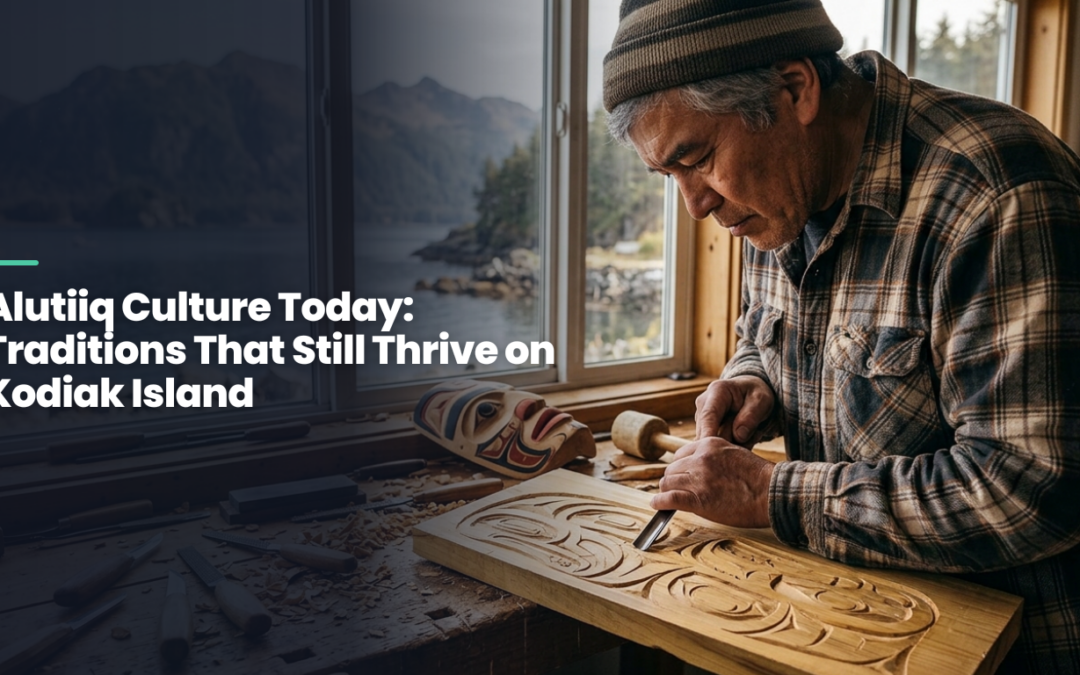
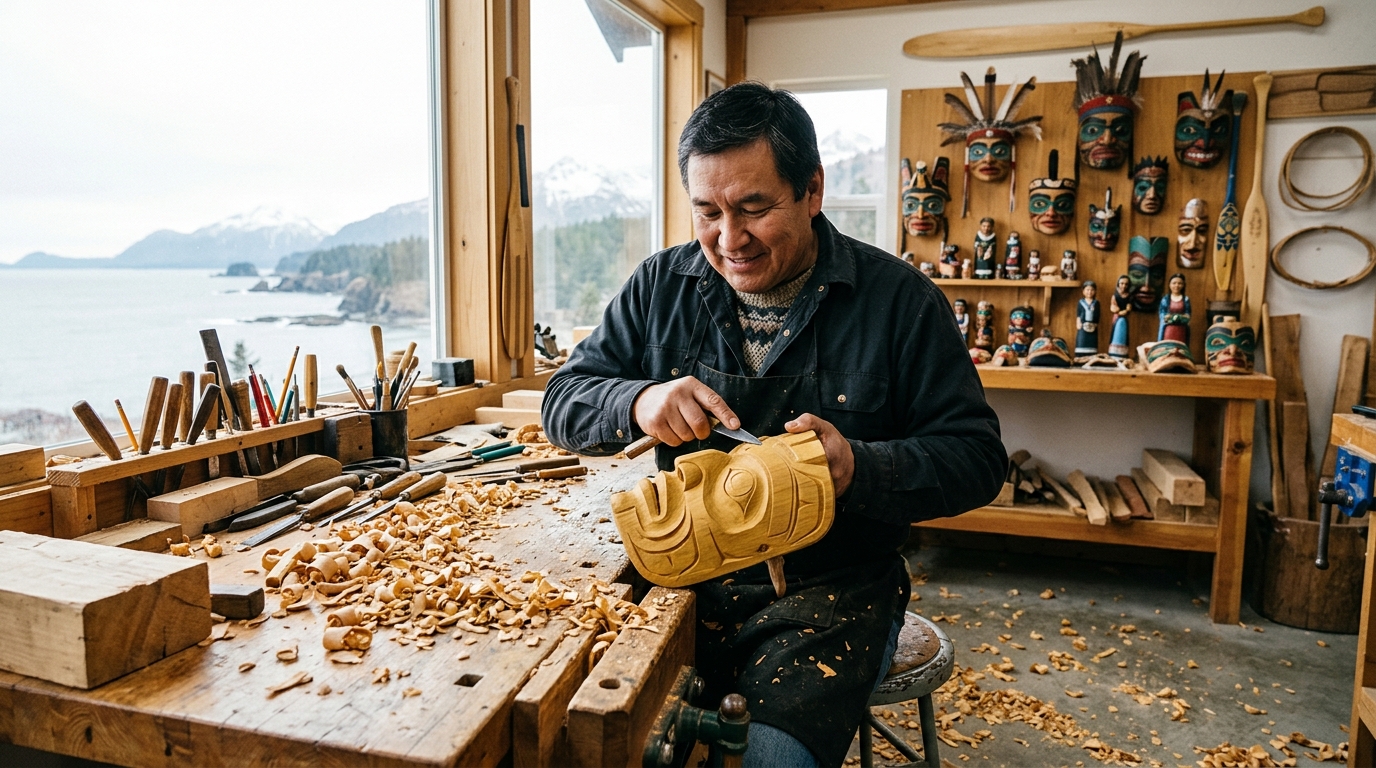
Alutiiq carving traditions produced kayaks (qayaqs), masks, and tools built for survival in a marine environment, and that craftsmanship hasn’t disappeared. Contemporary Alutiiq carvers continue working in wood, bone, and other materials, often drawing directly from historical forms while creating pieces for ceremonial use, sale, or cultural education.
- Traditional qayaq construction techniques are still taught and practiced by some community members.
- Mask carving connects to dance and storytelling traditions rather than existing as standalone art.
- Tool and implement replicas help pass down practical knowledge to younger generations.
These objects aren’t just decorative. They carry specific functions and meanings tied to Alutiiq relationships with the sea, which is part of why they’re worth paying attention to if you visit a cultural center or gift shop during your stay.
Dance, Language, and Community Gatherings
Alutiiq dance has seen a strong resurgence over the past few decades, with regalia, drumming, and choreography drawn from historical records and elder knowledge. Dance groups perform at community events, festivals, and sometimes for visitors, and these performances are treated as serious cultural practice rather than tourist entertainment.
The Alutiiq language, once in steep decline, is also part of this revival effort. Language programs in schools and community centers aim to keep Alutiiq words and phrases in active use, particularly among younger residents who might otherwise only hear it from older relatives.
Why This Matters for Visitors Staying Near Larsen Bay
Larsen Bay itself sits on land with deep Alutiiq roots, and the broader area has a documented history stretching back through Russian colonization, military use during World War II, and the natural disasters that reshaped the island more than once. If you want the full arc of how the region got to where it is today, Kodiak Island’s history from its Alutiiq origins onward lays it out chronologically.
Knowing this background changes how you experience a bear viewing trip, a kayak paddle along the coastline, or a quiet afternoon of hiking. You’re moving through a place with a long, continuous human story, not an empty wilderness.
Respectful Ways to Engage With Alutiiq Culture During Your Visit
Guests who want to learn more while they’re here have a few straightforward options, all of which depend on timing, local events, and what’s happening in the villages during your stay.
- Ask lodge staff or guides about any cultural centers, museums, or events happening locally during your dates.
- Treat carvings, masks, and regalia as meaningful cultural items rather than souvenirs, and ask before photographing people or ceremonies.
- Read up beforehand, including the history of specific groups like the Koniag, whose story before and after Russian contact shaped much of what Kodiak looks like today. Our piece on Koniag history before and after Russian contact is a solid starting point.
- Support local artisans and businesses when the opportunity comes up, rather than treating culture as background scenery.
Fish These Waters With That Context in Mind
Our guided charters for halibut, salmon, lingcod, rockfish, and Pacific cod put you on the same waters that have fed Alutiiq families for thousands of years, and our wildlife viewing, bear viewing, and kayaking trips get you out into the landscape that shaped these traditions. If learning more about the people and history of this place has you curious to see it firsthand, reach out to Kodiak Island Resort and we’ll help build a trip around your interests, whether that’s a full day on the water or a quieter adventure exploring the Larsen Bay area.