
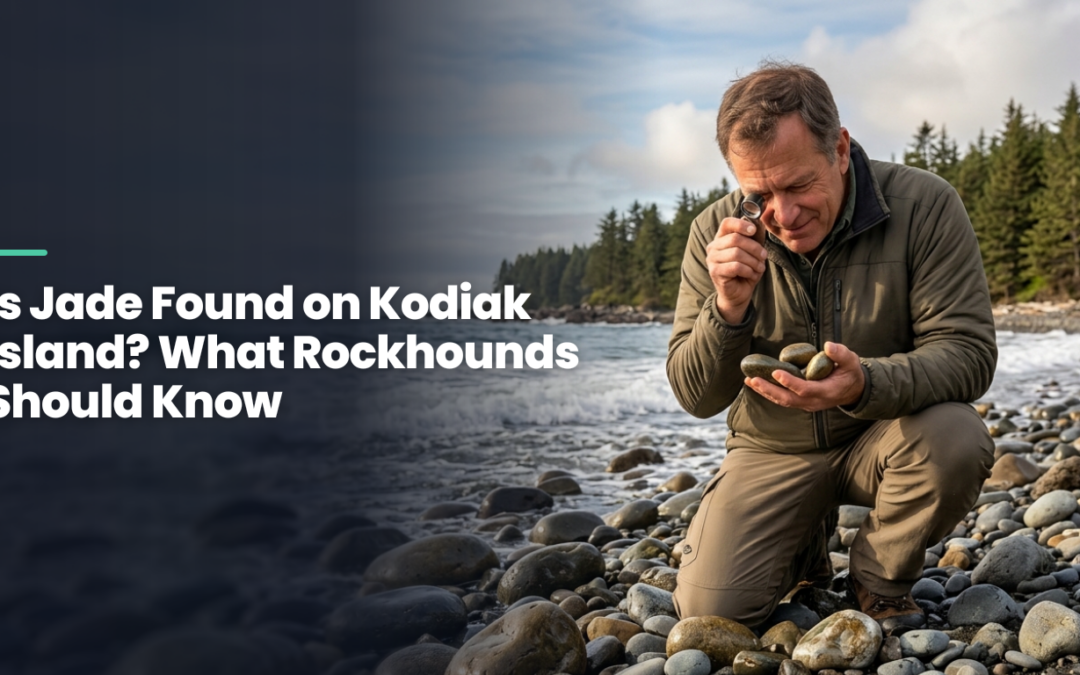
If you’ve spent any time walking the beaches between charters, you’ve probably picked up a smooth, colorful stone and wondered if you’d stumbled onto something valuable. Jade Kodiak Island searches turn up a lot online because jade is Alaska’s official state gem, and guests naturally want to know if it’s hiding in the gravel at their feet. The honest answer takes a little geology, so let’s walk through it.
What Jade Is and Where It Actually Comes From in Alaska
Jade is a hard, dense mineral that comes in two forms, nephrite and jadeite. Alaska’s jade is nephrite, and it’s the state gem for good reason. It has a long history with Alaska Native communities who used it for tools and ceremonial objects long before it became a collector’s item.
The Kobuk River Jade Belt
The vast majority of Alaska’s nephrite jade comes from a specific stretch of the Brooks Range near the Kobuk River, particularly around Dahl Creek and Jade Mountain in the northwestern part of the state. That region sits on old ultramafic rock formations that create the exact conditions nephrite needs to form. It’s several hundred miles from Kodiak Island, both in distance and in the type of rock underneath your boots.
Does Jade Actually Show Up on Kodiak Island?
Kodiak Island’s bedrock is mostly made up of the Kodiak Formation, a mix of graywacke and slate that formed as part of an accretionary complex, essentially layers of ocean sediment scraped up and folded together over millions of years. That’s a very different geologic recipe than the serpentinite and ultramafic rock that host jade deposits up north. In our years running charters and guiding hikes across the island, we haven’t come across confirmed jade finds here, and the underlying geology explains why.
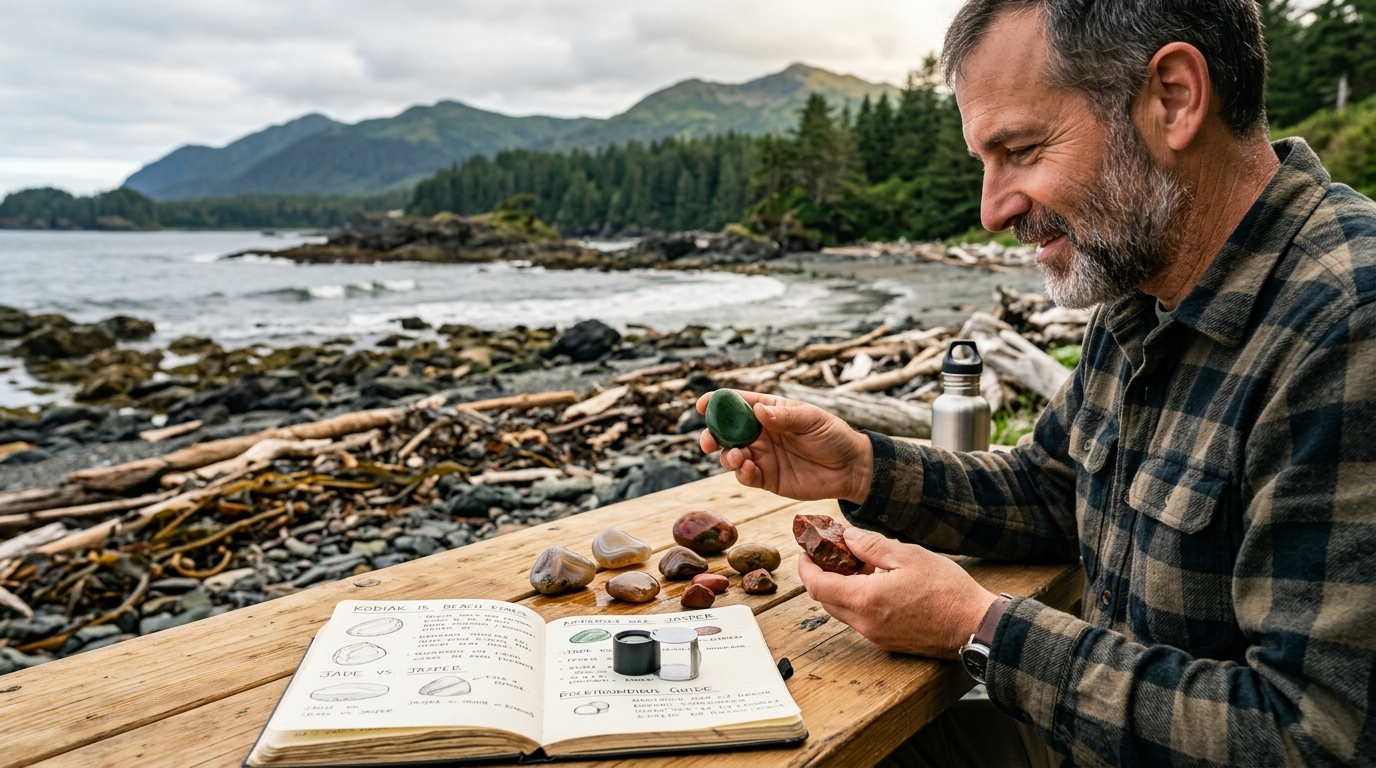
If you’re curious about the island’s mineral history more broadly, including a similar question we get often, our earlier piece on whether gold can be found on Kodiak Island covers some of the same ground and gives a good sense of what the local rock record actually supports.
What You’re More Likely to Find on Kodiak’s Beaches
The good news is Kodiak’s beaches aren’t empty of interesting finds, they’re just producing different stones than jade. Guests who go beachcombing between fishing trips regularly turn up agate and jasper, along with basalt and other volcanic rock washed smooth by the surf.
Agate and Jasper
Agate and jasper both form from silica-rich fluids moving through cracks and cavities in volcanic rock, and Kodiak has plenty of that kind of geology exposed along its coastline. These stones show up in reds, oranges, and banded patterns that catch the light nicely once they’re polished or even just wet from the tide.
Where to Look
Gravel beaches near stream mouths and areas with exposed volcanic rock tend to be the most productive. For a more detailed breakdown of specific spots and what tends to wash up where, our guide to where to search for agates and jasper on Kodiak is worth a look before you head out.
Tips for Rockhounding While You’re Here
Rockhounding pairs naturally with a lot of what guests already do on the island between charters. A few things make the difference between a frustrating walk and a good haul:
- Focus on tide-exposed gravel bars rather than dry sand higher up the beach
- Look right after a low tide when fresh material has been uncovered
- Wet stones show their true color and pattern far better than dry ones
- Bring a small pack, since good beachcombing stretches can run longer than expected
Staying Safe While You Search
Kodiak’s terrain rewards curiosity, but it’s still bear country, and rockhounds walking with their eyes down need to stay aware of their surroundings. This is especially true near stream mouths and berry patches, since bears spend a lot of time in both. If you’re hiking through areas with berry bushes, it’s worth knowing which plants you’re walking past, and our trail guide to the wild berries you can forage on the trails also explains how those same patches factor into bear activity and timing your walks accordingly.
For anyone who wants the fuller picture of how Kodiak’s landscape came together, including why certain minerals show up here and others don’t, we’ve put together a deeper look at the geology behind Kodiak Island’s rocks and minerals that ties a lot of these details together.
Make Rockhounding Part of a Bigger Kodiak Trip
Jade may not be part of Kodiak’s story, but the island still gives rockhounds plenty to enjoy, especially when it’s paired with the fishing and wildlife experiences that bring most guests here in the first place. Our guided hiking and kayaking excursions are a great way to cover more coastline and see rock formations you’d never reach on foot alone, and they pair naturally with a day of halibut, salmon, or lingcod fishing on the water. If you’re planning a trip and want to build in some time for beachcombing alongside bear viewing, whale watching, or a full slate of charters, we’re happy to help you put the itinerary together.