If you’ve ever wondered just how big a bear can get, the kodiak brown bear has the answer. These animals are the largest bear subspecies on the planet, and they live right here on Kodiak Island, within easy reach of our lodge in Larsen Bay. Seeing one in person, from a safe distance and with an experienced guide, is an experience most of our guests never forget.
What Makes the Kodiak Brown Bear the World’s Largest Bear
Kodiak brown bears are a distinct subspecies of brown bear found only on the Kodiak Archipelago. Isolated from mainland grizzlies for roughly 12,000 years, they developed into the largest bears on earth, with mature males often weighing well over 1,000 pounds. Females are smaller but still dwarf most other bear species found in North America.
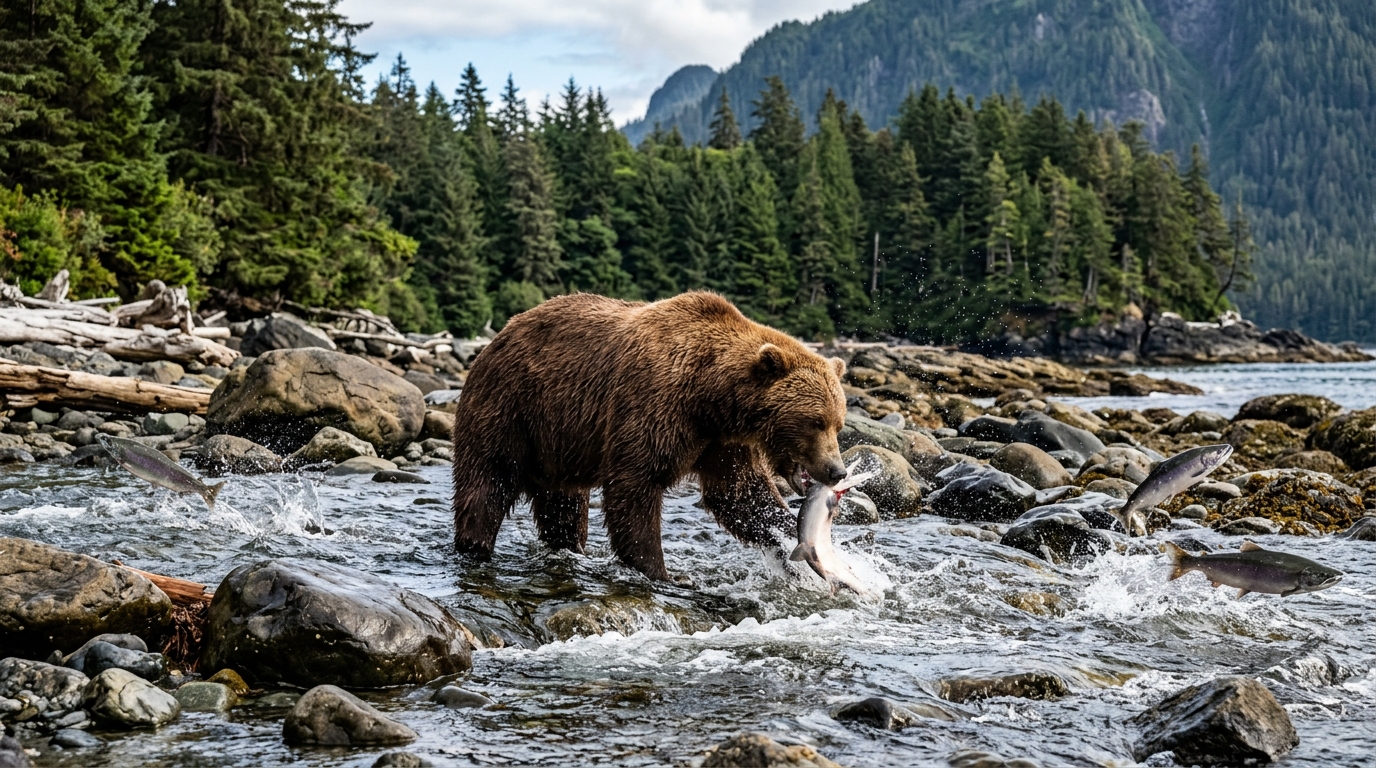
Their size comes largely from their diet. Kodiak Island’s rivers and streams produce some of the richest salmon runs in Alaska, and these bears gorge on that protein-packed food source for months at a time, building up fat reserves before winter denning.
Size and Appearance
- Adult males can stand over 10 feet tall on their hind legs
- Coat color ranges from blonde to dark brown, often varying by season
- Distinctive shoulder hump made of muscle, used for digging and fighting
- Massive front paws with long claws suited for catching fish
A Bear With a Long History on the Island
Kodiak brown bears have shared this landscape with people for thousands of years. The Alutiiq people who first settled the island developed deep knowledge of bear behavior and movement, and that relationship continued through Russian colonization and into the modern era. If you’re curious how the bears fit into the bigger picture of the region, our article on the island’s natural and cultural history traces that story from the Alutiiq roots through today.
That long coexistence is part of why bear viewing on Kodiak feels different from other destinations. Guides here aren’t just pointing out wildlife, they’re drawing on generations of accumulated knowledge about where bears feed, rest, and travel through the season.
Where Kodiak Brown Bears Live and Feed
Kodiak Island covers roughly 3,600 square miles of mountains, meadows, and coastline, and brown bears are found across most of it. The highest concentrations tend to show up near salmon streams, river mouths, and tidal flats where fish are easiest to catch.
Larsen Bay sits in one of the richer pockets of this habitat. The surrounding watershed supports strong salmon returns through the summer, which draws bears down from higher ground to feed along the banks. This is part of why our location works so well for both fishing charters and wildlife viewing in the same trip.
Typical Bear Habitat on Kodiak
- Salmon streams and river mouths during summer feeding season
- Alpine meadows and berry patches in late summer
- Coastal flats and estuaries where food is concentrated
- Dense brush and forest edges used for cover and travel
When to See Kodiak Brown Bears
Bear activity on Kodiak follows the salmon. As runs build through the summer, bears spend more time at the water’s edge, which makes sightings more predictable. Our lodge operates from mid-May through mid-September, and bear viewing opportunities generally improve as the season progresses and salmon numbers increase.
Early season visitors may see bears foraging on new vegetation, while mid to late summer brings the classic image of bears fishing in shallow streams. Timing your trip around peak salmon activity gives you the best odds of a memorable sighting.
How to View Kodiak Brown Bears Safely
Kodiak brown bears are powerful animals, and viewing them properly means keeping a respectful distance and reading their behavior correctly. This is not something we recommend attempting on your own. Our guides know the terrain, understand bear behavior, and position guests where sightings are both likely and safe.
A guided bear viewing trip through the resort takes care of the logistics, from transportation to vantage points, so you can focus on watching these animals in their natural setting without worrying about navigating bear country solo.
What to Expect on a Guided Trip
- Travel to areas with known bear activity for the season
- Guidance on safe viewing distances and behavior
- Opportunities to photograph bears fishing or foraging
- Insight from guides familiar with local bear patterns
Other Wildlife You Might Spot Along the Way
Bears are often the headline, but they’re far from the only wildlife worth watching for around Kodiak Island. Whale watching excursions regularly turn up humpbacks and orcas working the same nutrient-rich waters that support the island’s fish populations.
Closer to shore, keep an eye out for marine mammals that call these waters home. Our article on sea otters and seals in these waters covers what you might see bobbing near the boat, and our guide to spotting puffins and seabirds from the water is worth a look if birds are on your list too.
See Kodiak Brown Bears for Yourself
Watching a kodiak brown bear fish a salmon stream from a safe, well-chosen vantage point is one of the real highlights of a trip to Larsen Bay. We build our bear viewing trips around current bear activity and pair them easily with halibut, salmon, or lingcod charters so your days on the island cover both fishing and wildlife. Get in touch with us to talk through timing your visit and we’ll help put together a trip around what you want to see and catch.