
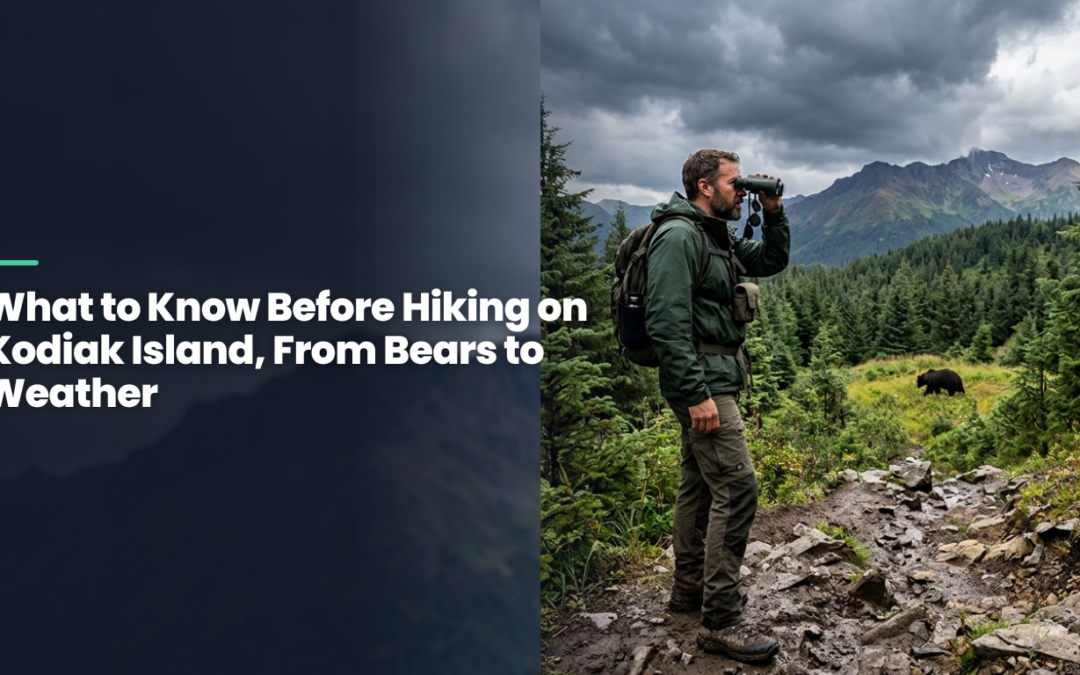
A hike on Kodiak Island is nothing like a walk through a state park trail system back home. The terrain, the weather, and the wildlife all operate on their own rules, and guests who show up unprepared usually find that out the hard way. Kodiak Island hiking safety comes down to a few basics that our guides see play out every season, and knowing them before you lace up your boots makes the difference between a great day outdoors and a stressful one.
Why Kodiak Island Hiking Safety Looks Different Here
Kodiak is a remote island roughly 240 miles southwest of Anchorage, and the Larsen Bay area where our lodge sits is surrounded by dense brush, steep ridgelines, and open tundra with very little cell coverage. There’s no quick call for help if something goes wrong, so the planning you do before you leave matters more than it would on a more developed trail. That means checking in with lodge staff about your route, telling someone your expected return time, and carrying the basics even for a short hike.
Tell Someone Your Plan
Before any hike, let our team know which trail you’re heading out on and roughly when you expect to be back. This isn’t a formality. If weather rolls in or a hike takes longer than planned, having a known starting point and route makes it much easier for someone to help.
Bear Awareness Is Non-Negotiable
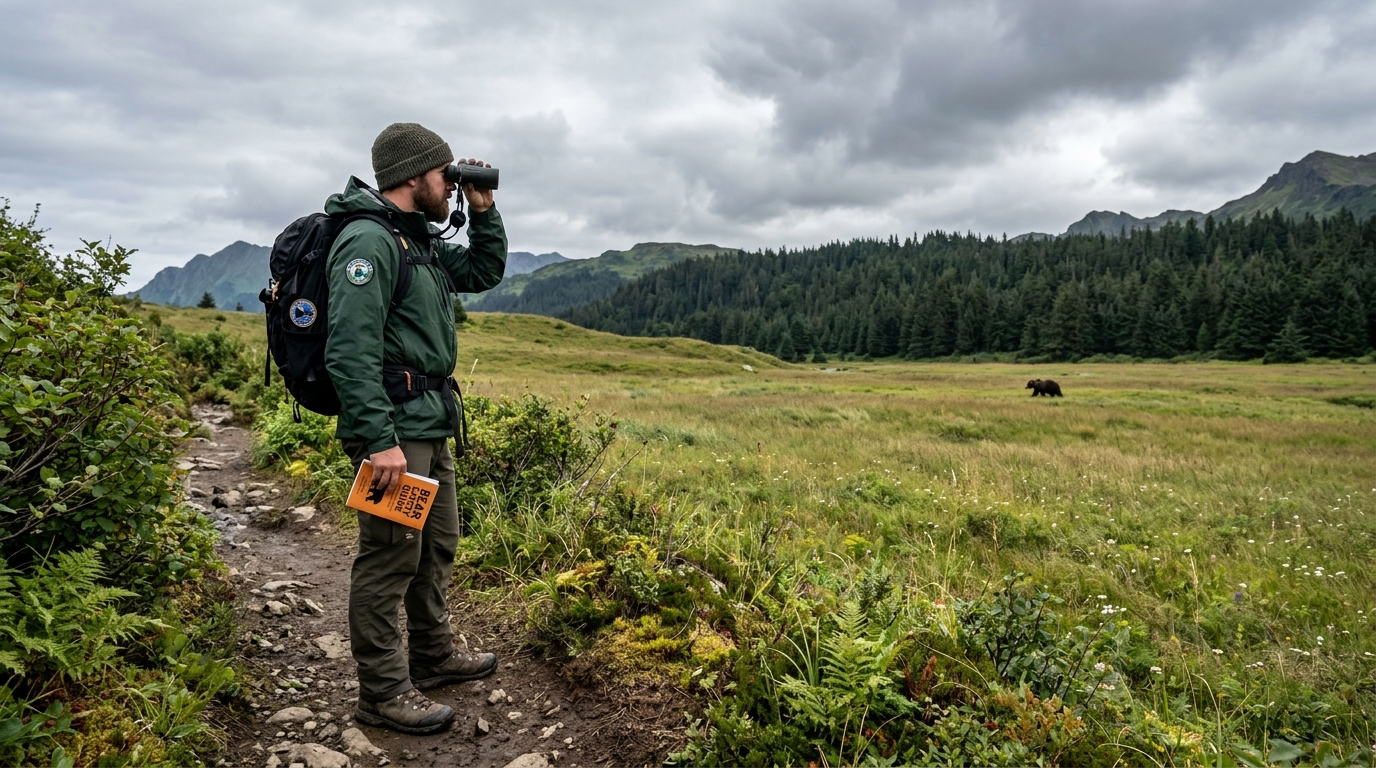
Kodiak is home to the Kodiak brown bear, and hiking here means hiking in their territory, not the other way around. Bears are most active near salmon streams and berry patches, which also happen to be some of the most scenic spots on the island, so awareness has to stay high even when the view is distracting you.
Basic Rules on the Trail
- Make noise as you walk, especially near thick brush or blind corners, so bears have time to move off before you’re close.
- Hike in a group when possible. Solo hikes carry more risk simply because there’s less noise and less ability to react.
- Never approach a bear for a photo, no matter how far off it looks. Distances on open terrain are easy to misjudge.
- Store food properly and pack out everything you bring in. A dropped sandwich wrapper today can create a habituated bear tomorrow.
If you want a deeper understanding of the animal itself, including its size, behavior, and history on the island, our article on how to stay safe around Kodiak brown bears covers it in more detail. Most guests who come to Kodiak actually want to see bears, and a guided bear viewing trip is a far better way to do that than an unplanned encounter on a hiking trail.
Weather Can Turn Fast, Even on a Clear Morning
Kodiak sits in the Gulf of Alaska, and the weather here is shaped by that exposure. A sunny, calm morning can turn into wind, fog, and rain within an hour, and temperatures on an exposed ridge can feel ten degrees colder than they do at sea level in Larsen Bay. Our guides have seen hikers head out in a t-shirt and come back soaked and cold because they didn’t expect the shift.
What That Means for Your Hike
- Layer your clothing, including a waterproof outer shell, even if the forecast looks mild.
- Check conditions with lodge staff before heading out, since local knowledge of the day’s pattern is more useful than a general forecast.
- Build in extra time. Fog or rain can slow your pace and reduce visibility, which matters both for navigation and for spotting wildlife at a safe distance.
- Turn back if conditions deteriorate. No view is worth getting caught on an exposed trail in deteriorating weather.
Know Your Trail Before You Go
Not every trail around Larsen Bay is the same, and the right choice depends on your fitness level, the time you have available, and how the day’s weather is shaping up. Our guide to the hiking trails reachable from Larsen Bay walks through terrain and wildlife you can expect on each route, and how to fit a hike around your fishing charter schedule. If you want to compare options by effort level, we’ve also broken down the Kodiak Island hiking trails ranked by difficulty so you can match a trail to your group’s experience.
Hiking here isn’t one single activity either. Depending on what you’re after, from a short coastal walk to a longer trek into higher terrain, it helps to understand the range of hiking experiences available on the island before you commit to a route.
What to Carry on Any Kodiak Hike
Even a short hike near the lodge deserves a basic kit. This isn’t about overpacking, it’s about covering the handful of things that actually matter if conditions change or a hike runs longer than planned.
- Rain shell and warm mid-layer, regardless of how the morning looks
- Sturdy, broken-in boots suited to uneven and often wet terrain
- Water and a small amount of food
- A way to make noise, such as talking or clapping through brushy sections
- A basic first aid kit and a charged phone, even knowing coverage is limited
Plan Your Hike Around Your Fishing Days
Most guests come to us for the fishing, whether that’s a halibut charter in the morning or a salmon trip timed to the run, and hiking fits naturally into the days around those charters. If you’d rather see Kodiak’s wildlife up close with a guide instead of on foot, our bear viewing and wildlife viewing trips cover the same territory with far less guesswork. Get in touch with our team when you’re planning your stay and we’ll help you build a schedule that fits in both the fishing and the hiking you came here for.