

There’s usually a stretch of downtime between charters, whether you’re waiting for the tide to turn or just giving your arms a rest after a morning of hauling in halibut. That’s exactly when rockhounding Kodiak Island beaches pays off. The same wild, wave-battered coastline that holds our fish also holds agates, garnets, jasper, and polished stones worth bending over for.
Why Kodiak Island Is Good Territory for Rockhounding
Kodiak’s shoreline is constantly reworked by surf, storms, and tidal action, which means new material washes up and gets exposed every season. The island’s volcanic and glacial history left behind a mix of rock types you won’t find on a typical gravel beach. If you want the backstory on why this coastline produces what it does, we’ve covered how Kodiak Island’s geology shaped its rocks in detail.
The short version is that volcanic activity and glacial grinding over thousands of years broke down and redistributed minerals across the island, and the ocean has been sorting and polishing them ever since. That’s the process that turns ordinary rock into the smooth, colorful stones you find at your feet.
Best Spots Near Larsen Bay
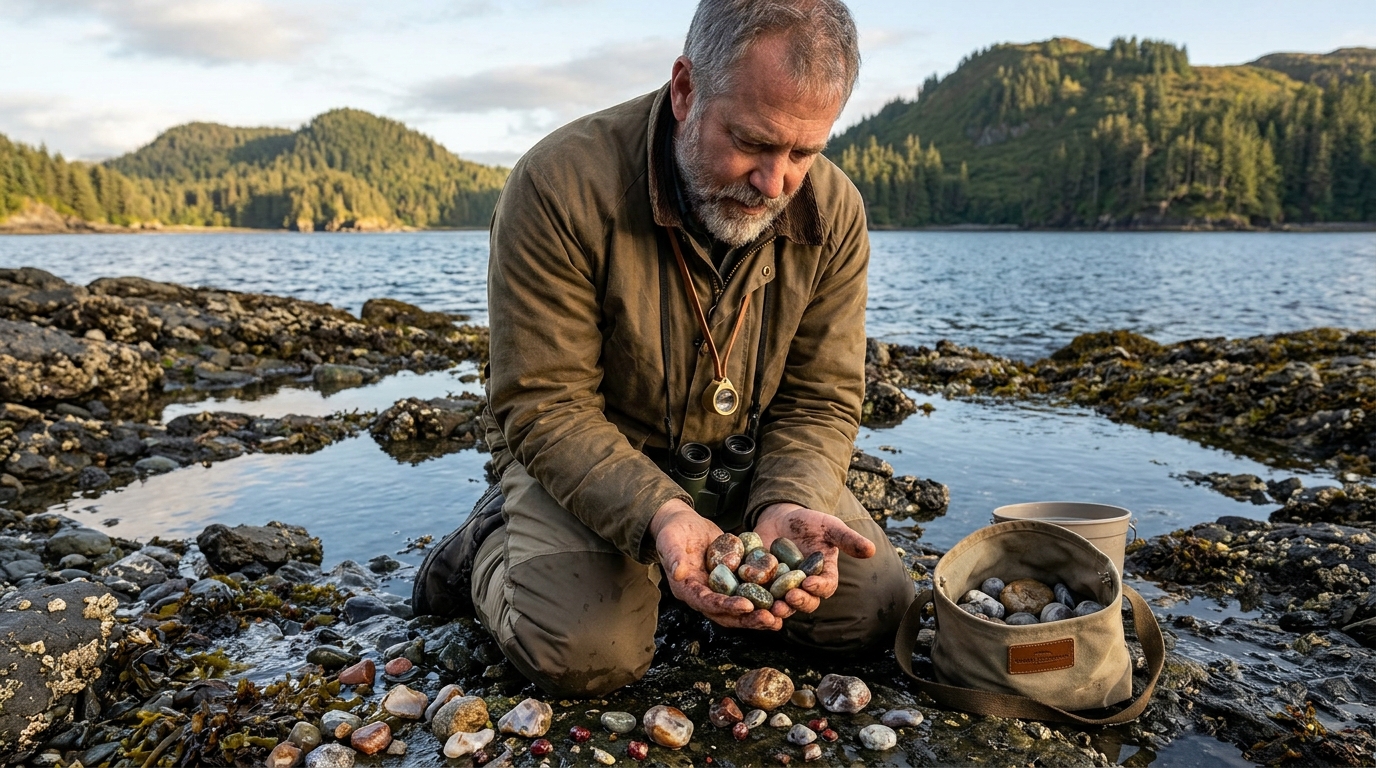
You don’t need to travel far from the lodge to find productive ground. Larsen Bay’s beaches, especially the gravel bars exposed at low tide, are a solid starting point for anyone new to the hobby.
What to Look For
- Agates, often translucent or banded, tend to show up where wave action has concentrated heavier material
- Jasper and other quartz-family stones, usually duller until wet or polished
- Garnets, which can appear as small reddish flecks in darker gravel
- Smooth, rounded beach stones worth collecting just for their color and shape
For a closer look at exactly what you might pick up and how to tell one stone from another, our earlier piece on finding agates and polished beach stones walks through the identification basics. We also put together a breakdown of the island’s rocks and minerals if you want a fuller picture before you head out.
Timing Your Search Around the Tide
Low tide is when rockhounding Kodiak Island beaches actually works. Material that’s normally underwater or buried gets exposed, and a falling tide often leaves a fresh line of gravel and stones along the wrack line.
Early morning low tides are usually your best window, especially right after a storm or a stretch of rough weather, since fresh waves do the work of turning over gravel and exposing new material. If you’re already up early for a fishing charter, it’s easy to fold in twenty or thirty minutes of beachcombing before or after you head out on the water.
What to Bring
You don’t need much gear to get started, which is part of what makes this such an easy add-on to a fishing trip.
- Sturdy, waterproof boots or shoes you don’t mind getting wet
- A small mesh or canvas bag for carrying what you find
- Gloves, since gravel bars can hide sharp edges
- A spray bottle of water to wet stones on the spot and see their true color
- Layers, since Kodiak’s weather can shift quickly even in summer
A lot of first-time rockhounds skip the gloves and spray bottle, then regret it once they’re standing on a gravel bar wondering if that dull gray rock is actually jasper. Wetting a stone right where you find it tells you more than holding it up to the light ever will.
Beachcombing Etiquette on Kodiak
Kodiak’s beaches are shared ground, used by wildlife, local residents, and visiting anglers alike. A few basic habits keep the experience good for everyone.
- Stay below the high tide line unless you know you’re on public access
- Leave driftwood and vegetation undisturbed, since both provide habitat
- Give wildlife plenty of space, particularly if you’re beachcombing near areas used for bear viewing
- Take only what you can reasonably carry and use, rather than stripping a section of beach
- Fill in any holes you dig in the gravel
Bears use the same shoreline you’re searching, so it’s worth staying alert and keeping some distance from brushy areas where visibility is low.
Beyond Rocks: What Else Washes Up
Stones aren’t the only thing the tide brings in. Kodiak’s beaches occasionally turn up fossil material as well, and if you’re curious about that side of beachcombing, we’ve written about what fossils turn up along the shoreline. It’s worth keeping an eye out even if agates are your main target.
Make It Part of Your Kodiak Trip
Rockhounding Kodiak Island is the kind of quiet, hands-on activity that pairs naturally with a day on the water, and most guests find they can work it into the same trip as their halibut, salmon, or lingcod charter without any trouble. If you’re planning a stay with us and want to build in time for beachcombing, hiking, or kayaking along the Larsen Bay shoreline between fishing trips, get in touch and we’ll help you put together a schedule that fits what you’re after.