
When you fly into Larsen Bay and look out over the water, it is easy to see only the scenery. But the bay itself, the village layout, and even the surnames you will hear from local guides all carry the fingerprints of a history that began over two centuries ago. The Russian fur trade on Kodiak Island tribes left a mark that still shapes the communities around our lodge, and knowing that history adds real depth to a trip here.
Life on Kodiak Island Before Russian Contact
Long before the first Russian ships arrived, the Alutiiq people lived in settled villages along Kodiak’s bays and river mouths, including the area we now call Larsen Bay. They built their economy around salmon runs, sea mammal hunting, and seasonal harvests from the surrounding waters, the same waters our guests fish today.
Their society was organized, skilled, and deeply tied to the ocean. For a fuller picture of how these communities functioned before outside contact, our earlier article on the Koniag people and their history covers their traditional way of life in detail.
The Arrival of Russian Fur Traders
Russian fur hunters, known as promyshlenniki, began pushing into the North Pacific in the 1700s chasing sea otter pelts, which were extremely valuable in trade with China. Kodiak Island, with its dense otter populations and sheltered bays, became a prime target. By 1784, Grigory Shelikhov established a permanent Russian settlement at Three Saints Bay, marking the start of sustained contact with the Alutiiq and Koniag people.
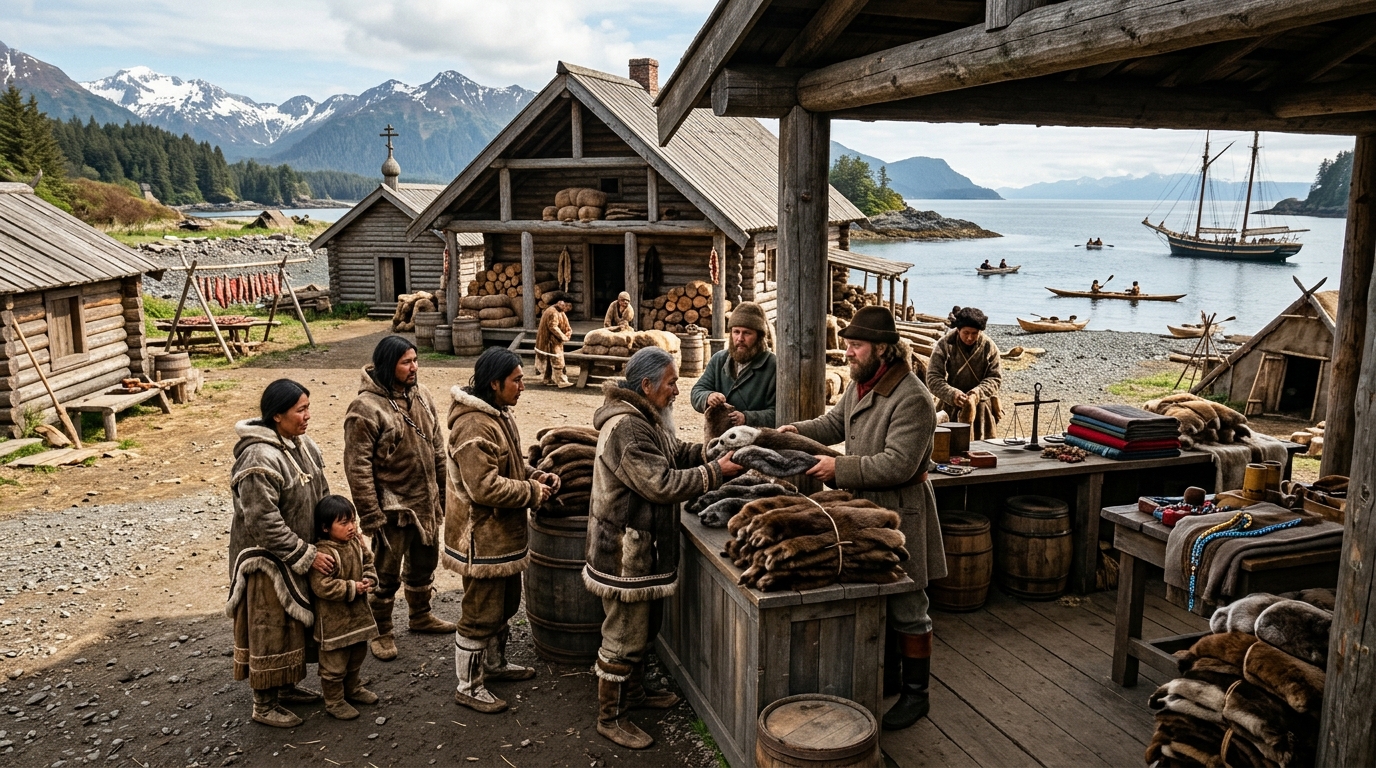
This was not a gradual trade partnership. Russian accounts and oral history both describe a period of violent conquest, forced labor, and loss of life on a scale that permanently altered the population and social structure of the island.
Forced Labor and the Hunting System
Once the Russian-American Company solidified control, Alutiiq men were conscripted into otter hunting parties, often sent far from Kodiak for months at a time. This system stripped villages of able-bodied hunters and disrupted the seasonal rhythms that had sustained communities for generations. Women and elders left behind had to adapt subsistence practices just to keep villages fed.
How the Fur Trade Reshaped Kodiak’s Villages
The fur trade did not just change how people worked. It changed where people lived and how communities were organized.
- Villages were consolidated or relocated to suit company logistics rather than traditional land use patterns.
- Population dropped sharply due to disease, violence, and the disruption of traditional food gathering.
- Russian Orthodox missionaries introduced a new religious structure that blended with, rather than fully replaced, existing spiritual practices.
- Intermarriage between Russian traders and Alutiiq women created Creole families whose descendants still live on Kodiak Island today.
Many of today’s villages near Larsen Bay trace their current layout and family lines directly back to this reorganization. If you want to see how these settlements evolved and what remains visible today, our piece on the native villages of Kodiak Island you can visit is a good next stop.
Cultural Survival Through the Fur Trade Era
Despite the upheaval, Alutiiq identity did not disappear. Language, subsistence knowledge, and craftsmanship like skin boat building and basket weaving persisted, often passed down quietly within families even as Russian customs were layered on top.
That resilience is part of why Alutiiq culture remains visible on Kodiak Island today, not as a museum piece but as a living tradition. Our article on Alutiiq traditions that still thrive today looks at how that culture continues in the villages near our lodge.
From Russian Colony to American Territory
Russian control of Kodiak Island lasted until the United States purchased Alaska in 1867, but the fur trade’s effects did not end with that transfer. Population patterns, village locations, and even local place names established during the Russian-American Company era carried forward into the American period and still influence the island today.
If you want to see this era in context alongside the island’s full history, from Alutiiq origins through statehood and beyond, we put together a timeline of Kodiak Island history that lays out the major turning points in order.
Why This History Matters When You Visit
Understanding the Russian fur trade’s impact on Kodiak Island tribes changes how you see the villages, the names on the map, and the people you meet during your stay. Larsen Bay itself sits in a landscape shaped by centuries of adaptation, loss, and endurance, not just scenic water and good fishing grounds.
We think guests get more out of their trip when they understand the place they are standing in, not just the fish they are catching.
Experience Kodiak Island With That History in Mind
Whether you are here for a halibut fishing charter, a salmon trip, or a bear viewing excursion near Larsen Bay, you are moving through country that has been home to the Alutiiq and Koniag people for thousands of years, and shaped hard by the Russian fur trade era. We welcome questions about the area’s history as much as questions about tackle and tides, so get in touch with us to plan a trip that combines great fishing with a real sense of where you are.