
Guests who book a fishing charter with us often add a guided hike to their trip, and the first question we hear is almost always the same: what do I actually need to bring? Kodiak’s weather can shift from sun to sideways rain in the span of an hour, and the terrain ranges from muddy beach trails to steep alpine slopes. Packing right isn’t about overthinking it, it’s about knowing which few items matter most.
Why Kodiak Island Hiking Demands Different Packing
Kodiak sits in a maritime climate, which means moisture, wind, and temperature swings are part of nearly every hike, even in July and August. The island’s trails also vary enormously, from coastal bluffs to dense rainforest to open muskeg, so the right gear for one route might feel like overkill or underkill on another. If you haven’t picked a trail yet, our rundown of the different types of hikes available on Kodiak Island is a good place to match terrain to your packing list before you leave home.
What This Means for Your Gear Choices
Because conditions change fast, the smartest approach is layering and redundancy rather than bringing one heavy jacket and hoping for the best. A light rain shower on the coast can turn into a steady downpour an hour inland, so your gear needs to handle both without weighing you down.
Layering for Wet, Changeable Weather
The single most useful packing strategy on Kodiak is dressing in layers you can add or remove as conditions change throughout the day.
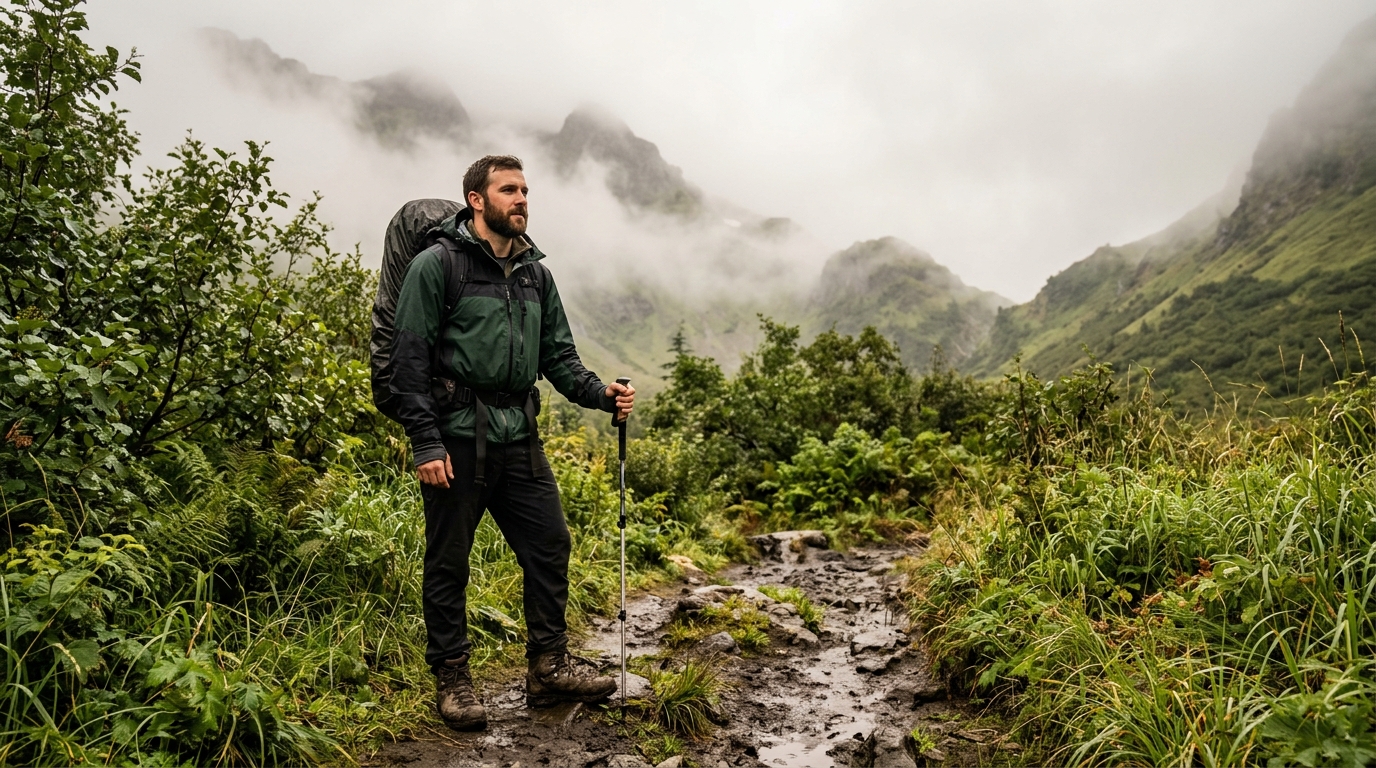
- Base layer: A moisture-wicking synthetic or wool top keeps sweat off your skin, which matters more than people expect once you’re climbing a ridge in cool, damp air.
- Insulating layer: A fleece or lightweight puffy jacket traps warmth without adding bulk to your pack.
- Outer shell: A genuinely waterproof (not just water-resistant) rain jacket and rain pants are non-negotiable. Kodiak rain is persistent, not a passing drizzle.
- Extra layer in your pack: Even on a sunny morning, bring one more warm layer than you think you’ll need. Weather on the water and in the hills can turn quickly.
Avoid Cotton Entirely
Cotton holds moisture and loses its insulating value once wet, which is exactly the wrong trait for Kodiak’s climate. Stick to synthetic or wool fabrics for every layer, including socks.
Footwear That Handles Mud, Roots, and Uneven Ground
Kodiak trails are rarely flat and dry for long. Expect muddy stretches, exposed roots, loose rock, and the occasional stream crossing, depending on the route.
- Waterproof hiking boots with solid ankle support are the baseline for most trails.
- Wool or synthetic hiking socks, with a spare pair packed in a dry bag, make a real difference on longer hikes.
- Gaiters are worth considering for muskeg crossings, where standing water and soft ground are common.
If you’re trying to figure out which trails suit your fitness level and footwear setup, our breakdown of Kodiak Island hiking trails ranked by difficulty level can help you plan accordingly.
Packing for Bear Country and Wildlife Encounters
Kodiak is bear country, and hiking here means being aware of your surroundings in a way that’s different from a typical trail walk back home. Carrying bear spray, making noise on the trail, and knowing how to store food properly are all part of a safe hike. We cover this in detail in our guide to bear safety and weather awareness on Kodiak hikes, which is worth reading before your trip regardless of which trail you choose.
Small Items That Matter More Than You’d Think
- A dry bag or waterproof pack liner to protect electronics, extra layers, and food.
- A lightweight headlamp, even for day hikes, in case a trip runs longer than planned.
- A basic first aid kit sized for your group.
- Binoculars, since wildlife viewing and bear viewing opportunities often appear unannounced along the trail.
Food, Water, and Hydration
Bring more water than you think you need, along with a way to treat water from streams if you’re on a longer route. Pack calorie-dense snacks that hold up to moisture, like nuts, dried fruit, or energy bars, since soggy trail mix bags are a common frustration on wetter hikes.
A Simple Packing Checklist
- Waterproof rain jacket and rain pants
- Insulating mid-layer (fleece or puffy)
- Moisture-wicking base layer
- Waterproof hiking boots and wool socks
- Bear spray
- Dry bag or pack liner
- Headlamp
- First aid basics
- Water and a treatment option
- Calorie-dense snacks
- Binoculars
None of this needs to be expensive or specialized. The goal is simply to stay dry, warm, and comfortable enough to actually enjoy the scenery instead of fighting the weather.
Timing Your Hike Around Your Fishing Charter
Many of our guests fit a hike in around a morning or afternoon charter, which means packing efficiently matters even more. If you’re staying with us in Larsen Bay, our guide to hiking trails near Larsen Bay walks through options that fit easily around a half-day or full-day fishing trip, so you don’t have to choose one or the other.
Let Us Help You Plan the Rest of Your Trip
Packing the right gear is only part of getting the most out of a stay with us. Once you’ve sorted your layers and boots, our guides can help pair a hike with a halibut or salmon fishing charter, a bear viewing trip, or a whale watching excursion, all built around what you actually want out of your time on Kodiak Island. Reach out to us and we’ll help you put together a schedule that makes the most of both the trails and the water.