

Between fishing charters, a lot of our guests find themselves on a trail with time to kill and an appetite for something sweet. Kodiak Island happens to be covered in wild berries from mid-summer on, and knowing what you’re looking at makes the difference between a nice walk and a real foraging trip. Here’s what we’ve learned about wild berries on Kodiak Island after years of watching them come and go along our local trails.
Why Kodiak Island Grows So Many Wild Berries
Kodiak’s cool, wet climate and acidic soils are exactly what berry plants like. The same maritime weather that keeps our rivers full and our salmon runs strong also feeds the understory plants along every trail and hillside on the island.
Most berry species here ripen in a wave starting in late July and running through September, which overlaps nicely with the back half of our fishing season. That means a guest who books a trip for silver salmon in August is also booking a trip during peak berry season, whether they planned it that way or not.
Salmonberries
Salmonberries are usually the first berry of the season, often ripening in late June and into July. They look something like a raspberry but come in shades of yellow, orange, and deep red, growing on thorny shrubs that like damp, shady ground near streams and forest edges.
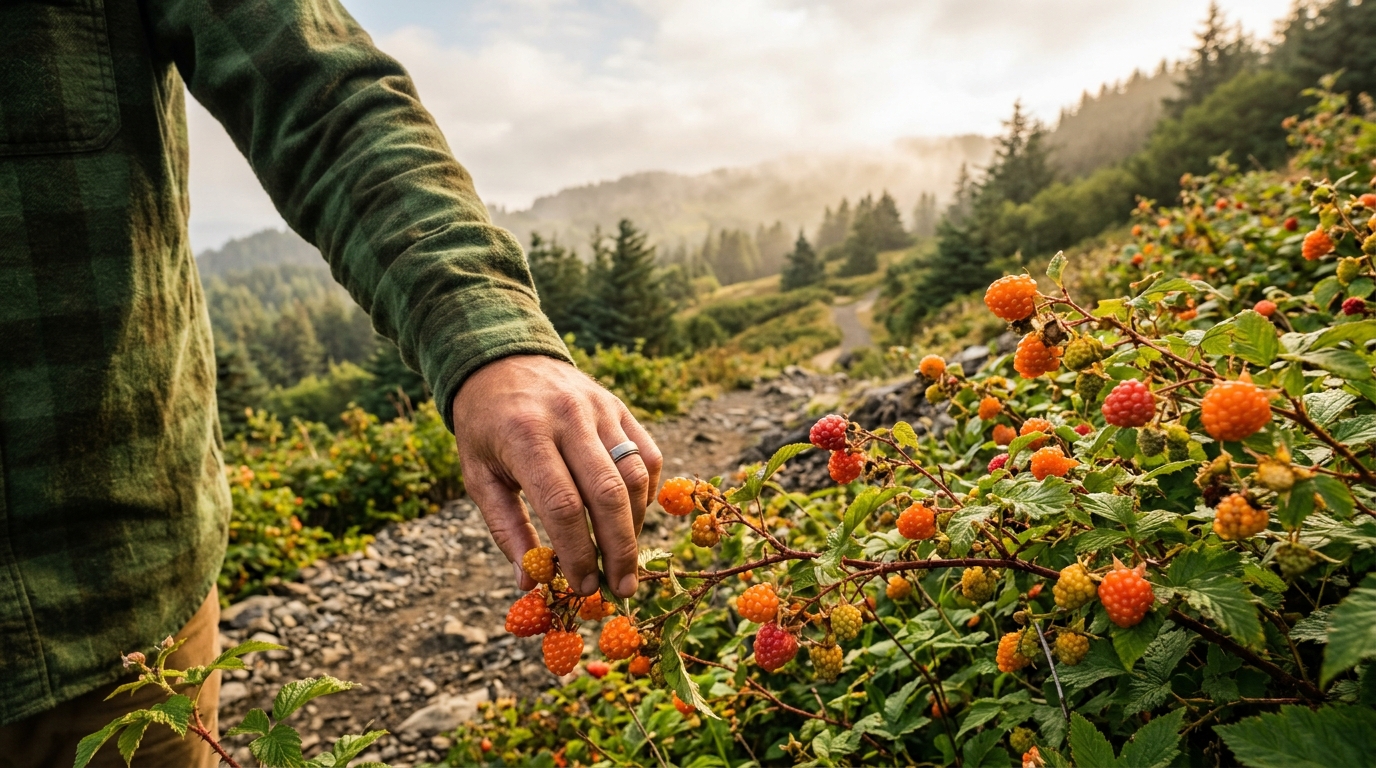
They have a mild, slightly tart flavor and a soft texture, which makes them better eaten fresh off the bush than packed out for later. You’ll find them thick along lower-elevation trails close to water, which is also where a lot of our guides lead hikes early in the season.
Blueberries
Alaska blueberries are smaller and more intensely flavored than the cultivated kind most visitors are used to. On Kodiak, they tend to show up in open, brushy areas and along ridgelines, ripening from late July through August.
The bushes are low to the ground, so picking means some bending over, but the payoff is worth it. If you’re hiking a route with some elevation gain, keep an eye out on the open slopes where the brush thins out, since that’s prime blueberry ground.
Where to Find Them on the Trail
- Open subalpine slopes and ridgelines above the treeline
- Brushy clearings along mid-elevation trails
- Edges of old burn areas or cleared ground
Crowberries
Crowberries are easy to overlook because the plant looks almost like a tiny evergreen shrub, but the small black berries it produces are edible and common across the island’s tundra and coastal heath. They have a mild, slightly watery taste on their own, which is why a lot of people mix them with blueberries or salmonberries rather than eating them straight.
They ripen in late summer and tend to hang on the plant well into fall, so they’re often still around after the blueberries and salmonberries are gone.
Highbush Cranberries
Highbush cranberries grow on taller shrubs and ripen later in the season, usually from late August into September. The berries are tart, almost sour when eaten raw, and most people we talk to prefer them cooked down rather than eaten straight off the bush.
They’re common along lower forest trails and near clearings, often growing alongside salmonberry bushes once those have finished fruiting for the year.
A Few Notes on Picking Safely
Alaska has a handful of berry look-alikes that aren’t worth the risk, so when in doubt, it’s best to stick to the species you can confidently identify or ask a guide before you eat anything unfamiliar. Baneberry in particular is one to avoid, and it can resemble other red berries at a glance.
Bears eat the same berries we do, and thick berry patches are a place they spend a lot of time in late summer. If you’re picking on your own rather than with a guide, it’s worth making noise, staying alert, and giving any patch a good look before you walk into it.
Good Habits for Berry Picking
- Pick only berries you can positively identify
- Stay aware of bear activity, especially in dense brush
- Bring a small container so you’re not relying on pockets
- Rinse everything before eating, even if it looks clean
Pairing Berry Picking With Your Trip
Most of our guests treat berry picking as something to do around the edges of a fishing day rather than a trip on its own, and that’s really the right way to approach it. A short hike before breakfast or a walk during a break in the charter schedule is usually enough time to fill a container with salmonberries or blueberries, depending on the week.
If you want to plan a hike with berry picking in mind, our hiking trails ranked by difficulty level breaks down which routes fit an easy morning walk versus a longer trek, so you can match the hike to how much time you have between charters. Berry season also overlaps with some of the best wildflower blooms on the island, which we cover in our guide to wildflowers and plants on Kodiak’s trails, including fireweed, a plant so common here we wrote a separate piece on where to see fireweed across the island.
Berries aren’t the only thing worth timing around our fishing calendar. If you’re planning a trip and want to know where the fish are running at the same time the berries are ripening, our breakdown of the best rivers to fish on Kodiak Island covers what you can expect to catch on the Karluk, Ayakulik, Buskin, and American rivers throughout the season.
Make It Part of Your Trip With Us
If you’re staying with us during the summer months, picking wild berries is a simple way to fill the time between a morning salmon charter and an afternoon of bear viewing or a short hike. Ask us about current trail conditions and what’s ripening when you book, and we’ll help you plan a schedule that leaves room for both fishing and foraging. Get in touch and we’ll put together a trip that fits what you want to see and catch on Kodiak Island.