

When guests ask us about Kodiak Island hiking trails, the first thing we tell them is that this island rewards every kind of hiker, from someone who wants a gentle walk along the shoreline before dinner to someone chasing a real backcountry challenge. Kodiak’s terrain is rugged, wild, and largely untouched, which means the payoff for getting outside is real solitude and real scenery. Here is what we’ve learned guiding guests on these trails season after season.
What Makes Hiking on Kodiak Island Different
Kodiak is the second largest island in the United States, and most of it has no roads at all. That means many of the best hikes are only reachable by boat or floatplane, which is part of why staying somewhere with local knowledge and transportation matters. The terrain shifts quickly from beach grass to alder thickets to alpine tundra, often within a single hike.
Weather changes fast here too. A clear morning can turn misty by afternoon, so we always recommend layering and checking conditions with someone who knows the area before heading out.
Easy Trails Near Larsen Bay
If you want to stretch your legs without committing to a full day on the trail, Larsen Bay has several options that are approachable for almost any fitness level.
Shoreline Walks
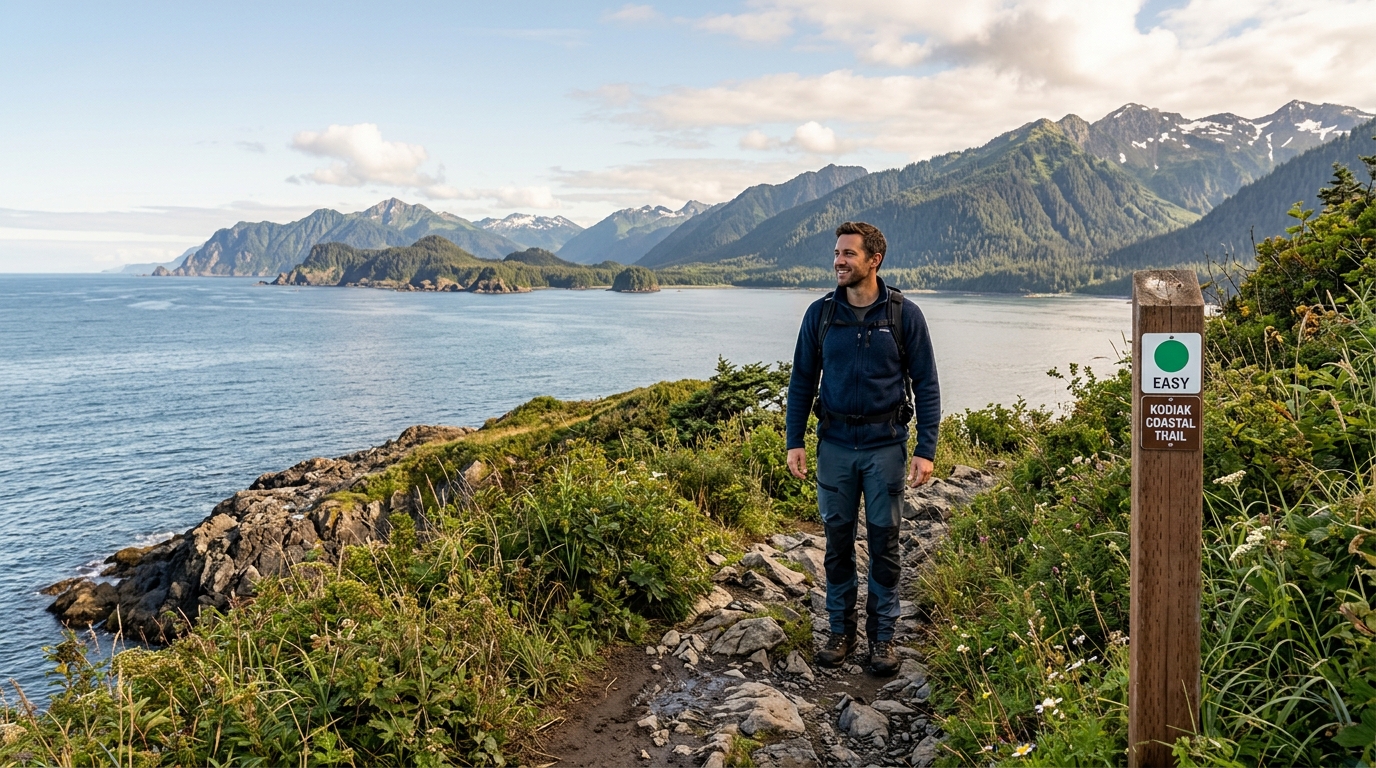
The beaches and coastal paths around Larsen Bay are flat, scenic, and easy to follow. These are popular with guests who want to watch eagles overhead or look for tide pool life between fishing trips. They’re also a good way to unwind after a morning on the water, since many of our anglers come back from a halibut fishing charter ready for a slower-paced walk in the afternoon.
Village Loop Trails
Short loop trails near the village itself offer a nice introduction to Kodiak’s plant life and terrain without much elevation gain. These are ideal for families or anyone easing into the island’s hiking scene for the first time.
Moderate Hikes for Active Explorers
For guests who want more distance and a bit of elevation, Kodiak has trails that climb through alder forest into open tundra with real views of the bay.
- Trails that gain a few hundred feet often open up to sweeping views of the water and surrounding mountains.
- Expect a mix of packed dirt, root systems, and occasional muddy patches, especially earlier in the season.
- Bring sturdy footwear, since Kodiak’s ground cover can be uneven even on well-used paths.
These moderate routes are a good fit for guests who hike regularly at home and want something more engaging than a shoreline stroll but aren’t looking for a full backcountry expedition.
Challenging Backcountry Routes
Kodiak’s interior holds some genuinely demanding terrain, and we only recommend these routes to guests who are experienced and properly prepared.
Alpine Ridgelines
Higher elevation routes take hikers above the treeline into open alpine terrain with panoramic views across the island and out toward the water. These hikes require more stamina, sure footing, and often a longer day of travel to reach the trailhead itself.
Off-Trail Backcountry Travel
Some of the most rewarding hiking on Kodiak involves little to no marked trail at all. This is where local guidance really pays off, since route-finding through alder and tundra can be disorienting without someone who knows the land and the wildlife patterns.
Wildlife You Might See Along the Way
Hiking on Kodiak often overlaps with the same wildlife viewing that draws people here in the first place. It’s common to spot bald eagles, deer, and if you’re hiking near salmon streams during the run, you may see signs of bear activity nearby. This is part of why we always brief guests on bear awareness before any hike, and why guided trips make sense for anyone unfamiliar with moving safely through bear country.
Planning Your Hike Around Your Trip
Most of our guests come to Kodiak primarily for the fishing, and hiking becomes a great way to round out the day or take a break between charters. Since the island’s terrain and access points can be tricky to navigate without local knowledge, we build hiking into the broader adventure itinerary alongside fishing and wildlife viewing so guests get a well-rounded experience rather than trying to piece it together on their own.
Best Time of Year to Hike
Our season runs from mid-May through mid-September, and trail conditions shift throughout that window. Early season hikes tend to be wetter and greener, while late summer often brings drier trails and more wildlife activity near the salmon streams.
Tips for Hiking Kodiak Island Trails Safely
- Always let someone know your planned route and expected return time.
- Carry rain gear even on clear mornings, since weather can shift quickly.
- Wear waterproof boots with good ankle support for uneven, often muddy terrain.
- Travel with a guide or experienced local when heading into backcountry or off-trail areas.
- Stay alert for bear activity, especially near streams and berry patches.
Following these basics makes the difference between a hike you enjoy and one that turns into an unexpected challenge.
Let Us Help You Plan Your Kodiak Adventure
Whether you’re looking for an easy shoreline walk between fishing trips or a full day on a backcountry route, we can help match the hike to your skill level and your schedule. Our guests typically build their days around a mix of adventure activities and time on the water, and you can see the full range of what we offer by visiting our home page to learn more about the lodge and how a stay here comes together. Reach out to us when you’re ready to plan your trip, and we’ll help you find the right balance of hiking, fishing, and wildlife viewing for your time on Kodiak Island.