

Between fishing trips, many of our guests spend time exploring the trails around Larsen Bay, and it doesn’t take long before they start asking questions about the plants brushing against their boots. Kodiak Island wildflowers are part of what makes the hiking here memorable, with color and texture that changes as the season moves from late spring into early fall. This guide covers the common blooms, berries, and coastal plants you’re likely to see while you’re staying with us.
Understanding what’s growing around you also matters for practical reasons. Some of the berries are excellent trailside snacks, others are best left alone, and knowing the difference makes your hikes and kayak landings more enjoyable and a little safer.
Why Kodiak Island Wildflowers Are So Abundant
Kodiak’s maritime climate, with its cool temperatures, frequent rain, and long summer daylight hours, creates ideal growing conditions for a wide range of plant life. The island sits in a temperate rainforest zone in its southern and western reaches, including around Larsen Bay, where dense understory vegetation and open meadows both thrive.
The volcanic soil and abundant moisture support plants that bloom in waves throughout the season, so a hike in late May looks noticeably different from one in August. This means guests who visit earlier or later in our mid-May through mid-September season will often see different wildflowers, even on the same trail.
Common Wildflowers You Will Spot on the Trails
Chocolate Lily
One of the more distinctive early-season blooms, the chocolate lily has a nodding, bell-shaped flower in deep maroon and yellow mottling. It tends to show up in grassy meadows and open slopes in late spring and is easy to spot once you know what to look for.
Fireweed
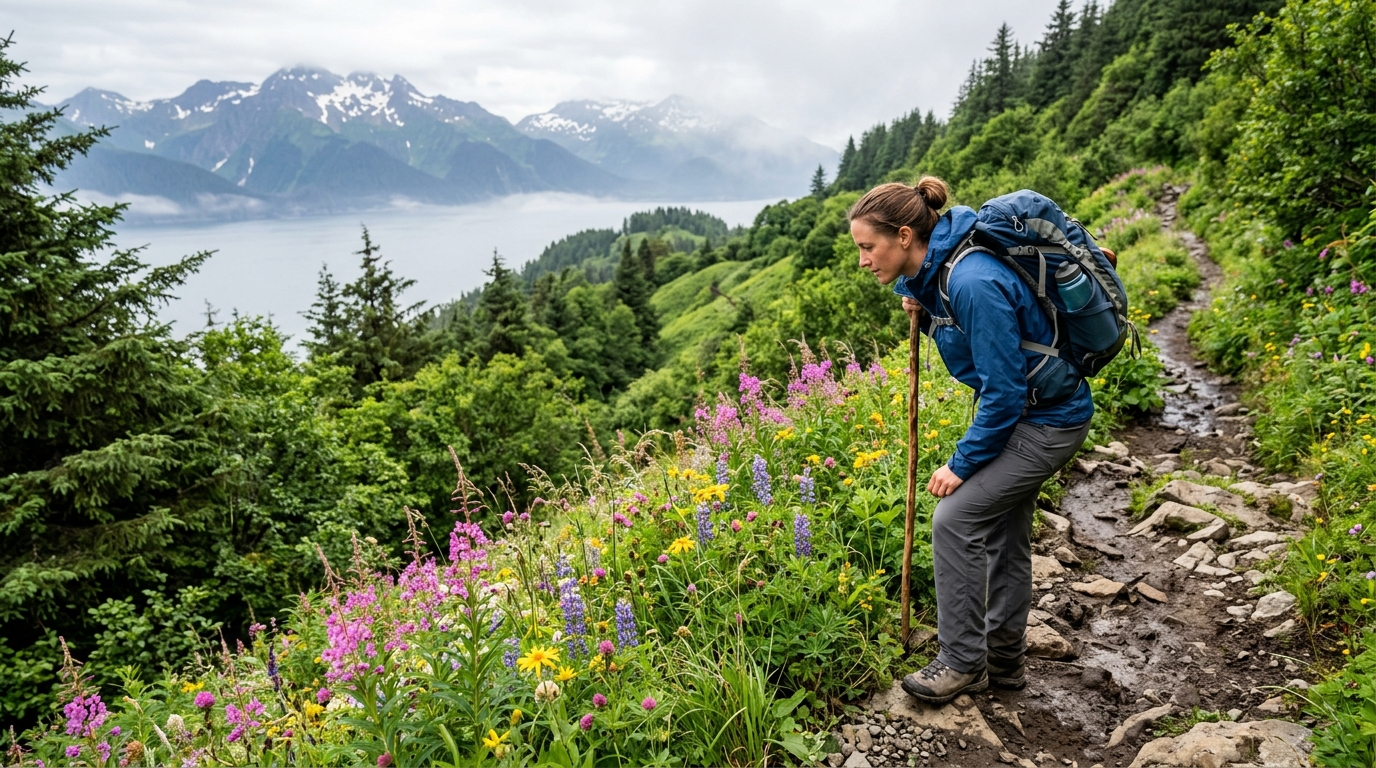
Fireweed is probably the wildflower most associated with Alaska summers. Its tall spikes of magenta-pink flowers bloom from the bottom up, and locals sometimes use the flower’s progress up the stalk as an informal marker of how much summer is left. You will see it lining trail edges, roadsides, and open clearings all around Larsen Bay.
Wild Geranium
Also called Kodiak geranium, this pinkish-purple flower is common in meadows and along forest margins. It blooms through much of the summer and adds a soft pop of color to otherwise green trail corridors.
Lupine
Tall spikes of blue-purple lupine flowers are common on hillsides and open slopes, often growing in dense patches that turn entire hillsides purple for a few weeks in early to mid summer.
Cow Parsnip
This tall plant with broad, umbrella-shaped white flower clusters grows in thick stands along many trails and stream banks. It can reach well over waist height, and guides typically point it out since the sap can cause skin irritation in sunlight, so it’s one to admire without touching.
Berries Worth Knowing About
Kodiak’s understory produces a good variety of berries through the summer months, and several are well known to locals as trailside treats.
- Salmonberry: Ripens in early to mid summer, with soft orange-to-red berries that resemble raspberries.
- Blueberry: Common in higher elevation meadows and open forest, ripening in late summer.
- High-bush cranberry: Tart red berries found in shrubby patches, generally ripening later in the season.
- Devil’s club berries: Bright red clusters on a spiny stalk. The berries are not eaten, but the plant itself is easy to identify and worth pointing out since the spines can be sharp.
Our guides are happy to point out what’s currently ripe on any given hike, since timing shifts a bit from year to year depending on the weather.
Coastal and Wetland Plants Around Larsen Bay
Because so much of our hiking and kayaking takes place near the shoreline, you’ll also encounter plant life that thrives right at the edge of saltwater and freshwater systems.
Beach Rye and Coastal Grasses
Tall, hardy grasses stabilize the dunes and upper beach areas around Larsen Bay. They’re not showy, but they play an important role in holding the shoreline together and are one of the first things you’ll notice when you step off a boat or kayak.
Skunk Cabbage
Found in wetter, low-lying areas and along stream margins, skunk cabbage has broad leaves and an unmistakable smell that gives it its name. It’s one of the earliest plants to emerge in spring and is a good marker of boggy ground on a trail.
Beach Greens and Coastal Succulents
Low-growing, fleshy-leaved plants often appear right along the tideline and rocky shore, adapted to salt spray and shifting gravel. These are easy to miss if you’re focused on the water, but worth a glance during a kayak break.
The Best Times to See Wildflowers During Fishing Season
Because our season runs mid-May through mid-September, guests get to see a fairly wide range of bloom cycles depending on when they visit.
- Late May to June: Early bloomers like chocolate lily and the first lupine and wild geranium.
- July: Peak fireweed, salmonberries ripening, and lupine fields still going strong in some areas.
- August into early September: Blueberries and high-bush cranberries ripening, fireweed moving up the stalk toward its top blooms, and cow parsnip fully mature along the trails.
If you’re planning a trip and want to time it around specific plants or berries, our team can offer some general guidance, though weather each year shifts things slightly.
Fitting Wildflower Walks Into a Fishing Trip
Most of our guests come to Kodiak Island primarily for the fishing, and we build our days around that priority, whether that means a full day targeting halibut on our halibut fishing charter or chasing salmon closer to shore. But the beauty of staying at a lodge based right in Larsen Bay is that a hike or a paddle fits naturally into the days around your charters, especially on travel days or slower tide windows.
Wildlife viewing, bear viewing, and kayaking trips all pass through the same terrain where these plants grow, so you don’t need to set aside a separate day just for wildflowers. It usually happens along the way.
Plan Your Kodiak Adventure With Us
Whether you’re coming for the fishing, the wildlife, or simply the chance to walk through some of Alaska’s most productive coastal terrain, our team can help you build a trip that covers what matters most to you. Feel free to visit our home page to see the full range of what we offer at the lodge, and get in touch with any questions about timing your visit around the wildflowers, berries, or fishing that interest you most.