
If you’ve ever pictured Alaska’s coastline as just eagles and whales, you’re missing one of the most entertaining parts of a day on the water. Puffins Kodiak Island trips reveal a rowdy, colorful world of seabirds that nest on the cliffs and dive for fish right alongside our boats. Between the tufted puffins bobbing on the surface and the murres wheeling overhead, the birdlife alone is worth the trip.
Puffins on Kodiak Island: Tufted and Horned Species
Kodiak Island hosts two puffin species, and both are common enough that guests spot them on most wildlife viewing outings during the summer months. Tufted puffins are the ones most people picture, with their orange bills and pale yellow head plumes that curl back like windswept hair. Horned puffins are a little less flashy but just as fun to watch, with black and white bodies and a small red horn-like mark above each eye.
Both species spend the winter far offshore and only come inshore to breed, which is why they show up reliably during our operating season from mid-May through mid-September. They nest in burrows or rock crevices on steep, grassy cliffs, then spend their days flying out to sea to fish before returning with a beakful of small fish for their chicks.
Where to Spot Puffins Around Larsen Bay
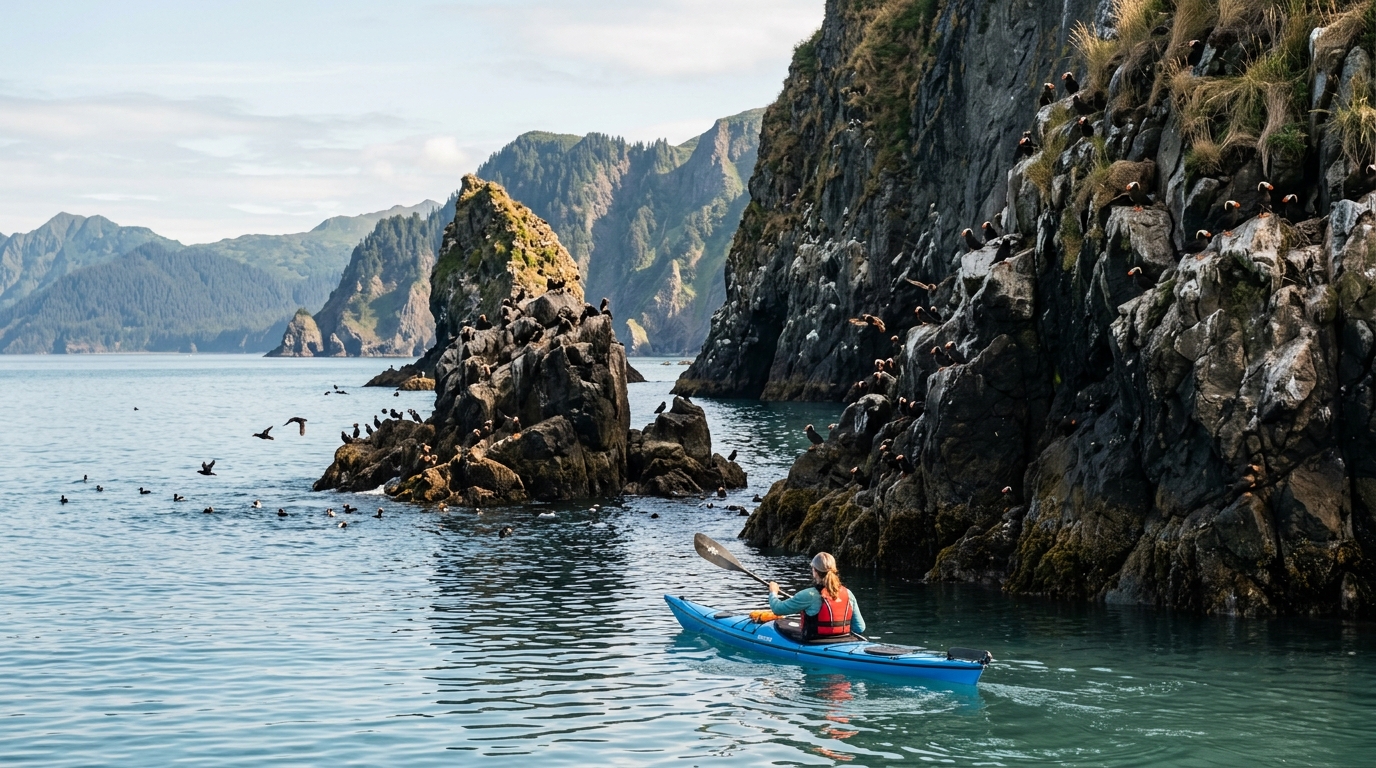
Puffins favor specific terrain, and knowing what to look for helps guests get the most out of a trip. Steep, grass-topped cliffs near open water are the classic setup, since puffins need enough of a running start to launch into flight and a soft enough surface to dig their nesting burrows.
What to Watch For
- Small, fast-moving black and white birds skimming low over the water in groups
- Puffins sitting in loose rafts on calm water near cliff faces
- Sudden dives as birds chase schools of small baitfish
- Birds flying back toward the cliffs with fish visible in their bills
Our guides know which stretches of coastline near Larsen Bay tend to hold the most activity in a given week, since puffin numbers can shift a bit depending on where the baitfish are concentrated. A kayak puts you closer to the water and closer to eye level with the birds than a larger boat ever could, and our kayaking experiences on Kodiak Island are a favorite way for guests to slip quietly along the cliffs without spooking the colonies.
Other Seabirds You’ll See From the Water
Puffins get most of the attention, but they share these cliffs and waters with a full cast of other seabirds. Learning to tell a few apart adds another layer of interest to any day spent out on the water.
Murres and Guillemots
Common murres nest in dense colonies on narrow cliff ledges, packed shoulder to shoulder in numbers that can look almost like a crowd at a stadium. Pigeon guillemots are smaller and easier to see up close, often paddling near shore with their bright red feet and white wing patches standing out against dark water.
Kittiwakes and Gulls
Black-legged kittiwakes are graceful fliers that nest on cliff ledges in tight colonies, and their calls are one of the first sounds guests notice when approaching a rookery. Glaucous-winged gulls are the larger, more familiar gulls that patrol the shoreline and are quick to show up wherever fish are being cleaned.
Cormorants
Pelagic cormorants perch on rocky outcrops with their wings spread out to dry, a posture that makes them easy to identify even from a distance. They’re strong divers and often hunt in the same nearshore waters where our anglers are working for lingcod and rockfish.
These birds don’t exist in isolation from the rest of Kodiak’s marine life either. Seabirds, whales, and salmon all follow the same baitfish, so a good bird day is often a good wildlife day across the board, something we cover in more depth in our article on wildlife you can see on Kodiak Island besides bears and whales.
Best Time of Year for Seabird Sightings
Timing matters more with seabirds than with some other Kodiak wildlife, since puffins and murres are only around during the breeding season. From mid-May through July, colonies are at their busiest as adults feed chicks and traffic to and from the cliffs peaks. By August, some birds start heading back out to open water for the winter, so early and mid-summer trips tend to offer the most consistent puffin sightings.
This window overlaps closely with peak salmon season, which means a single day on the water can easily combine strong fishing with excellent birdwatching. It also overlaps with when we see the most whale activity near Larsen Bay, and guests interested in stacking their wildlife sightings often ask us about the whale species found near Larsen Bay before booking a combined outing.
Puffins Are Just One Part of the Show
Seabirds share this coastline with one of Alaska’s densest eagle populations, and guests are often surprised at how many bald eagles they spot perched along the same cliffs where puffins nest. If you want a fuller picture of what’s overhead before your trip, our guide to bald eagles on Kodiak Island and where to spot them is a good companion read.
See Kodiak’s Seabirds for Yourself
Whether you’re hoping to watch tufted puffins skim the surface, paddle quietly past a murre colony, or simply add strong birdlife to a day built around fishing, our wildlife viewing trips and guided outings are designed to put you in the right place at the right time. Our team knows the cliffs, colonies, and tide windows around Larsen Bay well enough to make the most of whatever the day brings, from halibut and salmon charters to slower-paced kayaking and wildlife viewing. Get in touch with us to plan a trip that fits what you want to see and catch.