
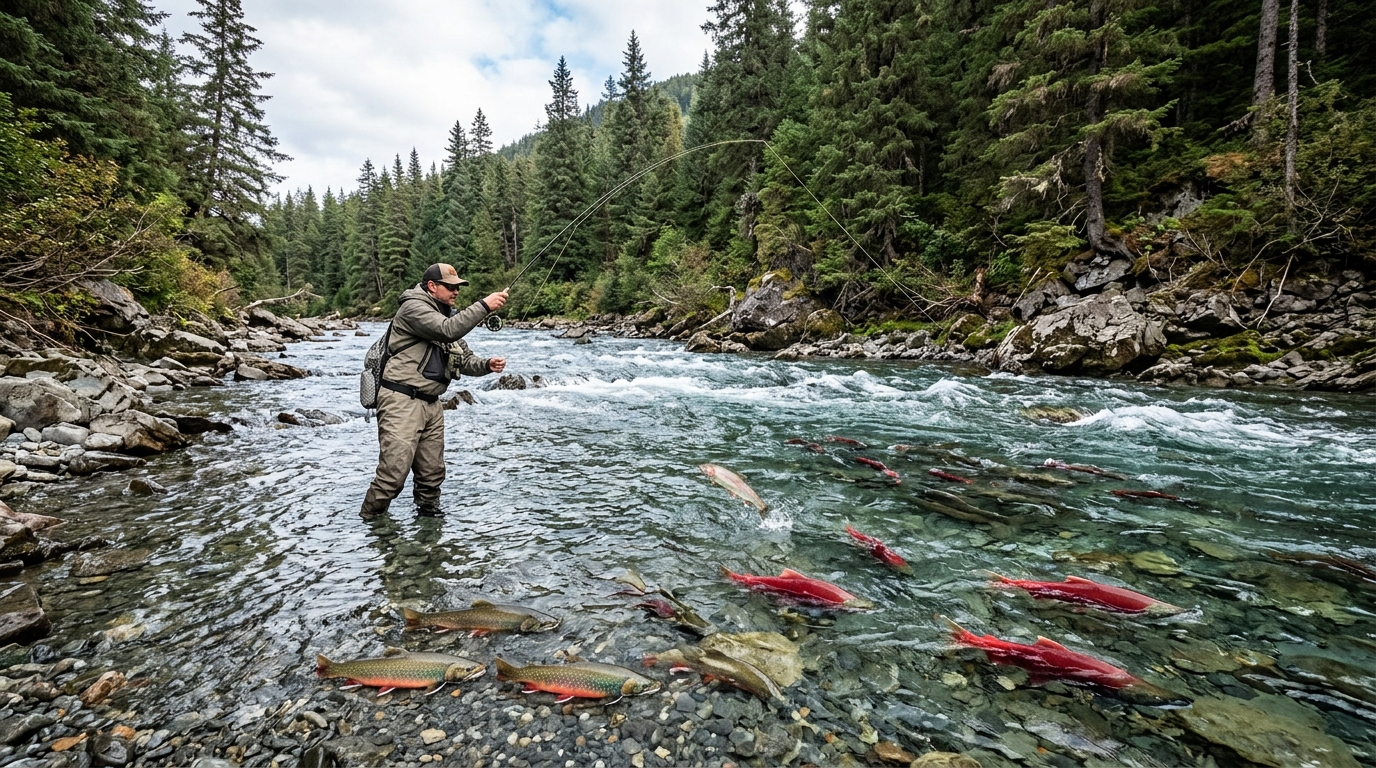
Standing in a Kodiak river with a fly rod in hand is a different experience than trolling for halibut offshore, and it draws a different kind of angler. If you’re planning a trip and wondering what kodiak island fly fishing actually looks like on the water, from the species you’ll cast to the gear you’ll need, here’s what to expect before you book.
Kodiak’s rivers are short, clear, and fed by snowmelt and rain, which keeps them cold and well-oxygenated through most of the season. That combination supports strong runs of salmon and resident populations of Dolly Varden and rainbow trout, all within casting distance of the banks. Because these rivers are also relatively compact compared to mainland Alaska systems, wading anglers can cover a lot of productive water in a single outing.
What Makes Kodiak Island Fly Fishing Different
Kodiak’s geography sets the tone. The island sits in nutrient-rich coastal waters, and its rivers are short connectors between the mountains and the bays, which means fish move through them in concentrated windows rather than spreading thin over long stretches. That makes timing more important than distance covered.
It also means the fishing here rewards anglers who understand the bigger picture. The rivers around Larsen Bay don’t operate in isolation. Understanding how Kodiak’s river systems feed the bays helps explain why certain stretches fish better at certain times, and why the same river can hold salmon, trout, and char within a few hundred yards of each other.
Species You’ll Encounter on Kodiak’s Rivers
Fly anglers on Kodiak typically target three categories of fish, each with its own behavior and best approach.
Dolly Varden
Dolly Varden are aggressive, opportunistic feeders that hold in current seams and behind structure, waiting for food to drift past. They’re often the first fish anglers hook into on a Kodiak river, and they respond well to egg patterns and small streamers, especially once salmon start spawning and eggs are in the water.
Rainbow Trout
Kodiak’s rainbow trout are resident fish that key in on the same food sources as the Dollies but tend to hold in slightly different water, often near undercut banks or slower pools. They can be more selective, and matching what’s actually drifting in the current, whether that’s smolt, eggs, or terrestrial insects, makes a real difference in hookup rates.
Salmon
Salmon are the headline species on most Kodiak rivers, and different runs move through at different times. King salmon typically arrive first in the season, followed by other species later in the summer. If timing your trip around a specific salmon run is a priority, our breakdown of king salmon fishing on Kodiak Island covers when they show up and where to cast, and our guide to silver salmon fishing on Kodiak Island rivers does the same for the later run.
Techniques That Work on Kodiak’s River Systems
Most Kodiak river fishing is done with a single-handed rod in the 6 to 8 weight range, which handles both trout-sized fish and larger salmon without being overkill. A few approaches consistently produce results:
- Swinging streamers through current seams for aggressive Dolly Varden and rainbow trout
- Drifting egg patterns near spawning salmon, where Dollies and trout stage to feed
- Sight fishing to salmon holding in clear pools, which requires a stealthy approach and accurate casts
- Adjusting fly size and color based on water clarity, since Kodiak’s rivers can shift from gin clear to slightly stained depending on recent rain
Reading the water matters more than having a huge fly selection. A handful of proven patterns fished correctly in the right spot will outperform a big box of flies fished randomly.
When to Go: Seasonal Timing
Kodiak’s fly fishing season runs alongside the resort’s operating season, from mid-May through mid-September, but the fishing changes character as the summer progresses. Early season favors king salmon and hungry resident trout. Midsummer brings a mix of salmon species and steady Dolly Varden action. Late summer, once spawning is underway, egg patterns become especially productive as trout and char key in on the protein-rich food source.
Because timing shifts so much, it helps to know what’s running before you plan your trip. This is where understanding the five fish species anglers target most on Kodiak pays off, since it gives you a framework for what to expect no matter when in the season you visit.
What to Expect on a Guided Trip
A guided river trip on Kodiak is built around reading conditions in real time. Water levels, weather, and fish movement all shift day to day, and a guide who knows the local rivers can adjust the plan on the spot rather than sticking to a fixed itinerary. That’s especially valuable for anglers who are new to fly fishing or new to Kodiak’s specific rivers, since local knowledge shortens the learning curve considerably.
Expect a full day on the water, quality gear suited to the conditions, and a trip designed around what you actually want to catch, whether that’s a trophy king salmon, a strong-fighting rainbow trout, or simply as many hookups as possible in a day. Bring layers, since Kodiak’s weather can shift quickly even in the middle of summer, and be ready to wade in cold, clear water.
Ready to Cast a Line on Kodiak’s Rivers
Our guided salmon fishing charters are built around the same river systems covered here, and we tailor each trip to what our guests want out of the day, whether that’s chasing a specific salmon run or working a river for Dolly Varden and rainbow trout. We also offer halibut, lingcod, rockfish, and Pacific cod charters for anglers who want to combine river days with time on the water, along with bear viewing, whale watching, hiking, and kayaking for the rest of the group. Get in touch with us to talk through timing and put together a trip that fits what you’re after.