

Kodiak Island hiking looks straightforward on a map until you’re standing in a rain-soaked alder thicket wondering which direction the trail actually went. The terrain here is wilder and less forgiving than most mainland trail systems, and the weather changes faster than most visitors expect. After years of guiding guests through the country around Larsen Bay, we’ve learned exactly what first-time hikers need to know before they lace up their boots.
What Makes Kodiak Island Hiking Different
Kodiak isn’t a place with a network of maintained, signposted trails stretching for miles. Many routes here follow game trails, old fox farm roads, or ridgelines that locals and guides have walked for decades. That means navigation skills matter more than they would on a groomed park trail, and a little local knowledge goes a long way toward keeping a hike enjoyable instead of stressful.
The island’s terrain shifts quickly too. You can start a hike in coastal grass, climb through dense alder and devil’s club, and end up on open alpine tundra within a couple of miles. Each zone has its own footing challenges, so pacing yourself and knowing what’s ahead matters more than raw fitness.
Weather and Terrain You Should Prepare For
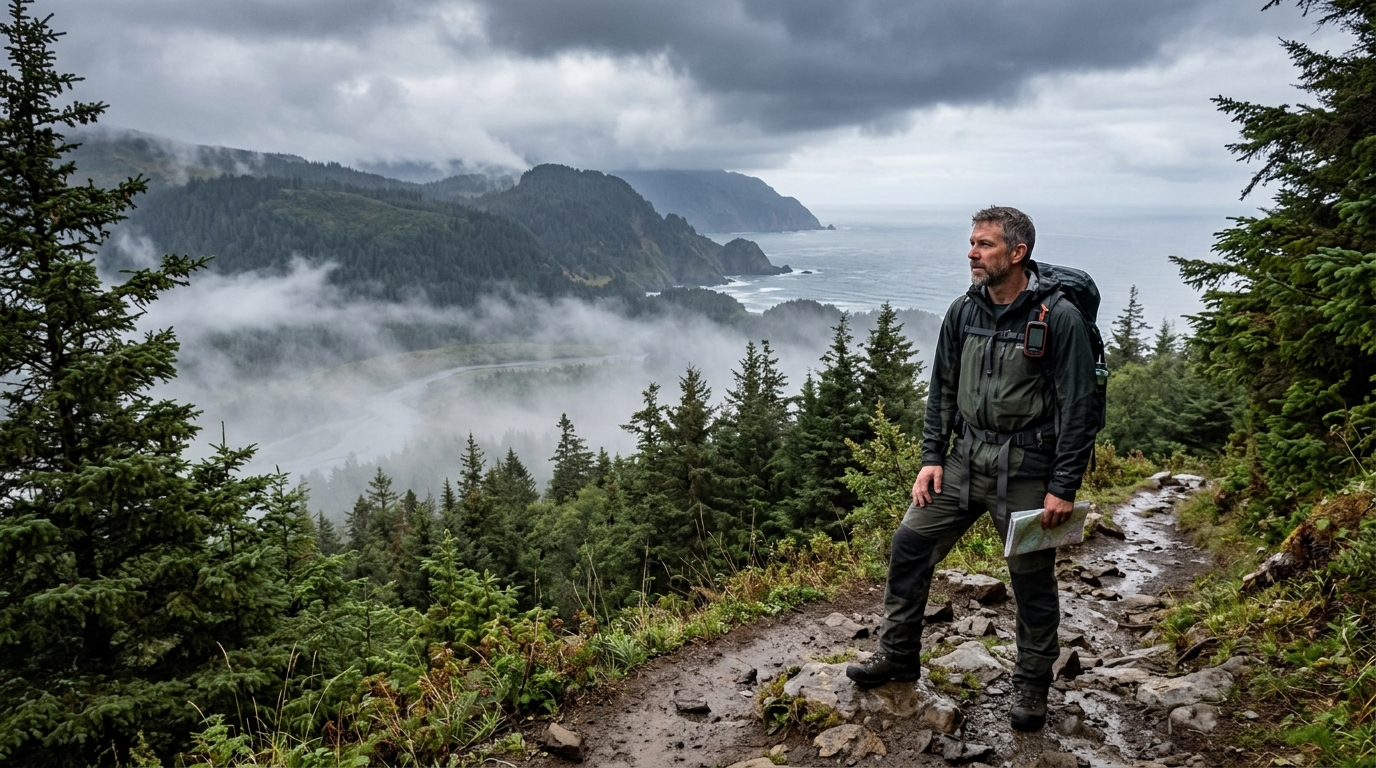
Weather around Larsen Bay can change within a single afternoon. Fog rolls in off the water, wind picks up on exposed ridges, and rain showers pass through even on days that started clear. Layered clothing and a reliable rain shell aren’t optional extras here, they’re basic equipment.
Underfoot, expect a mix of conditions depending on elevation and season. Lower elevations tend to be muddy and root-tangled, especially after rain, while higher terrain opens up into tundra that’s easier walking but exposed to wind. Streams and creek crossings are common, and water levels can rise quickly after heavy rain, so it pays to check conditions before committing to a longer route.
Seasonal Timing
Our lodge operates from mid-May through mid-September, and hiking conditions shift noticeably across that window. Late May and June often bring cooler temperatures and lingering snow at higher elevations, while July and August offer the most stable footing and the widest window for longer routes. By September, days shorten and weather turns more unpredictable, which is worth factoring in if you’re planning a full day on the trail.
Wildlife You May Encounter Along the Trail
Kodiak Island hiking almost always comes with wildlife sightings, and that’s part of what makes it memorable. Bald eagles are a near-constant presence overhead, and deer and fox sightings are common on lower trails. The animal most hikers want to know about, understandably, is the Kodiak brown bear.
Kodiak is home to one of the densest populations of brown bears anywhere in the world, and trails near salmon streams or berry patches are places where encounters are more likely, especially in mid to late summer. We cover what to expect when encountering Kodiak brown bears in more detail elsewhere, but the short version is this: stay alert, make noise as you move through thick brush, and never hike alone in bear country without knowing the basics of bear safety. Guests who want a closer, safer look at these animals often join one of our guided bear viewing trips instead of hoping for a chance sighting on foot.
What You’ll See on the Ground
Kodiak’s geology is part of what makes the hiking here interesting even when the wildlife stays hidden. The island sits on a mix of sedimentary and volcanic rock, and hikers regularly notice quartz veins, weathered graywacke, and in some spots, a visible ash layer left over from the 1912 Katmai eruption. If you’re curious about what you’re walking over, we put together a breakdown of the rocks and minerals visible along Kodiak hiking trails that’s worth a look before you head out.
Coastal sections often reveal tide pools and beach rock formations at low tide, which adds another layer to a hike that starts near the water and climbs inland.
Gear and Preparation Basics
Kodiak hiking rewards preparation more than it rewards fitness alone. A few basics make a real difference in comfort and safety:
- Waterproof boots with solid ankle support for uneven, often muddy terrain
- A rain shell and insulating layer, even on days that start sunny
- Bear awareness knowledge and a plan for hiking in groups where possible
- A map or GPS reference, since cell coverage is limited or nonexistent on most trails
- Extra time built into your schedule, since weather and terrain can slow progress
None of this is meant to discourage anyone. It’s meant to set expectations so that your first Kodiak hike feels like an adventure instead of an ordeal.
Choosing the Right Trail for Your Experience
Not every trail around Larsen Bay demands the same level of skill or stamina. Some routes are short, scenic walks suited to guests who want fresh air and a good view without a major commitment. Others climb steadily into alpine terrain and are better suited to experienced hikers with a full day to spend. We’ve laid out options for different skill levels in our guide to the best hiking trails on Kodiak Island for every skill level, which is a useful starting point when you’re planning your time with us.
Matching the trail to your experience level is the single biggest factor in whether a Kodiak hike feels rewarding or overwhelming, so it’s worth spending a few minutes on this before you set out.
Plan Your Kodiak Adventure With Us
Hiking is just one part of what makes a stay at Kodiak Island Resort memorable. Guests often pair a day on the trails with our guided bear viewing trips, wildlife viewing outings, or a kayaking excursion along the coastline near Larsen Bay, all of which give you a closer, safer look at the terrain and animals that make this island special. If you’re planning a trip and want help figuring out which hikes and adventures fit your goals and fitness level, reach out to us and we’ll help you build an itinerary around it.