
When you step off the plane in Larsen Bay, you’re landing in a place people have called home for over 7,000 years. Understanding alutiiq culture kodiak island traditions gives your fishing trip a deeper layer, connecting the halibut grounds and salmon streams you’ll fish to a way of life that shaped this coastline long before anyone called it Alaska.
Who Are the Alutiiq People?
The Alutiiq (also spelled Sugpiaq) are the Indigenous people of the Kodiak Archipelago, the Alaska Peninsula, and Prince William Sound. On Kodiak Island specifically, Alutiiq communities built their lives around the sea, developing skydiving skill sets in kayaking, harpoon hunting, and salmon harvesting that let them thrive in one of the most productive marine environments on earth. Villages like Larsen Bay grew up around reliable salmon runs and sheltered anchorages, the same features that make this coastline valuable to fishermen today.
Subsistence Living and the Rhythm of the Seasons
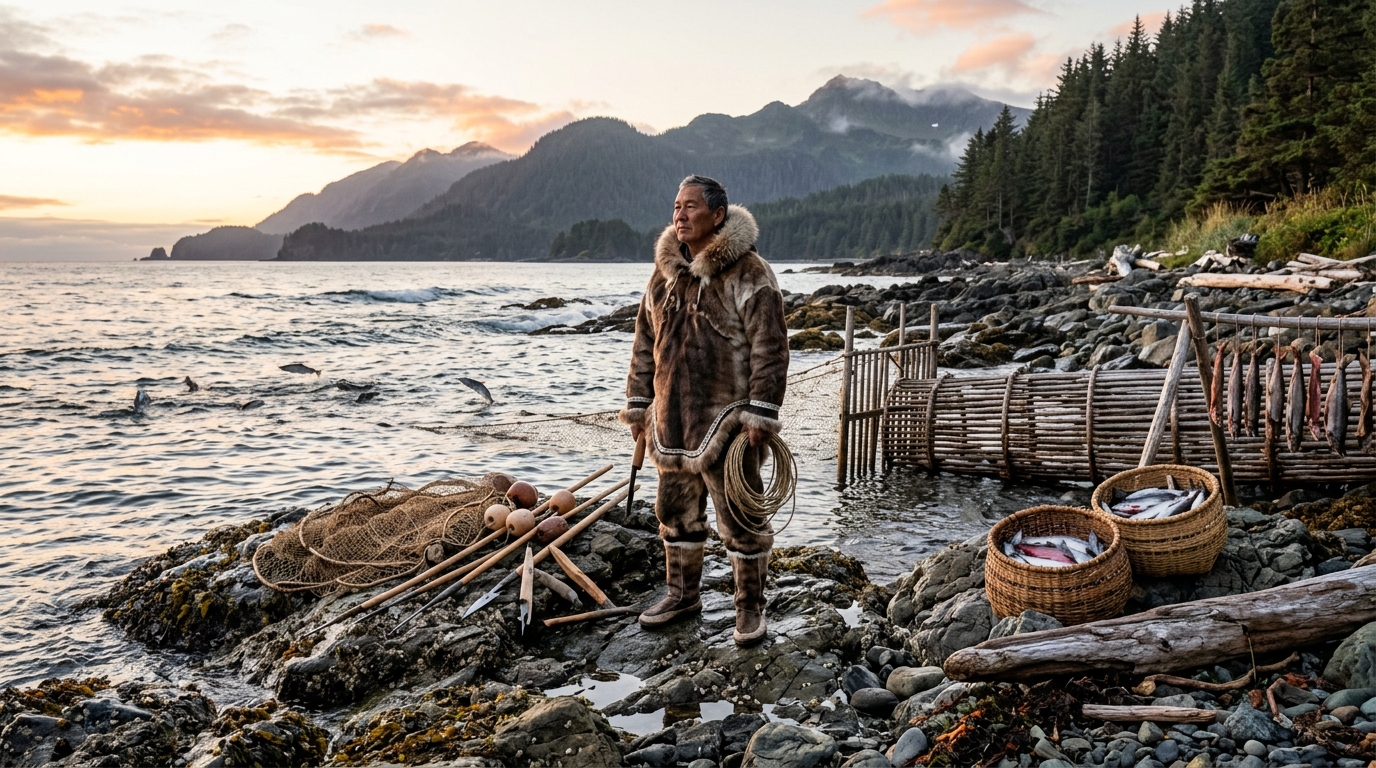
Alutiiq life has always followed the salmon, the halibut, and the sea mammals that pass through these waters on a predictable seasonal cycle. Summer meant intensive fishing and food preservation for the winter ahead, while fall and winter brought hunting, tool-making, and storytelling indoors. That seasonal rhythm still echoes in how Kodiak’s fishing seasons run today, and it’s part of why our own charter season lines up with the months when salmon, halibut, and lingcod are most active in local waters.
Traditional Fishing Methods
Long before rod and reel, Alutiiq fishermen used woven nets, bone hooks, and finely built kayaks called qayaqs to work these same bays and channels. They read tides, currents, and fish behavior with a precision built from generations of direct observation, knowledge that in many ways still informs how local guides think about where and when fish are biting.
Food Preservation and Community
Smoking and drying salmon wasn’t just practical, it was a community event that brought families together each summer. Some of that tradition survives in how Kodiak communities, including Larsen Bay, still process and share their catch today.
Larsen Bay’s Alutiiq Roots
Larsen Bay itself sits on ground with deep Alutiiq history, and the village that exists here today grew directly out of earlier Native settlements along this same protected bay. If you want the fuller backstory, our article on the native history of Kodiak Island and Larsen Bay walks through how this specific place fits into the broader story of Alutiiq settlement on the island.
The bay’s location made it a natural gathering point, with salmon streams feeding into the bay and sheltered water protecting boats from the open Gulf of Alaska. Those same qualities are exactly what make Larsen Bay such a productive base for our guided charters today, connecting past and present through a shared reliance on the same resource.
Traditions That Still Shape Daily Life
Alutiiq culture on Kodiak Island isn’t a museum piece. It shows up in ongoing efforts to keep language, dance, and craft traditions alive, and in how many island families still fish and hunt as part of daily life rather than as a hobby. A few examples worth knowing before your visit:
- The Alutiiq language, once endangered, is being actively taught and revived through community programs across the archipelago.
- Traditional dance and drumming are performed at community gatherings and cultural events on the island.
- Skin sewing, basketry, and mask-making remain practiced art forms passed down through Alutiiq families.
- Subsistence fishing and hunting rights remain central to how many Kodiak Island communities sustain themselves.
None of this is separate from the landscape you’ll experience on a fishing trip or a wildlife viewing excursion. It’s woven into the same waters, hillsides, and weather patterns that define a week at the lodge.
How History Reshaped the Land You’ll See
Alutiiq communities on Kodiak Island have weathered enormous change, from Russian contact and fur trading through the mid-20th century. If you’re curious about that longer arc, we’ve covered it in our piece on the history behind the waters you’ll fish in, which traces the shift from ancient Alutiiq villages to the fishing frontier the island is known for now.
One event in particular reshaped the physical landscape in ways still visible today. The 1964 Good Friday earthquake and the tsunami that followed permanently altered the coastline around Larsen Bay and other villages, and our article on how the 1964 earthquake changed Kodiak Island’s coastline and villages explains what happened and how communities rebuilt. Knowing that history adds real context when you’re looking out over the bay from the lodge.
Experiencing Alutiiq Culture During Your Visit
You don’t need a dedicated cultural tour to notice Alutiiq influence during your stay. It’s present in the place names, the fishing patterns, and the way local guides talk about reading the water. Guests who take time for our hiking adventures or kayaking excursions often get the clearest sense of it, moving through the same terrain and waterways that shaped Alutiiq life for thousands of years before recreational travel existed here.
Wildlife viewing and bear viewing trips also connect directly to this heritage, since the relationship between Alutiiq communities and Kodiak’s brown bears, salmon runs, and marine mammals goes back generations. Watching a bear work a salmon stream or spotting whales offshore gives you a small window into the same natural rhythms that have sustained this island’s people for millennia.
Fish and Explore the Waters That Shaped This Island
A trip to Kodiak Island Resort puts you right in the middle of this history, fishing the same productive waters and walking the same shoreline that Alutiiq communities have relied on for generations. Whether you’re here for halibut and salmon charters, a bear viewing trip, or a day of kayaking along the coast, we can build a personalized itinerary around what interests you most. Get in touch with us to start planning a trip that combines great fishing with a real sense of the place you’re visiting.