
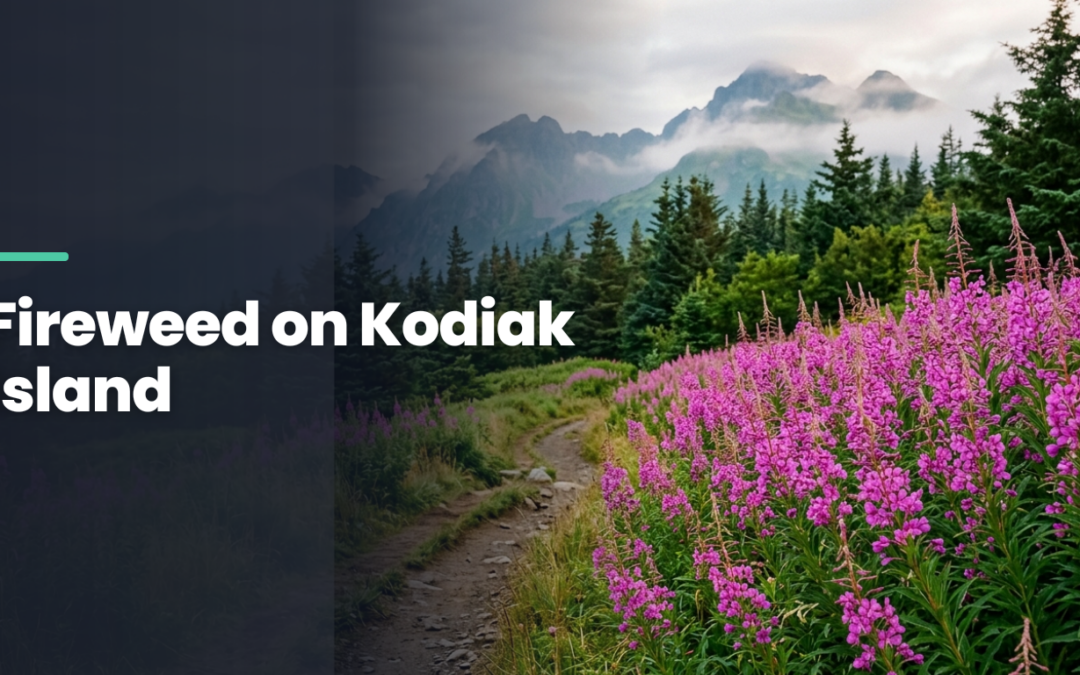
If you’ve walked a trail near Larsen Bay in July, you’ve probably noticed tall pink spires lining the path, the forest edge, and the gravel bars along the shore. That’s fireweed alaska visitors ask about more than almost any other plant, and for good reason. It’s the state’s most recognizable wildflower, and Kodiak Island has plenty of it.
This guide covers what fireweed looks like, when it blooms, and where our guests tend to see the best stands while hiking or paddling around the lodge.
What Fireweed Looks Like
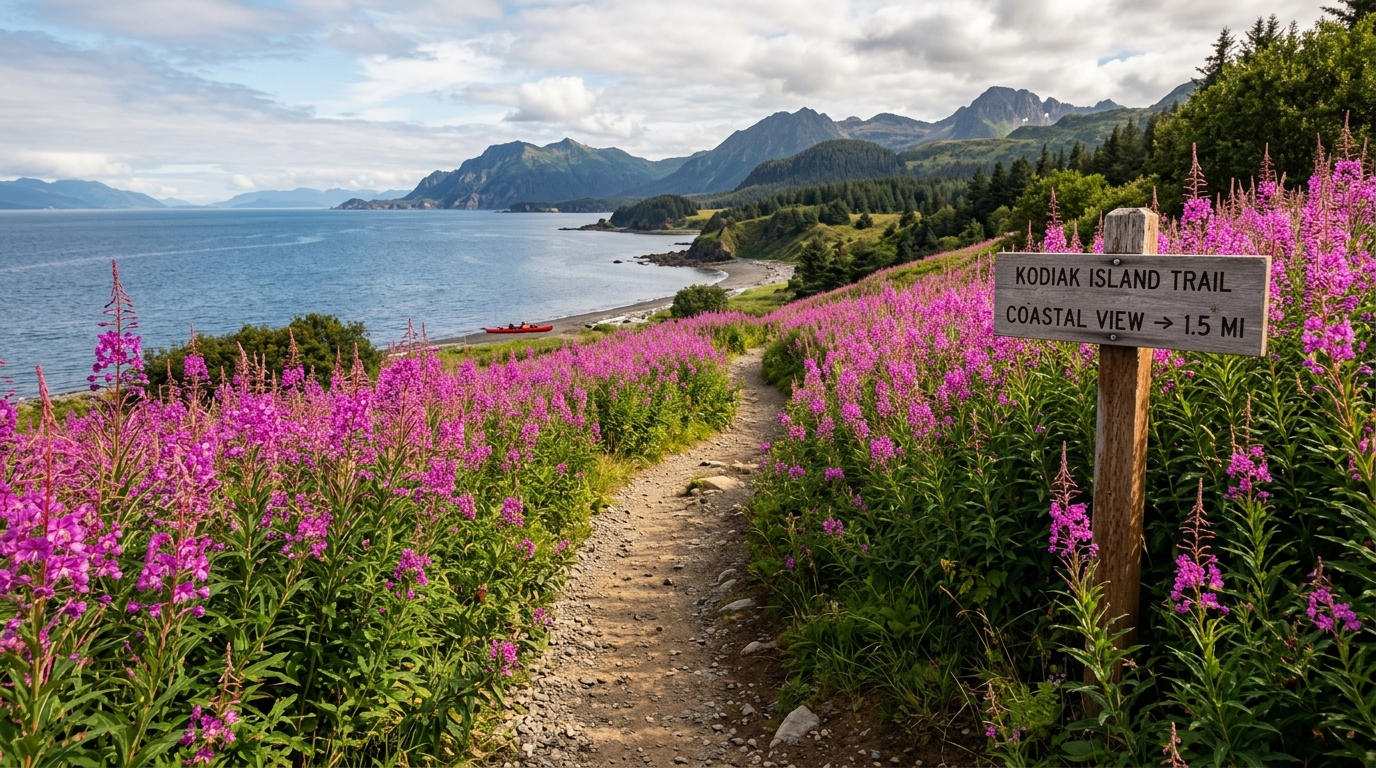
Fireweed grows in tall, leafy stalks that can reach several feet high, topped with spikes of bright pink to magenta flowers. The blossoms open from the bottom of the stalk upward over the course of the summer, so a single plant can show open flowers near the base and tight buds near the top at the same time.
It grows in dense colonies rather than as scattered individual plants, which is why a hillside or roadside can turn almost entirely pink when it’s in full bloom. You’ll find it in open, sunny spots rather than deep forest, since it thrives in disturbed ground, clearings, and areas that get good light.
How to Tell It Apart From Other Kodiak Wildflowers
Fireweed is taller and more upright than most of the other wildflowers you’ll see on the island, including the lupine that blooms earlier in the season. Lupine grows in shorter, bushier clusters with blue-purple flower spikes, while fireweed stands taller and leaner with that distinct magenta color. If you want a fuller picture of how the two overlap and when each one peaks, our article on when wildflowers like fireweed peak by month breaks down the bloom calendar in more detail.
When Fireweed Blooms on Kodiak Island
Fireweed typically starts showing color in late June and builds through July, with many stands hitting peak bloom in mid to late July. By August, the lower flowers on each stalk have gone to seed while the top buds are still opening, giving the plant a slightly different look as the season winds down.
Since our season runs mid-May through mid-September, most guests who visit in July and into early August will catch fireweed at or near its best. Guests arriving in May or early June will see other wildflowers first, with fireweed coming into its own a bit later in the summer.
Where to See Fireweed Around Larsen Bay
Fireweed doesn’t require any special trip to find. It grows along the roadside near the lodge, in clearings, and especially along the edges of hiking trails where sunlight reaches the ground.
On the Trails
Several of the hiking routes accessible from the lodge pass through open hillsides and clearings where fireweed grows thick in midsummer. These same trails offer a good look at the island’s broader plant life, including the spruce forest that fireweed often borders. For a rundown of trail options, terrain, and how to time a hike with your fishing schedule, take a look at the hiking trails reachable from Larsen Bay, several of which pass right through prime fireweed country in July.
By Kayak
Paddling the shoreline around Larsen Bay gives you a different vantage point on the same plant. Fireweed often grows right down to the high tide line along gravel beaches and rocky points, so a kayaking excursion in midsummer puts you close to dense patches without any uphill walking involved. It’s a good option for guests who want to see the color without committing to a longer hike.
Fireweed in the Bigger Picture of Kodiak’s Plant Life
Fireweed is easy to spot and easy to enjoy, but it’s worth knowing it in context with the rest of what grows on the island. Kodiak’s forested areas, dominated by Sitka spruce, create the shaded ground that fireweed avoids, which is part of why you see it concentrated in clearings and along trail edges rather than under the canopy. If you’re curious about the forest itself, our guide to what kind of forest grows on Kodiak Island covers the tree species and terrain that frame all those open, sunny patches where fireweed thrives.
It’s also worth knowing what to leave alone. Not every berry or leafy plant along the trail is safe to pick or eat, and a few common ones on the island can cause real problems if mistaken for something edible. Our rundown of poisonous plants and berries to avoid on Kodiak Island is worth a read before you go off exploring on your own.
Fishing First, Fireweed on the Side
Most of our guests come for the fishing, and that’s still the heart of a trip here. Our halibut fishing charters, salmon fishing charters, and lingcod, rockfish, and Pacific cod trips are guided by people who know the nutrient-rich waters around Kodiak and build each day around what our guests actually want to catch. The fireweed and the rest of the wildflower season are simply part of what you’ll see on the way to and from the water, whether that’s a hike before your charter or a kayaking excursion on a slower afternoon.
If you’re planning a summer trip and want to fit a hike or paddle around your fishing days, or you’re curious about bear viewing, wildlife viewing, or whale watching while you’re here, get in touch with us and we’ll help you put together a schedule that covers the fishing and the scenery both.