
After a morning on the water pulling up halibut and silver salmon, it’s tempting to spend the afternoon wandering Kodiak Island’s trails and picking whatever looks ripe along the way. But some of the most attractive berries and leafy plants on this island are the ones you should never put in your mouth. Knowing the poisonous plants on Kodiak Island before you head out is part of staying safe on our trails, our shoreline, and everywhere in between.
We spend our season guiding guests through the same brush and beaches we’re describing here, so this isn’t guesswork. It’s what we’ve learned from years of walking these trails around Larsen Bay.
Why Kodiak Island’s Plants Deserve Caution
Kodiak’s temperate rainforest climate produces thick, fast-growing vegetation from mid-May through mid-September, the same stretch when our lodge is open and guests are hiking between charters. That lush growth includes berries and plants that mimic edible look-alikes closely enough to fool an inexperienced forager. A little caution goes a long way when you’re miles from the nearest clinic.
The Overlap Problem
Several toxic plants on the island grow in the same clearings, streambanks, and forest edges as the wild berries guests love to snack on. If you’re not confident telling them apart, it’s worth reviewing our guide to wild berries you can forage and spot on the trails before you go picking anything on your own.
Poisonous Plants on Kodiak Island to Recognize
These are the plants we point out most often to guests during hikes and kayak landings.
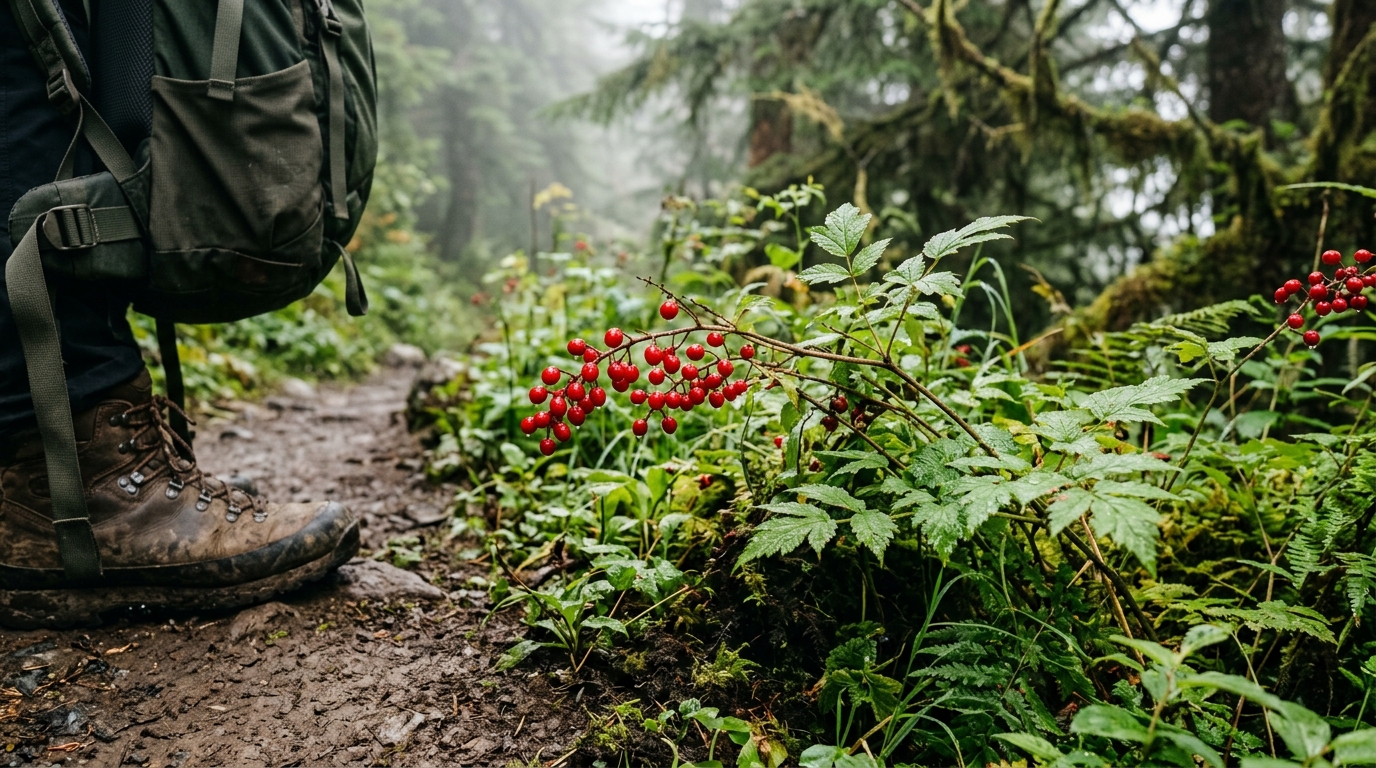
Baneberry
Baneberry produces small white or red berries on a single stalk, often in a tight cluster that looks almost too perfect. Every part of the plant is toxic, and the berries carry the highest concentration. It tends to grow in the shaded understory beneath Sitka spruce, the same kind of habitat we describe in our piece on what trees and forests look like on Kodiak.
Water Hemlock
Water hemlock is one of the most dangerous plants you’ll encounter near streams, wet meadows, and the edges of salmon-bearing creeks. It has clusters of small white flowers and a hollow, purple-streaked stem. Even a small amount ingested can cause serious harm, so we treat it as a strict look-but-don’t-touch plant on every hike.
False Hellebore
False hellebore grows tall, often waist-high, with broad ribbed leaves that unfurl early in the season. It’s easy to mistake for a wild vegetable when it first emerges, but the entire plant is toxic if eaten. You’ll often spot it in the same open slopes where wildflowers bloom, which is one more reason to be selective about what you touch during peak bloom.
Devil’s Club
Devil’s club isn’t something you’d eat, but it deserves a mention because the spines covering its stems and leaves can cause painful, slow-healing wounds. It grows in dense stands along many of our forest trails, and brushing against it is the more common hazard compared to any actual poisoning.
Berries That Look Edible but Aren’t
Kodiak Island has genuinely excellent wild berries, but a few red flags are worth memorizing.
- Berries growing in pairs directly opposite each other on the stem, rather than singly or in clusters, are a common warning sign among toxic species here.
- Milky or discolored sap when a stem is broken is another indicator that a plant is best left alone.
- Any berry attached to a plant with umbrella-shaped flower clusters, like water hemlock, should be skipped entirely no matter how ripe it looks.
If you want a clear picture of what’s actually safe to pick, our dedicated guide to Kodiak’s wild berries covers the varieties we regularly see near camp and along the shoreline.
Timing Your Hikes Around Peak Plant Growth
Toxic plants and their edible look-alikes are most abundant and most confusing during the height of summer growth, generally through July. Knowing the best times to hike Kodiak Island’s trails can help you plan around denser understory growth and choose routes where visibility and footing are better. Early and late season hikes tend to have less overgrowth to navigate, though the tradeoff is shorter daylight in September.
Wildflower Season Adds Another Layer
Late spring and early summer also bring Kodiak’s wildflower bloom, which draws a lot of attention on the trails and understandably so. It’s worth checking our guide to the best time to see Kodiak Island’s wildflowers and greenery in bloom so you know what’s blooming alongside the plants worth avoiding.
Practical Tips for Staying Safe on the Trail
- Never eat a berry or plant unless you can positively identify it, and when in doubt, leave it.
- Stick to marked trails and established routes, especially in thick brush where plants overlap.
- Bring a guide or someone familiar with the area on longer hikes away from camp.
- Keep kids and pets close in areas with dense understory growth.
- Wash hands after handling unfamiliar plants, even ones you don’t intend to eat.
Fish the Waters, Let Us Handle the Rest
Our guides know this island’s trails and shoreline as well as we know the halibut grounds and salmon runs we fish every season. Whether you’re joining us for a halibut or salmon charter, a lingcod and rockfish trip, or one of our guided hikes and kayaking excursions, we’ll point out what’s safe to explore and what’s better left alone. Get in touch with us to plan a trip that pairs great fishing with a little wilderness education on the side.