

Between fishing charters, a lot of our guests find themselves walking the beaches near Larsen Bay with a little time on their hands and nowhere they need to be. That downtime is where Kodiak Island beachcombing rocks become the real find of the trip. The gravel bars and cobble beaches here hold agates, jasper, and sea glass that most visitors never think to look for until someone points it out.
This guide covers what you can realistically expect to spot, where to look, and how to fit a little beach time around your fishing schedule without cutting into the hours that matter most on the water.
Why Kodiak’s Beaches Are Good for Rock Hunting
Kodiak Island sits on a mix of volcanic and sedimentary rock that has been ground down and sorted by wave action for thousands of years. That constant tumbling is what turns rough stone into the smooth, rounded material you find scattered across the beaches. Add in decades of maritime traffic through Larsen Bay and the surrounding coves, and you also get a steady trickle of sea glass mixed in with the natural stone.
The beaches change with every tide and storm, so a stretch of gravel that looked picked over last week can turn up a fresh batch of agates after a good blow. This is part of why locals and repeat guests never treat beachcombing as a one-time activity. Each low tide is a slightly different beach.
What You Can Actually Find
Agates
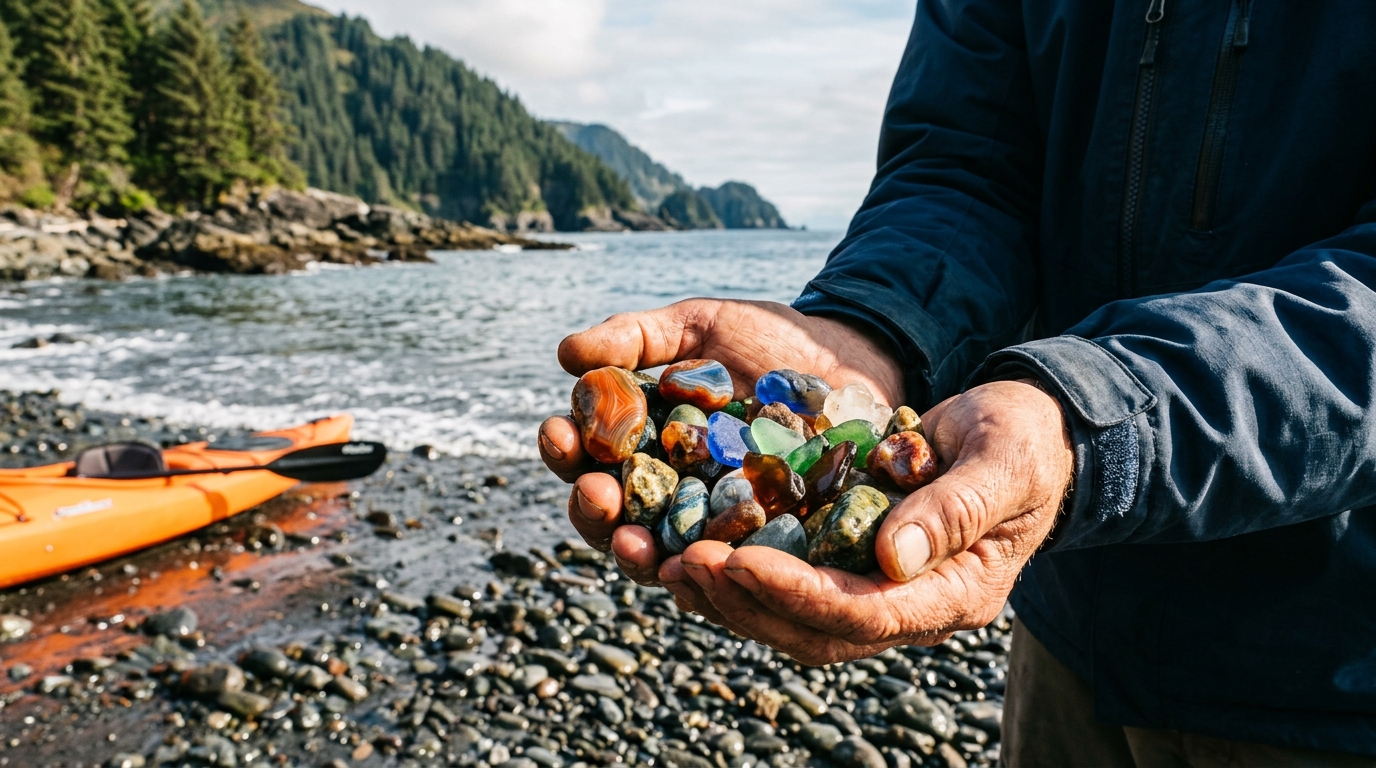
Agates on Kodiak tend to show up as small, translucent stones with a slightly waxy look when wet. They are often gray, white, or a pale amber color, and the easiest way to spot them is to look for stones that seem to glow a little when the sun hits them at a low angle. They are not huge here, so patience matters more than covering ground fast.
Jasper
Jasper is more common than agate on many of the local beaches and easier to identify once you know what to look for. It usually appears as a solid, opaque stone in reds, browns, or rusty oranges, sometimes banded with darker lines. Unlike agate, jasper does not need direct sun to stand out. Its color alone tends to separate it from the gray basalt and sandstone around it.
Sea Glass
Sea glass shows up in smaller quantities but is often the most exciting find for guests who have never collected it before. Green and brown pieces are the most common, worn smooth from years of tumbling in the surf. Blue, white, or lavender pieces are rarer and worth a slower walk if you spot even one, since another may be nearby.
Best Spots Around Larsen Bay for Beachcombing
The gravel beaches closest to the lodge are a reasonable starting point, especially right after a tide change when new material gets pushed up onto the shore. Guests who kayak the shoreline often notice small coves and pocket beaches that are hard to reach on foot but hold material that has not been picked through as often.
If you plan to walk further down the coast to explore, it helps to know what to expect when hiking Kodiak’s shoreline before you set out, since the terrain and weather can shift quickly even on a short walk. A little preparation goes a long way when you are more focused on scanning the ground than watching the trail.
Tips for a Productive Beachcombing Session
- Go out during or right after low tide, when more beach is exposed and material has had less time to get buried again.
- Look along the high tide line first, where wave action naturally deposits smaller stones and glass.
- Move slowly and scan a narrow strip rather than covering long distances quickly.
- Wet stones show their true color and pattern far better than dry ones, so a quick splash of water can help you decide what is worth keeping.
- Bring a small bag or container since pockets fill up faster than people expect.
Beachcombing as Part of a Bigger Kodiak Story
The stones and glass along these beaches are only part of what makes the shoreline worth exploring. If you want a deeper look at the geology behind what you are finding, our companion piece on rocks, gems, and minerals found around Kodiak Island goes into more detail on the specific formations behind the agates and jasper you might pick up.
The land and water here also carry a long human history that shapes how the local community still relates to the coastline today. Learning a bit about the Alutiiq cultural heritage and history of Kodiak Island gives extra context to the beaches, bays, and waters you are exploring, whether you are fishing, kayaking, or just walking the shore.
Building Beach Time Into Your Kodiak Trip
Most of our guests come to Larsen Bay for the halibut, salmon, lingcod, rockfish, and Pacific cod fishing, and rightly so given the waters here. But the same stretch of coastline that makes for great fishing also makes for a rewarding walk once the lines are out of the water for the day. A kayaking excursion along the shore or a quiet hour of beachcombing between charters rounds out the trip in a way that fishing alone does not always cover.
If you are planning a stay with us and want to build in time for beachcombing, kayaking, or a short hike along the coast around your fishing charters, we are happy to help you work it into the schedule. Reach out to our team and we can talk through what fits best alongside your halibut, salmon, or bottomfish trips during your visit to Kodiak Island Resort.