
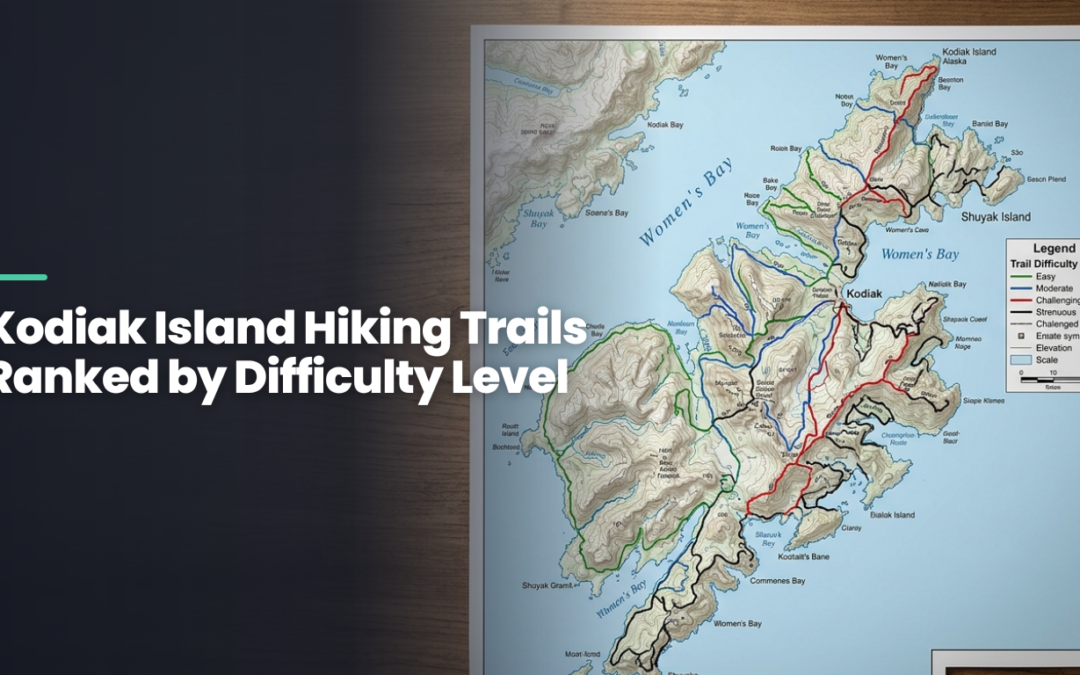
Picking the wrong trail on Kodiak Island can turn a planned afternoon stroll into a four-hour slog through alder thickets, or leave an experienced hiker bored on a path that barely gets the heart rate up. Matching Kodiak Island hiking trails to your actual fitness level and the time you have available makes the difference between a trip highlight and a wasted day. We have walked most of these trails ourselves, guided guests on them, and watched weather and terrain change plans more times than we can count, so here is our honest breakdown by difficulty.
Kodiak Island hiking trails difficulty varies a lot more than the mileage alone suggests. A short trail here can involve steep elevation gain, loose rock, or thick brush that slows you down far more than a longer, flatter route elsewhere. Before you commit to a plan, it helps to understand what each category actually feels like on the ground.
Easy Trails for Beginners and Families
Easy trails around Kodiak Island are mostly flat or gently rolling, well-defined, and short enough to fit into a half-day without cutting into fishing or rest time. These are good choices if you are breaking in new boots, traveling with kids, or simply want a walk after a full morning on the water.
- Short coastal walks near Larsen Bay with minimal elevation change and solid footing
- Trails through lower meadow and shoreline areas where you can see wildflowers and plants on the trails at their peak in early to mid summer
- Loop paths that return to a trailhead quickly if weather turns, which it often does on the island
These routes are also a smart option on a travel day, since they do not demand much recovery time before an early charter the next morning.
Moderate Trails for Hikers With Some Experience
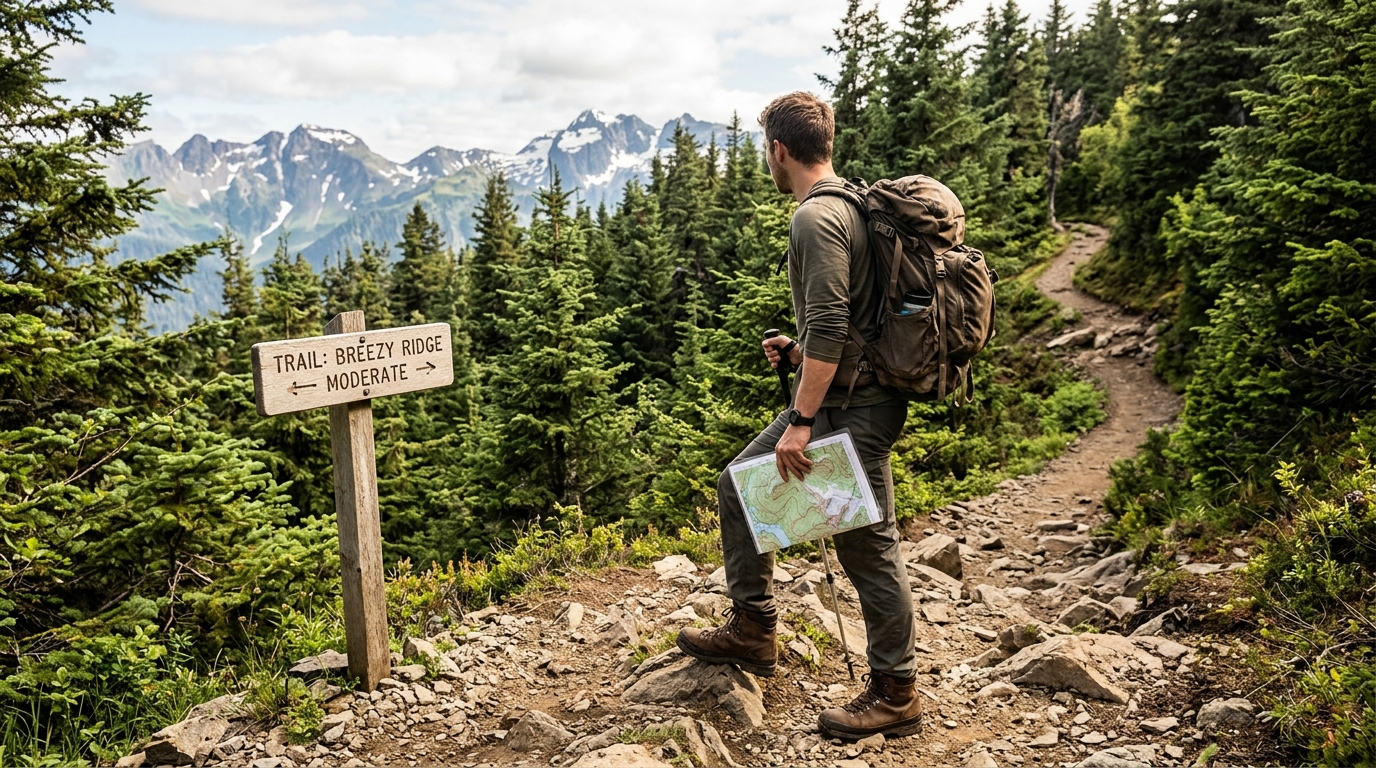
Moderate trails step up the difficulty with longer distances, some sustained climbing, and terrain that shifts between forest floor, open tundra, and rockier stretches. You do not need technical hiking experience, but a reasonable fitness base and sturdy waterproof boots make a real difference.
What to Expect
Expect three to five hours round trip on most of these routes, with elevation gain that gets your heart working without requiring scrambling or ropes. Trail conditions can change quickly after rain, since Kodiak’s volcanic soil holds water and turns slick fast.
Planning Around Your Trip
Moderate hikes fit well on a day when you are not fishing until the afternoon, or as a full-day outing if you pair the hike with wildlife viewing along the way. We often see guests combine one of these hikes with time spent glassing hillsides for Kodiak brown bears from a safe distance before heading back down.
Strenuous Trails for Experienced, Fit Hikers
Strenuous trails on Kodiak Island are a different animal entirely. These routes involve significant elevation gain, exposed ridgelines, and terrain that can include scree, dense brush, or stream crossings depending on recent weather. They are rewarding for hikers who come prepared, but they are not the place to test your limits for the first time.
- Full-day commitments, often six hours or more round trip
- Sections with loose footing or steep grades that demand trekking poles and good ankle support
- Limited cell coverage and long stretches without other hikers, so letting someone know your route and return time matters
If you are set on tackling one of these, plan it for a day without an early charter the following morning. Recovery time matters more on these trails than on anything in the easy or moderate categories.
Matching a Trail to Your Trip Schedule
Most of our guests are here primarily to fish, so hiking usually fills a half-day or a day between charters rather than anchoring the whole trip. Think about what you want out of the day before you pick a trail length.
- If you want a short break to stretch your legs after a morning on the water, choose an easy trail close to the lodge
- If you want a dedicated outdoor day with a mix of terrain and good odds of wildlife sightings, a moderate trail is usually the sweet spot
- If you are an experienced hiker looking for a real physical challenge and can give up a full day, a strenuous route delivers that
For a broader sense of what is available beyond difficulty level alone, our rundown of how Kodiak Island hikes are categorized covers coastal walks, forest routes, and alpine terrain in more detail.
What to Bring Regardless of Difficulty
Weather on Kodiak Island shifts fast, and even an easy trail can turn uncomfortable if you are not dressed for it. A few basics apply across every difficulty level.
- Waterproof boots with good ankle support, even on flatter trails
- Layered clothing, since temperatures and wind can change within an hour
- Bear awareness basics, since you are in bear country on nearly every trail on the island
- A charged phone or GPS device, even though coverage is limited in many areas
Knowing where to see Kodiak brown bears safely ahead of time also helps you understand what to do if you encounter one on a trail rather than on a guided viewing trip.
Trails Closest to the Lodge
If you are staying with us in Larsen Bay and want to minimize travel time, several of the trails we have mentioned are within easy reach of the lodge itself. Our detailed guide to the trails closest to our lodge breaks down distances and starting points so you can plan a hike without losing a big chunk of your day to transit.
Let Us Help You Plan Your Days on the Trail
Whether you want a short walk between charters or a full day testing a strenuous route, we can help you figure out what fits your schedule and fitness level. Our guides know this terrain firsthand and can also build hiking around your fishing plans, whether that means halibut and salmon charters in the morning or a dedicated day for hiking, bear viewing, and wildlife viewing. Get in touch with us and we will help you put together a trip that balances time on the water with time on the trail.