

Fishing charters out of Larsen Bay fill most of a guest’s day, but the hours between trips matter too. When the boats are in and the tide is wrong, we send guests up into the hills, and that’s when Kodiak Island wildflowers really earn their reputation. The island’s wet climate and volcanic soil produce a trailside show that changes almost weekly through the season.
This guide covers what you’ll actually see on the ground, not a botanist’s full inventory, so you know what you’re looking at and when to expect it.
Kodiak Island Wildflowers You’ll Spot on Most Trails
Kodiak’s wildflowers tend to cluster by elevation and moisture, so the same hike can show you three or four distinct plant communities in a couple of miles. Here are the ones our guides point out most often.
Fireweed
Fireweed is the plant most guests remember, tall spikes of pink-magenta blooms that line roadsides, old clearings, and open meadows from July into August. It’s such a defining part of the island’s summer landscape that we wrote a separate piece on where to find fireweed at its best on Kodiak, including the window when it’s blooming heaviest.
Lupine and Wild Geranium
Nootka lupine shows up in dense purple-blue clusters along drier slopes and gravel bars, usually a few weeks ahead of fireweed. Wild geranium, with its pale pink petals and deeply lobed leaves, fills in the understory on rainforest trails and muskeg edges. Both are easy to photograph since they tend to grow in thick patches rather than single stems.
Chocolate Lily and Yarrow
Chocolate lily is one of the odder finds, a nodding brownish-purple flower that grows low to the ground in meadows and open slopes. Yarrow, with its flat white flower clusters, shows up almost everywhere disturbed ground exists, from trailheads to old homestead sites.
Beach Pea
Along the shoreline routes, beach pea sprawls across the gravel just above the tideline with purple-pink flowers that look a bit like a garden sweet pea. It’s one of the first plants to green up in spring and one of the last holding color into fall.
Shrubs and Berries Along the Trail
Wildflowers get most of the attention, but the shrub layer is just as much a part of Kodiak’s trail character, and it’s worth knowing which berries are food and which aren’t.
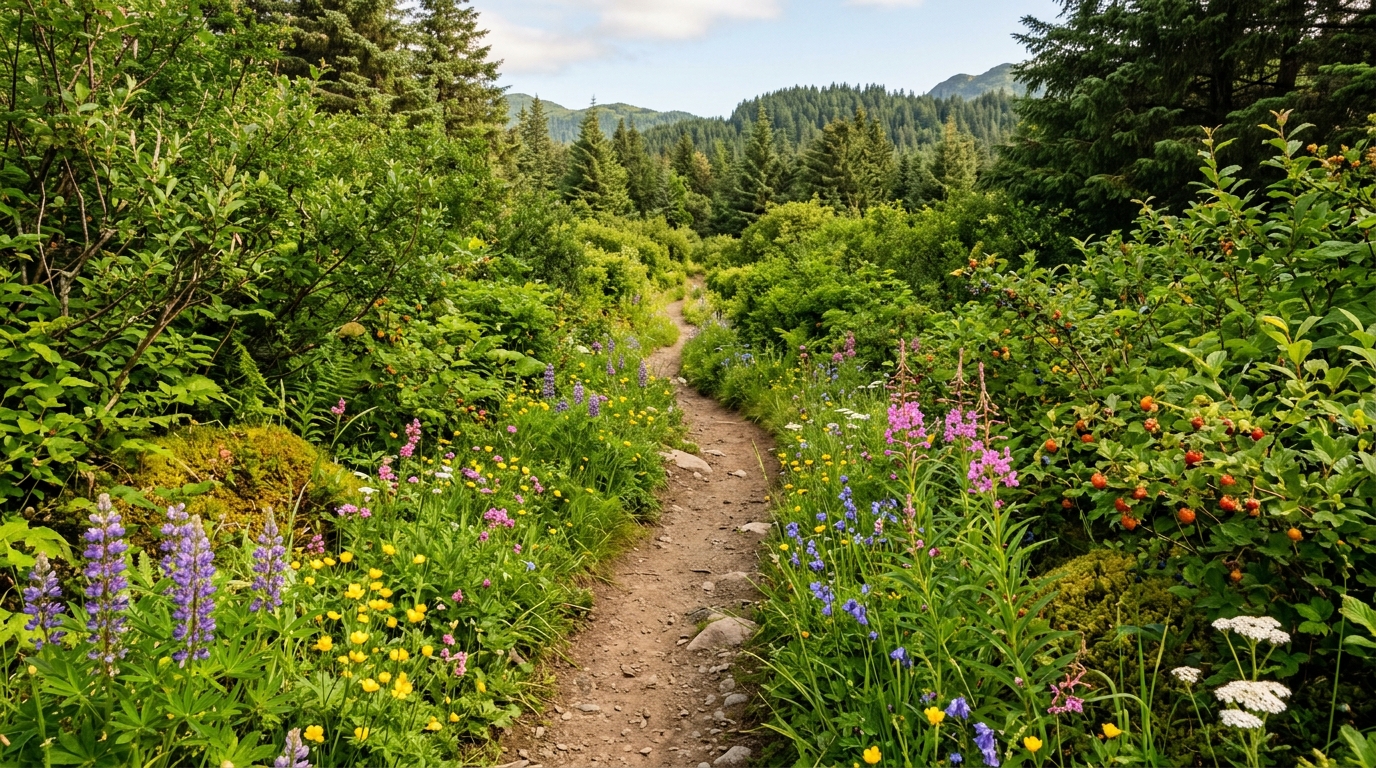
- Salmonberry, with its orange-to-red berries, ripens early and lines many of the lower-elevation trails near Larsen Bay.
- Blueberry bushes carpet the alpine tundra and muskeg by late summer, drawing both hikers and bears to the same slopes.
- Devil’s club grows thick in the rainforest understory, recognizable by its large maple-like leaves and the fine spines covering the stem.
Not everything that looks like a berry on Kodiak is safe to eat, and a few common plants can cause real skin irritation or worse if handled carelessly. We put together a detailed rundown of the poisonous plants and berries to avoid on the island, drawn from years of walking these same trails with guests.
Ground Cover and Forest Floor
Below the shrub line, Kodiak’s forest floor is its own quiet world. Thick moss blankets the ground and climbs the trunks of Sitka spruce, and lichen hangs in pale strands from lower branches in the wetter stretches of trail. Skunk cabbage pushes up its bright yellow hood in early spring in boggy low spots, often before much else has greened up.
The mix of spruce canopy, moss floor, and understory shrubs is distinct enough that we cover it on its own in our guide to the forest types found on Kodiak Island, which pairs well with this list if you’re trying to picture the whole trail environment rather than just the flowers.
When to Hike for the Best Wildflower Viewing
Kodiak’s bloom season runs roughly from late May through August, but it isn’t one long steady show. Early summer favors lower-elevation flowers like beach pea and wild geranium, while lupine and chocolate lily tend to peak in June and into early July. Fireweed and late-season yarrow carry the color into August, right as the berries start ripening behind them.
Because the resort operates from mid-May through mid-September, most guests catch at least one strong bloom window during their stay, though the exact timing shifts a bit year to year with weather and snowmelt.
Choosing the Right Trail for What You Want to See
Not every trail shows the same plants in the same way. Coastal routes favor beach pea and shoreline grasses, rainforest trails lean heavily into moss, devil’s club, and wild geranium, and alpine ridges open up into lupine and blueberry tundra once you clear the treeline. If you want help matching a route to what you’re hoping to photograph or simply how much elevation you want to climb, our writeup on the different types of hikes available on Kodiak breaks down the coastal, rainforest, muskeg, and alpine options in more detail.
Build a Hike Into Your Fishing Trip
Our guided hiking adventures are built around the same guest-specific approach we use for halibut and salmon charters, so we can point you toward trails that match your pace and interests, whether that means an easy shoreline walk between fishing days or a longer alpine route for the best wildflower views. Pair a hike with one of our kayaking excursions or a bear viewing trip for an even fuller picture of the island’s wilderness, and get in touch with us to work a hike into your stay at Kodiak Island Resort.