If you’re picturing endless snow-capped peaks and empty tundra when you think of Kodiak Island, the forest along our trails and shorelines might surprise you. Kodiak Island trees form dense, moss-draped stands that shelter bears, line the kayak routes we paddle, and shape nearly every hike our guests take out of Larsen Bay. Here’s what you’ll actually see once you’re out there.
The Sitka Spruce Forests That Define Kodiak Island Trees
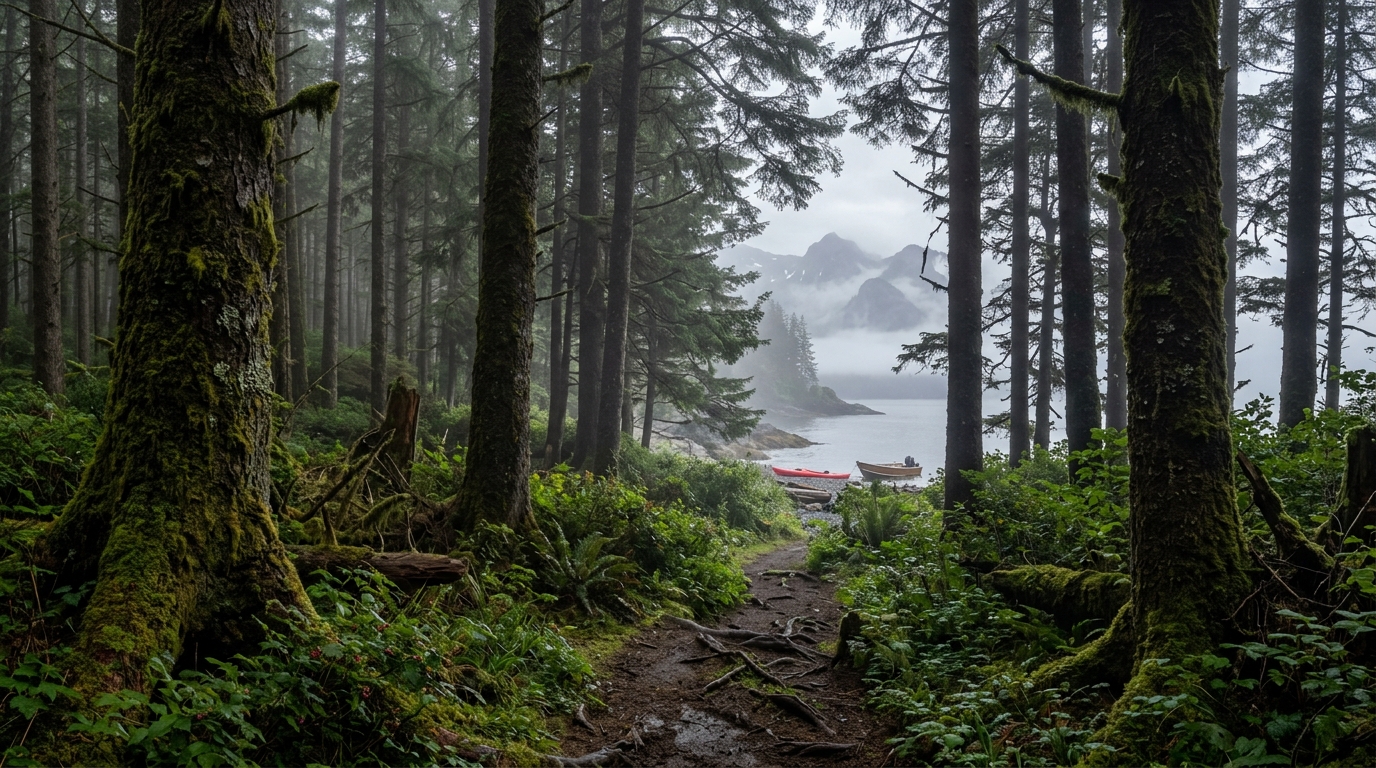
The northeastern part of Kodiak Island, where Larsen Bay sits, is covered in Sitka spruce. These trees are tall, straight-trunked conifers with short, sharp needles and thick, scaly bark, and they grow close together in stands that block out a lot of daylight even at midday.
Sitka spruce is the tree you’ll notice first on almost any hike or wildlife outing we run. It thrives in the wet, cool coastal climate here, and many of the trees along our routes are old growth, meaning they’ve been standing for generations and have the wide trunks and lichen-covered bark to show for it.
What Grows Beneath the Canopy
The understory beneath the spruce is where things get interesting. Thick carpets of moss cover fallen logs and rocks, and ferns fill in the gaps between tree roots. In the wetter, low-lying areas you’ll also find devil’s club, a spiny plant that guides point out early so guests know to avoid brushing against it.
Berry bushes are everywhere too, especially salmonberry and elderberry, which bears and other wildlife rely on heavily in late summer. If you want a closer look at the smaller plants and flowering species that fill in these forest gaps, our guide to wildflowers and plants along the trails covers what blooms and when.
Ground Cover Changes by Season
- Early summer brings out low bush cranberry blossoms and unfurling ferns.
- Mid-summer is peak berry season, when salmonberry and elderberry are heaviest.
- Late summer often shows the first yellowing in the understory as the season turns.
Where the Forest Meets the Sea
One of the more striking things about Kodiak’s coastline is how abruptly the spruce forest can end right at the water’s edge. Trees lean out over rocky beaches, roots exposed where erosion has worked at the bank, and driftwood piles up beneath the treeline after storms.
This forest-to-shoreline transition is part of what makes paddling here so memorable. Our kayaking adventures through coastal waters put you right at the base of these tree-lined bluffs, close enough to see eagles perched in the upper branches and otters working the tide line below.
From Forest to Tundra: How the Landscape Changes
Kodiak Island isn’t forested everywhere. As you move south and west across the island, the spruce stands thin out and eventually give way to open tundra and grassland, a shift tied to soil, wind exposure, and glacial history rather than anything the trees themselves are doing wrong.
This means the scenery on a given hike can change dramatically depending on which trail you’re on. Some routes stay under forest cover the entire way, while others climb out of the trees into open alpine terrain with sweeping views back down toward the water. We break down which is which in our hiking trails across Kodiak Island guide, so you can pick a route that matches the scenery you’re after.
Wildlife in the Trees and Undergrowth
The forest isn’t just backdrop. Kodiak brown bears use the tree cover for shade and shelter, and the berry-heavy understory is a major food source for them through summer and into fall. Bald eagles nest in the tallest spruce along the shoreline, and Sitka black-tailed deer move through the understory more often than most first-time visitors expect.
Guides watch these forest edges closely on bear viewing and wildlife viewing trips, since the tree line is often where animals appear and disappear from view in a matter of seconds. Knowing how the forest is structured, dense canopy here, open understory there, helps our guides put guests in position to see wildlife without disturbing it.
See Kodiak’s Forests for Yourself
The best way to understand what Kodiak Island trees and forests actually look like is to walk or paddle through them. Whether you join us for a guided hike, a kayaking trip along the tree-lined coast, or a bear and wildlife viewing outing between fishing charters for halibut, salmon, or lingcod, we’ll put you right in the middle of it. Get in touch with us at Kodiak Island Resort to build a trip that fits what you want to see.