If you’re planning a Kodiak trip around king salmon or silvers, you might be missing two runs that fill in the gaps and offer some of the most consistent action of the season. Pink salmon fishing on Kodiak Island draws less attention than the marquee species, but for anglers who want steady bites and a fish that fights hard on light tackle, pinks and sockeye deserve real consideration. Here’s how these two runs fit into the bigger picture of Kodiak’s salmon calendar and what makes them worth building a trip around.
Kodiak’s Salmon Calendar: Where Pinks and Sockeye Fit In
Kodiak Island sees five species of Pacific salmon move through its rivers and bays over the course of the season, and each one has its own window. Kings show up first, sockeye and pinks follow in the middle stretch of summer, and silvers close things out toward late summer and into fall. Understanding where pinks and sockeye sit in that sequence helps you plan a trip that lines up with what you actually want to catch.
Because the runs overlap somewhat, a well-timed trip can put you on more than one species in the same week. That overlap is part of why our guided salmon charters run throughout the season rather than around a single narrow window.
Pink Salmon Fishing on Kodiak Island: Timing and Rivers
Pink salmon, often called humpies, are typically the most abundant salmon species to move through Kodiak’s river systems each summer. They tend to show up in local rivers by early to mid-July and stay strong into August, giving anglers a solid month or more of dependable fishing. Because they arrive in large numbers, pinks are a great option for anglers who want a high volume of bites, including kids or first-timers who benefit from steady action rather than long stretches of waiting.
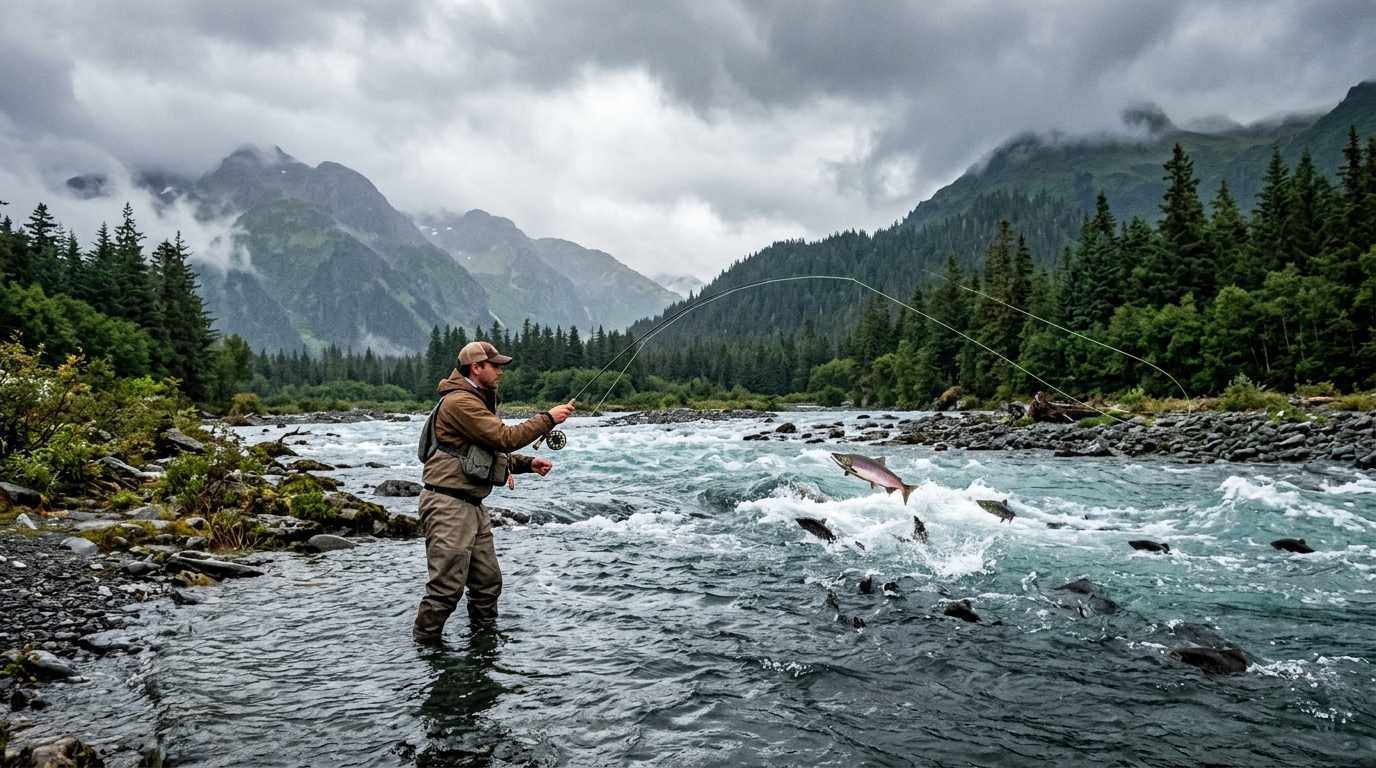
Pinks favor the same clearwater river systems that support Kodiak’s other salmon runs, and they’ll stack up in pools and slower current seams as they stage before spawning. For a closer look at which river systems around Larsen Bay tend to hold the most fish and why, our earlier piece on how Kodiak’s river systems shape salmon runs breaks down the connection between the rivers and what shows up in them.
What to Expect From a Pink Salmon Trip
- Smaller average size than kings or sockeye, generally in the three to five pound range
- Aggressive strikes on smaller spoons, spinners, and flies
- Best fished in the mid to late stages of their river run once numbers build
- A good match for anglers who want lighter tackle and fast-paced fishing
Sockeye Salmon: A Different Fish, A Different Game
Sockeye salmon run a bit earlier than pinks, typically entering Kodiak’s river systems in June and staying strong through much of July. Unlike pinks, sockeye don’t strike out of aggression as readily, since they tend to feed less once they enter freshwater. That means presentation and technique matter more, and our guides adjust methods specifically to get sockeye to commit.
What sockeye lack in aggressive strikes, they make up for in raw power once hooked. They’re known for hard, sustained runs and a fight that surprises anglers who assume a smaller fish means an easier one. Sockeye also hold in tight schools, so once you find a productive stretch of river, the action can pick up quickly.
What Makes Pinks and Sockeye Different From Kings and Silvers
Kings and silvers get most of the attention on Kodiak Island, and for good reason. Kings are the biggest salmon in Alaska’s waters, and silvers are famous for aggressive surface strikes late in the season. But pinks and sockeye offer something different, and understanding those differences helps you set realistic expectations for your trip.
Kings tend to run earlier and require different techniques and gear given their size, which we cover in more detail in our guide to king salmon run timing and where to cast. Silvers, on the other hand, run later in the summer and are known for explosive strikes, a topic we go into further in our guide to silver salmon fishing timing. Pinks and sockeye fill the middle of the calendar, and they reward anglers who want volume, technique, or both, depending on which species you target.
A Quick Comparison
- Kings: largest species, earliest run, most demanding gear and technique
- Sockeye: strong fighters, selective feeders, tight schooling behavior
- Pinks: most abundant, aggressive strikes, lighter tackle friendly
- Silvers: aggressive surface strikes, later run, popular for their fight
Where to Fish for Pinks and Sockeye Around Larsen Bay
The rivers feeding into the bays around Larsen Bay hold strong numbers of both pinks and sockeye during their respective runs, and our guides know which stretches tend to produce depending on water levels and timing that particular week. Access and productivity shift throughout the season, which is part of why a guided approach makes a real difference rather than guessing at timing on your own.
Anglers who enjoy fly fishing in particular will find pinks and sockeye offer good opportunities on the fly, especially once they’ve settled into holding water. If that’s your preference, our page on fly fishing on Kodiak Island’s rivers covers what to expect from that style of fishing across the different salmon species.
Fish Kodiak’s Full Salmon Season With Us
Whether you’re chasing the volume of a strong pink salmon run or the fight of a sockeye fresh off the tide, our guided salmon fishing charters are built around your goals and the timing of the season. We also run charters for halibut, lingcod, rockfish, and Pacific cod if you want to round out a trip with more than one species, and our bear viewing and wildlife viewing trips are a great way to fill in days between fishing. Get in touch with us at Kodiak Island Resort to plan a trip that matches the runs you’re most interested in.