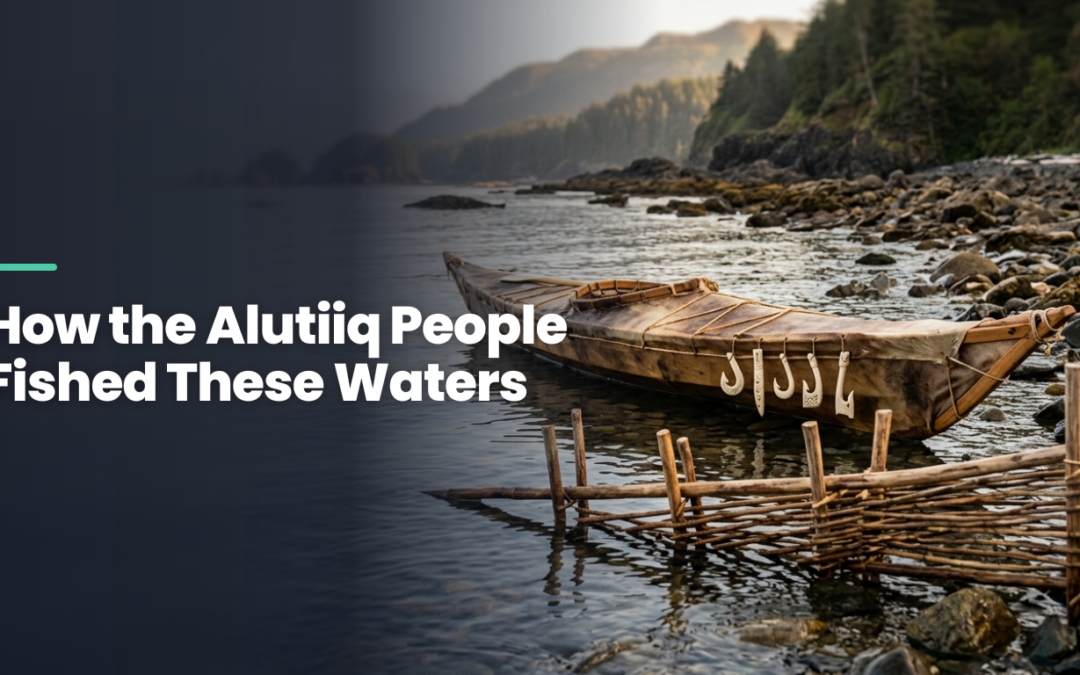
Long before the first guided charter idled out of Larsen Bay, the Alutiiq people were already reading these waters like a map. Their fishing traditions on Kodiak Island werent a hobby or a sport, they were survival, built on generations of close observation of tides, runs, and weather. Understanding that history gives our guests a deeper appreciation for the same halibut grounds and salmon streams we fish today.
Alutiiq Fishing Traditions on Kodiak Island Run Deep
The Alutiiq have lived on Kodiak Island for thousands of years, and their entire way of life was organized around the rhythm of the fish. Salmon runs, halibut migrations, and cod movements dictated where families settled, when they moved camp, and how they planned the rest of the year. If you want the fuller picture of how that history unfolded, from early settlement through Russian contact and into the modern era, we covered it in detail in Kodiak Island’s history from Alutiiq origins.
Fishing wasnt a single activity either. Different species called for different tools, different boats, and different knowledge, and the Alutiiq had all of it figured out well before any outside world showed up with hooks and lines of their own.
Reading the Water Without a Fish Finder
Modern anglers lean on electronics to find structure and bait balls. Alutiiq fishermen had none of that, so they relied on decades of passed-down knowledge about where fish held and when they moved through.
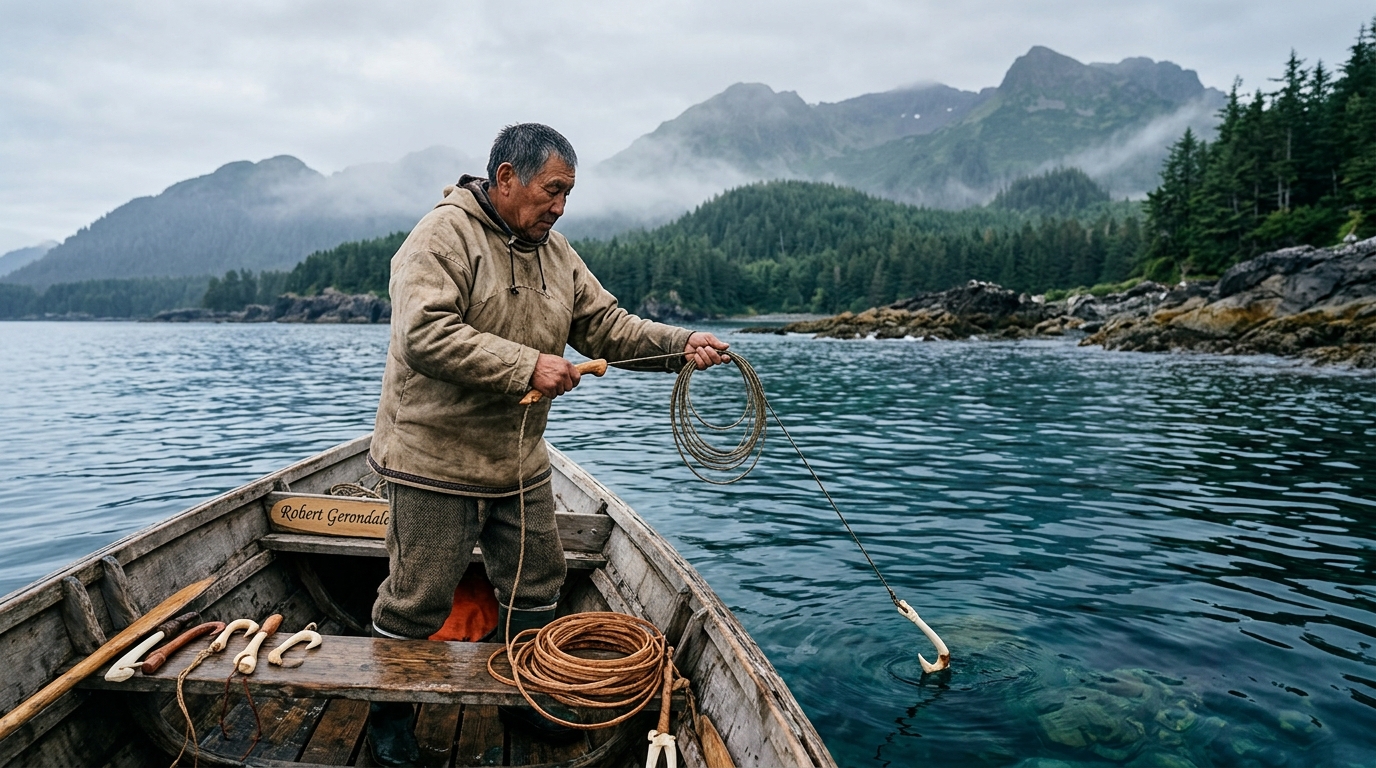
They tracked tide changes, watched for bird activity, and knew which bays and river mouths held fish at specific points in the season. That kind of local knowledge still matters today, which is part of why our guides spend their careers learning these same waters rather than just running a boat to a GPS waypoint.
Seasonal Timing Mattered More Than Luck
Salmon runs were the anchor of the subsistence calendar. Families planned around the timing of each species, moving to fish camps near rivers and streams when the runs were strongest, then shifting focus to halibut and cod banks later in the season. Nothing about it was random. It was pattern recognition refined over countless generations.
Tools Built for the Job
Alutiiq fishing gear was simple by modern standards, but every piece was purpose built for the species and conditions it was meant for.
Halibut Hooks and Deepwater Gear
Halibut fishing required gear strong enough to handle a powerful bottom fish without modern rod and reel technology. Alutiiq fishermen used carved wooden hooks, often paired with stone weights, designed to hold bait near the bottom in the same deep channels and banks our halibut charters target today. The shape and angle of those hooks werent decorative, they were engineered to set properly in a halibuts mouth once it took the bait.
Salmon Weirs and Traps
For salmon, the Alutiiq often built weirs and traps across smaller streams and river mouths. These structures funneled fish into a collection point where they could be caught by hand, speared, or netted, allowing a family or village to harvest large numbers of salmon efficiently during a short run window.
Nets, Spears, and Bone Tools
Nets were woven from available natural fibers and sinew, and spears tipped with carved bone or stone points were used for both salmon and cod in shallower water. Nothing was wasted. Tools were repaired, repurposed, and passed down, since materials took real time and skill to produce.
The Kayak That Made It All Possible
None of this tool work mattered much without a way to get out on the water safely, and thats where the qayaq, often called a baidarka, came in. These skin covered kayaks were fast, stable, and built specifically for coastal and open water conditions around Kodiak Island.
A skilled paddler could cover real distance to reach halibut grounds or follow a cod school, then return home with the catch. The design balanced speed with the stability needed to handle a struggling fish right next to the boat, a problem anyone who has fought a big halibut can appreciate.
Preserving the Catch for Year Round Use
Catching fish was only half the job. Preservation determined whether a family had enough food to get through the winter months when fresh fish wasnt available.
- Salmon was commonly smoked and dried, often cut into strips that could be stored for months.
- Halibut and cod were also dried, sometimes using wind and smoke in combination depending on the weather and location.
- Fish oil was rendered and stored as well, used both as a food source and a practical household resource.
This preservation knowledge was just as important as the fishing itself, and it reflects the same practical, no waste approach that shaped every part of Alutiiq life on the island.
The Same Waters We Fish Today
What stands out when you look at this history is how little the geography has changed. The halibut banks, salmon streams, and cod grounds the Alutiiq depended on are largely the same waters our guided charters fish out of Larsen Bay today. The fish still move on similar seasonal patterns, and the nutrient rich waters around Kodiak Island are still doing the same job they always have.
If you want to go deeper on the people behind this history, our pages on the Koniag people before and after Russian contact and the Alutiiq tribes and where they live today both add useful context. For a hands on look at the tools and culture described here, visiting the Alutiiq Museum to learn more is a worthwhile stop before or after a day on the water.
Fish These Waters With Us
We think knowing the history of these waters makes the fishing mean a little more. Our guided halibut, salmon, lingcod, rockfish, and Pacific cod charters put you on the same productive grounds the Alutiiq relied on for generations, with modern equipment and experienced guides handling the details. If you want to pair a day on the water with bear viewing, whale watching, hiking, or kayaking around Larsen Bay, reach out and we will help you build a trip around what matters most to you.