Every guest who casts a line into the waters near Larsen Bay is fishing in a place with a history that stretches back thousands of years. The Koniag people of Kodiak Island built an entire way of life around these same waters long before anyone else arrived, and understanding that history adds real depth to a trip built around fishing and wildlife viewing here.
The Koniag are the Alutiiq subgroup native to Kodiak Island, distinct from other Alutiiq communities on the mainland and the Alaska Peninsula. Their story is one of remarkable adaptation to a rugged coastal environment, followed by upheaval after Russian traders arrived in the late 1700s. Both chapters shape the place you see today.
Who Were the Koniag People of Kodiak Island
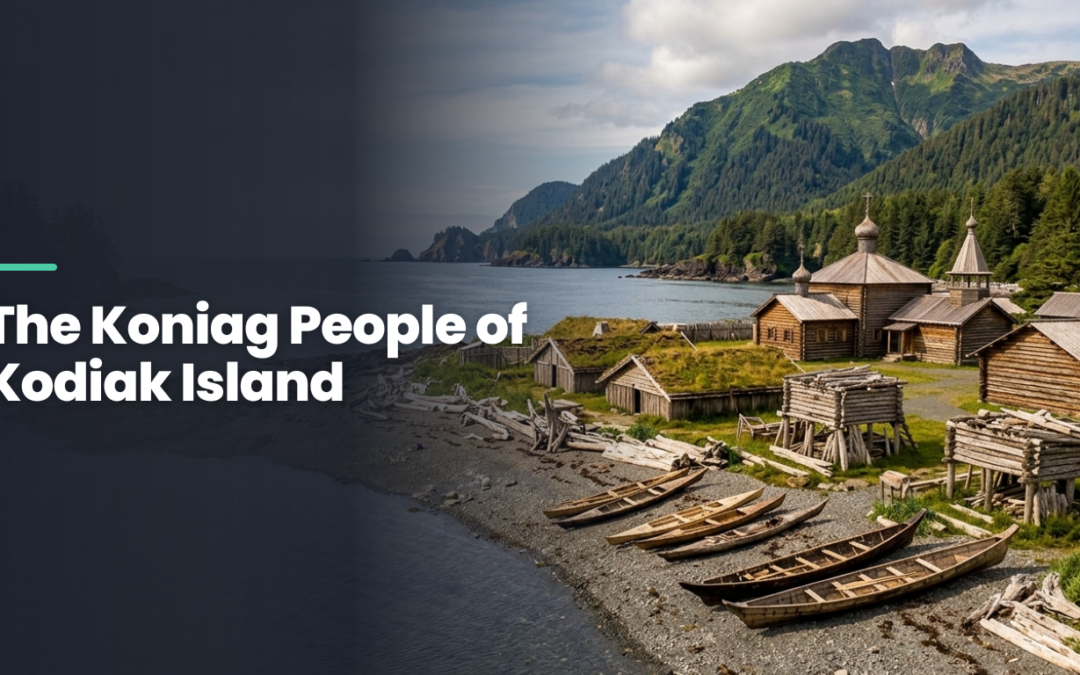
The Koniag settled Kodiak Island and the surrounding archipelago thousands of years before European contact. They built permanent winter villages along protected bays, including sites near present day Larsen Bay, and moved seasonally to take advantage of salmon runs, sea mammal migrations, and berry harvests. Archaeological work on the island has turned up evidence of continuous habitation stretching back over 7,000 years, making the Koniag one of the longer continuously documented cultures in North America.
Villages were typically built around a large communal structure called a barabara, a semi subterranean sod house designed to hold up against the wind and cold of the Gulf of Alaska. Extended families lived together, and village life revolved around a strict seasonal calendar tied to when fish and game were available.
A Way of Life Built Around the Water
Long before charter boats and rod holders, the Koniag were expert mariners. They built skin covered kayaks called qayaqs, similar in concept to what many visitors paddle today, and used them to hunt sea otter, seal, and sea lion far offshore. Salmon, halibut, and other bottomfish were dried, smoked, and stored to carry families through the long winter months.
Their knowledge of the tides, currents, and fish runs around Kodiak was passed down orally across generations and was remarkably precise. That same nutrient rich water that supported Koniag villages for millennia is still what makes the halibut fishing charters and salmon fishing charters out of Larsen Bay so productive today.
Koniag Social Structure and Beliefs
Koniag society was organized around extended kin groups with recognized leaders, often chosen for skill in hunting, oratory, or spiritual knowledge. Status within a village was tied closely to a person’s success providing for the community, whether through fishing, hunting, or trade.
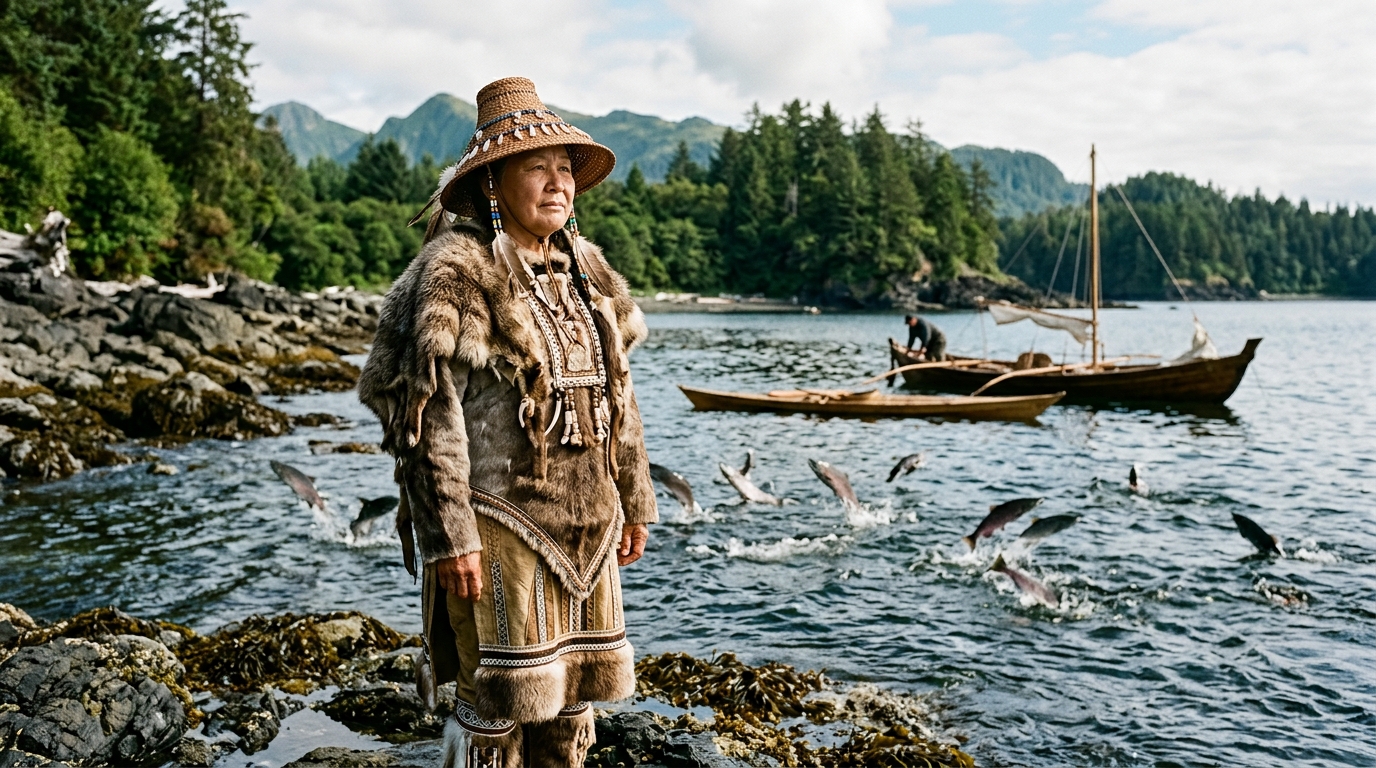
Spiritual life was deeply connected to the animals the Koniag depended on. Ceremonies and rituals were held to show respect to whales, seals, and salmon, reflecting a belief that showing gratitude to these animals kept them returning. Masks, carved figures, and ceremonial dances played a central role in these practices, some of which are preserved and explained in detail for visitors who spend time learning about the culture firsthand.
Trade and Contact With Neighboring Groups
The Koniag were not isolated. They traded with Alutiiq groups on the Alaska Peninsula and had contact, sometimes hostile, with Athabaskan and other neighboring peoples. Trade networks moved furs, oil, tools, and other goods across long distances well before Europeans ever appeared on the horizon.
Russian Contact and Its Impact on the Koniag
Russian fur traders reached Kodiak Island in the 1760s and 1780s searching for sea otter pelts, and their arrival changed Koniag life permanently. Grigory Shelikhov established a permanent Russian settlement at Three Saints Bay in 1784, and within a short period, conflict, disease, and forced labor devastated Koniag communities across the island.
The Russians relied on Koniag hunters to harvest sea otter for the fur trade, often through coercive labor systems that pulled men away from their own families and subsistence work for extended periods. Introduced diseases, to which the Koniag had no immunity, caused population losses that some estimates suggest cut communities down dramatically within just a few decades of contact.
For a broader look at how deeply this era shaped the island, including place names and cultural traces still visible today, our earlier article on how Russian colonization shaped Kodiak Island covers the period when Kodiak served briefly as the capital of Russian America before the seat of power moved to Sitka.
Villages Reshaped and Consolidated
Russian administrators often consolidated smaller Koniag settlements into larger villages to make labor and resource extraction easier to manage. Some traditional village sites were abandoned entirely during this period, while others, including communities near Larsen Bay, persisted and adapted.
Russian Orthodox missionaries also arrived during this era, and the faith took hold across many Koniag communities, blending with existing spiritual traditions rather than replacing them outright. That blended religious and cultural identity is still visible in Kodiak villages today.
The Koniag Legacy on Kodiak Island Today
Despite the disruption of the Russian period and later American territorial administration, Koniag descendants remain an active part of life on Kodiak Island. Alutiiq language, dance, and traditional practices have seen a genuine resurgence in recent decades, supported by tribal organizations and cultural institutions dedicated to preserving that heritage.
Guests interested in exploring this history in more depth have a few good starting points. Our article on the Alutiiq villages and tribes of Kodiak Island walks through the communities scattered across the island, including Larsen Bay itself, while our companion piece on where Alutiiq tribes live on Kodiak Island today gets into where different Alutiiq groups are based now. If you want to see artifacts and exhibits in person, our visitor guide to planning a visit to the Alutiiq Museum covers what to expect and how to make the most of your time there.
Why This History Matters for Visitors
Knowing this background changes how a trip to Larsen Bay feels. The bay you’re fishing, the hills you’re hiking, and the waters where you might spot whales or bears were all part of a working landscape that supported Koniag families for thousands of years before it became a destination for visiting anglers.
Experience Kodiak Island With That History in Mind
We built Kodiak Island Resort in Larsen Bay because this stretch of coastline offers some of the richest fishing and wildlife viewing in Alaska, and that abundance has deep roots. Whether you’re here for a halibut fishing charter, a salmon fishing charter, or a day spent bear viewing and wildlife viewing along the shoreline, you’re experiencing a landscape shaped by the Koniag people long before it became a resort destination. Get in touch with us to plan a trip that combines great fishing with a real appreciation for the place you’re visiting.