If you’re staying with us in Larsen Bay, you’re already surrounded by Alutiiq history, whether you notice it or not. The village names on the charts, the shoreline trails you might hike between fishing days, and the faces of some of our own crew all trace back to the Alutiiq tribes of Kodiak Island, a people who have lived on this archipelago for thousands of years. Understanding who they are and where their communities sit today gives your trip a lot more depth than fish counts alone.
This guide breaks down the main Alutiiq tribal communities on Kodiak Island, where they’re located, and why that geography still matters for anyone visiting the region.
Who Are the Alutiiq Tribes of Kodiak Island?
The Alutiiq (also spelled Alutiiq or referred to as Sugpiaq) are the Indigenous people of the Kodiak Archipelago and parts of the surrounding Gulf of Alaska coast. They are not a single tribe but a collection of village-based communities, each with its own tribal council, history, and ties to specific bays and river systems. On Kodiak Island specifically, these communities have depended on salmon runs, halibut grounds, and marine mammals for food and trade for longer than written records exist.
Archaeological evidence places Alutiiq ancestors on Kodiak Island for over 7,000 years, making this one of the longest continuously inhabited regions in North America. That long relationship with the land and water is part of why the fishing here is so good today. The same salmon streams and halibut banks that sustained Alutiiq villages for millennia are the ones our guides run charters on now.
Distinguishing the Tribes from the Villages
It helps to separate two things that often get blended together: the broader Alutiiq people as a cultural and linguistic group, and the individual federally recognized tribes tied to specific villages. Each village, Larsen Bay included, has its own tribal government even though all share a common Alutiiq heritage, language roots, and traditional practices.
Where the Alutiiq Communities Live Today
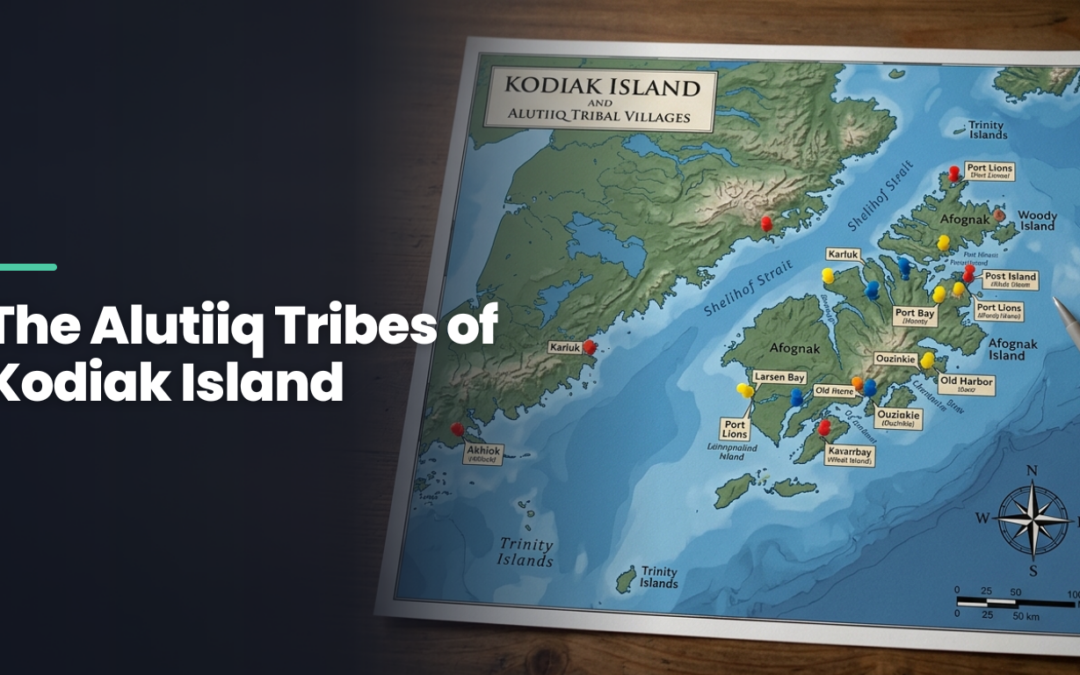
Kodiak Island’s Alutiiq population is concentrated in a handful of villages, most of them small, remote, and accessible primarily by boat or small plane. Here are the main communities you’ll encounter on maps of the island:
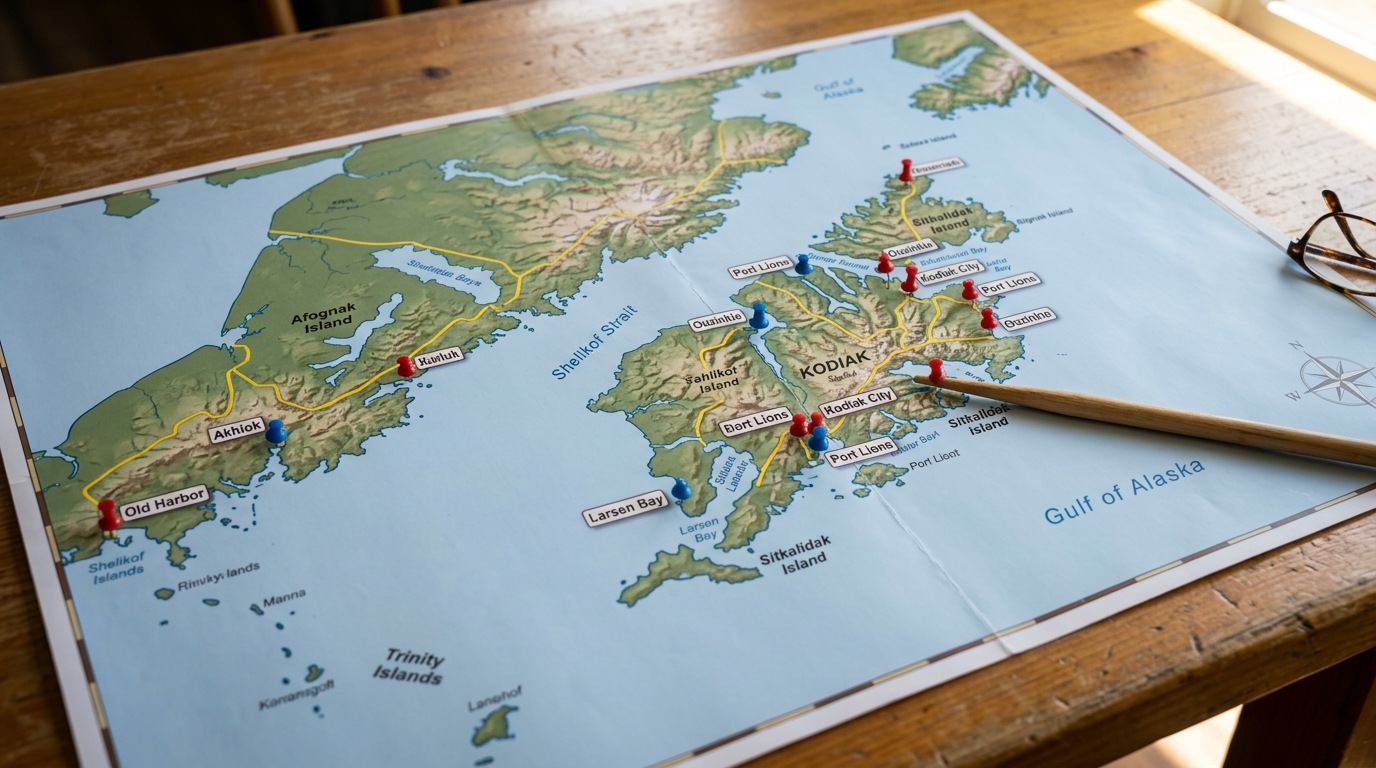
- Larsen Bay: Our home base, located on the western side of Kodiak Island. The Larsen Bay Tribal Council represents this community, and the village has deep roots in salmon fishing and cannery history.
- Karluk: A small village near the mouth of the Karluk River, historically one of the most productive salmon streams in the world.
- Old Harbor: Located on the southeastern coast, rebuilt after the 1964 earthquake and tsunami and still an active fishing community.
- Ouzinkie: Situated on Spruce Island near the city of Kodiak, with a tribal council actively involved in cultural preservation.
- Port Lions: Founded after the 1964 earthquake displaced the original village of Afognak, now home to another distinct Alutiiq tribal community.
- Akhiok: A village near the southern tip of Kodiak Island, one of the smaller and more remote communities in the archipelago.
Each of these villages maintains its own tribal council, and many are involved in subsistence fishing, cultural programs, and land management decisions that still shape how the island’s resources are used today.
Why Larsen Bay Specifically Matters
Because our lodge sits directly in Larsen Bay, guests are staying inside an active Alutiiq community rather than a generic wilderness outpost. The bay itself, the river system feeding it, and the surrounding hills have been part of Alutiiq life for generations before any lodge existed here. That context is worth knowing before you cast a line, not just as trivia but as a way to understand why this particular stretch of coastline has remained so rich in salmon, halibut, and other fish for so long.
How Alutiiq Culture Still Shapes Kodiak Island Today
The tribal communities we’ve listed aren’t historical footnotes. They’re active governments, cultural stewards, and in many cases neighbors and coworkers to the people who run fishing operations across the island. Traditional knowledge about fish runs, weather patterns, and safe water passages still gets passed down and informs how guides and captains operate today.
If you want a deeper look at the customs, language, and daily life that define this culture, we’ve covered that in more detail in our piece on Alutiiq traditions that shape the region today. It’s a useful companion to this article if you’re trying to understand the people behind the place names on your fishing map.
A Longer Historical Layer: Russian Contact
The story of Kodiak Island’s tribes doesn’t stop with Indigenous history alone. Russian fur traders arrived in the late 1700s and established Kodiak as their first capital in Alaska, a period that dramatically altered Alutiiq village life through disease, forced labor, and cultural disruption. That chapter is detailed in our article on Kodiak Island’s history as Russia’s first capital, which explains how that era still shows up in local place names and family histories around Larsen Bay.
Where to Learn More Before Your Trip
If you’re the type of traveler who likes to understand a place before you arrive, a couple of other resources on our site go deeper than we can here. For a hands-on look at Alutiiq artifacts, art, and oral history, our guide covers what to know before visiting the Alutiiq Museum, which is a worthwhile stop if your schedule allows a day off the water. And if you want a fuller rundown of every village and tribal council across the archipelago, we’ve put together a closer look at Kodiak’s native villages that expands on the list above.
Fishing and Adventure in a Living Alutiiq Homeland
Understanding the Alutiiq tribes of Kodiak Island adds a layer of respect and context to a trip that’s ultimately about the fishing and the wilderness. When you book a halibut or salmon charter with us, or head out for lingcod, rockfish, or Pacific cod, you’re fishing waters that have fed people here for thousands of years. The same goes for our bear viewing, wildlife viewing, whale watching, hiking, and kayaking trips, all of which move through land and water shaped by this history. If you’d like help planning a trip around your specific goals, whether that’s a personalized fishing charter or a mix of adventure activities during your stay in Larsen Bay, reach out and we’ll help you put together an itinerary that fits.