Long before anyone cast a line for halibut in these waters, the Alutiiq people had already built a life around them. Understanding the Kodiak Island native tribes gives visitors a deeper sense of the place they’re fishing and exploring, and it’s a story that’s still being written in villages scattered across the archipelago today.
Most guests arrive in Larsen Bay focused on salmon runs and halibut grounds, and that’s exactly what we’re here for. But the bay itself, and the island around it, carries thousands of years of Alutiiq history that shapes the land, the water, and the communities you’ll pass through on your trip.
The Alutiiq People Behind Kodiak Island’s Native Tribes
The Alutiiq (also spelled Alutiiq or referred to historically as Koniag) are the Indigenous people of the Kodiak archipelago. Archaeological evidence puts their ancestors on this island for roughly 7,500 years, making them one of the longest continuous cultures in Alaska. Their traditional life was built almost entirely around the sea: salmon, halibut, seal, and sea otter provided food, clothing, and trade goods long before any outside contact.
When Russian fur traders arrived in the late 1700s, that way of life was disrupted hard and fast. Villages were relocated, populations were decimated by disease and forced labor, and the survivors were pulled into a fur trade economy that had little regard for existing settlement patterns. If you want the fuller arc of that period, we cover it in an earlier piece on the history behind the waters you’ll fish in.
The Village Communities Scattered Across the Island
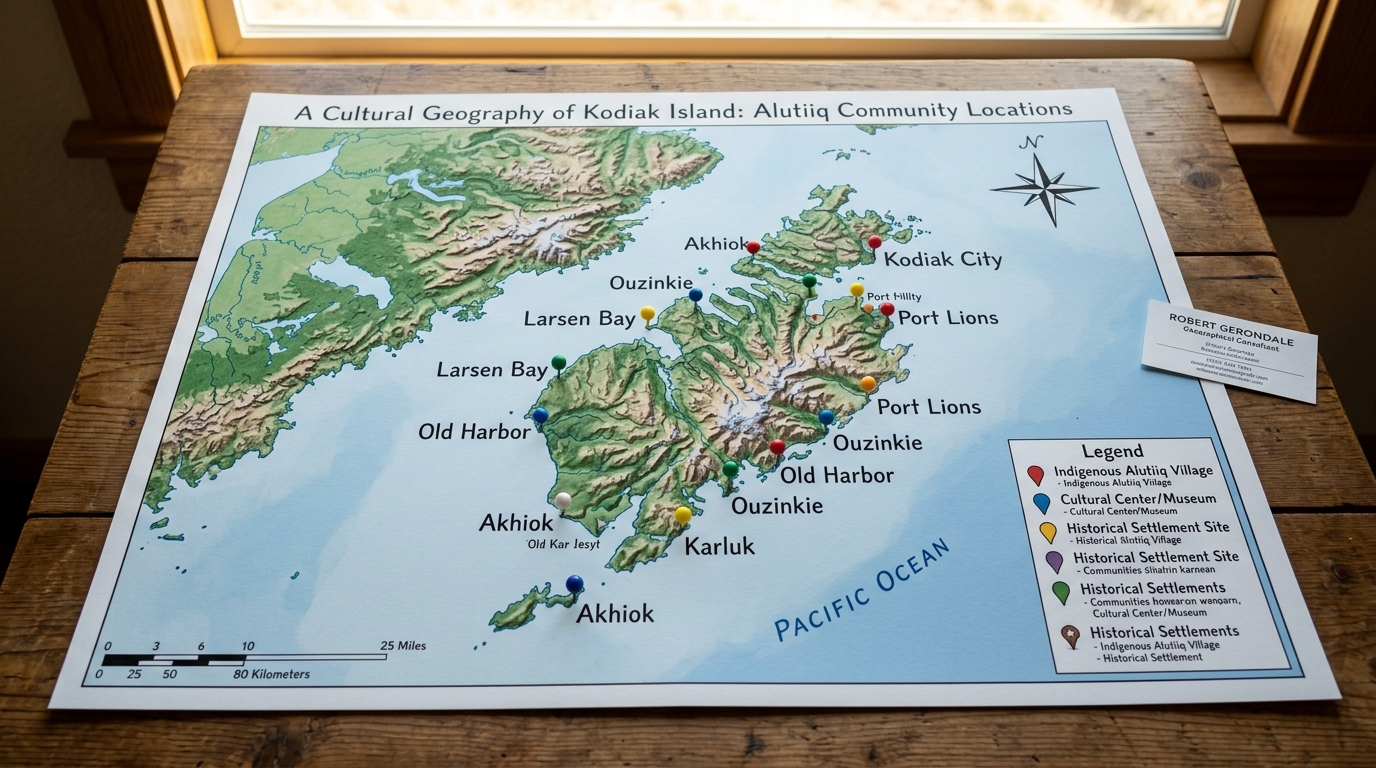
Today, Alutiiq life on Kodiak Island is organized around a handful of small, distinct village communities, each with its own tribal council and its own character. These aren’t museum displays. They’re active, year-round communities with subsistence fishing, local schools, and tribal governance.
Larsen Bay
The village nearest to our lodge, Larsen Bay has an Alutiiq history stretching back centuries, with a cannery-era economy layered on top starting in the early 1900s. It remains a working fishing village today, and the tribal council here is active in managing local resources and cultural preservation.
Old Harbor
Located on the island’s southeast coast, Old Harbor sits near one of the most significant archaeological sites in the region, with evidence of Alutiiq settlement dating back thousands of years.
Ouzinkie
A small village on Spruce Island, Ouzinkie was originally settled by retired Russian-American Company employees and their Alutiiq families, giving it a distinct blend of Russian Orthodox and Alutiiq traditions that’s still visible in the community today.
Port Lions
Port Lions was established after the 1964 earthquake displaced residents of the original village of Afognak, which was destroyed by the resulting tsunami. It stands as a direct example of how geologic events reshaped where these communities physically exist.
Karluk and Akhiok
These smaller villages sit along the island’s western side, closer to some of the remote water we run charters through. Both maintain strong subsistence traditions centered on salmon.
How History Shaped Where These Villages Stand Today
You can’t separate the location of these villages from the disasters and disruptions that hit the island over the last century. The 1964 Good Friday earthquake and the tsunami it triggered permanently altered the coastline, destroyed or damaged several villages outright, and forced entire communities to relocate. We go into detail on how the 1964 earthquake reshaped Kodiak’s villages and coastline, and it’s worth a read if you’re curious why some village sites feel newer than others while the culture behind them is ancient.
Larsen Bay itself wasn’t spared. The bay and the community around it absorbed real damage, and rebuilding efforts here mirrored what happened across the island. Knowing that context adds weight to the place you’re standing when you step off the boat after a day on the water.
Traditions That Still Guide Life in These Villages
Alutiiq culture isn’t frozen in the past. Language revitalization efforts, traditional skin-sewing and basket weaving, subsistence fishing rights, and seasonal harvest practices are all still part of daily life in these villages. Elders continue to pass down knowledge about weather patterns, fish runs, and hunting grounds that predates any modern forecasting tool.
Larsen Bay in particular has managed to keep a strong thread of these traditions alive despite the changes brought by commercial fishing and tourism. We’ve written more specifically about this in how Alutiiq traditions still shape life in Larsen Bay today, which is a good companion read if this topic interests you.
Why This Context Matters for Visitors
Most anglers come to Kodiak for the fishing, and that’s fair. But understanding the Kodiak Island native tribes and their villages changes how you see the landscape once you’re here. The bays you’ll fish, the trails you might hike, and the shoreline you’ll pass on a wildlife viewing trip all carry names, stories, and uses that go back long before any lodge existed.
If you want a broader grounding before your trip, we put together a resource covering the native history of Kodiak Island and Larsen Bay every visitor should know. It’s a useful primer whether you’re a first-time visitor or someone who’s fished here for years without digging into the backstory.
Fish and Explore the Same Waters, With Some History in Your Back Pocket
Once you know a bit about the villages and traditions woven into this island, a day out on our halibut, salmon, or lingcod charters feels a little different, and so does an afternoon spent bear viewing or kayaking along the shoreline near Larsen Bay. Our guides know these waters well and are happy to talk through what you’re seeing, from the fish you’re catching to the landscape around you. If you’re ready to plan a trip that combines serious fishing with a real sense of place, get in touch with us and we’ll help put together a charter or adventure itinerary that fits what you’re after.