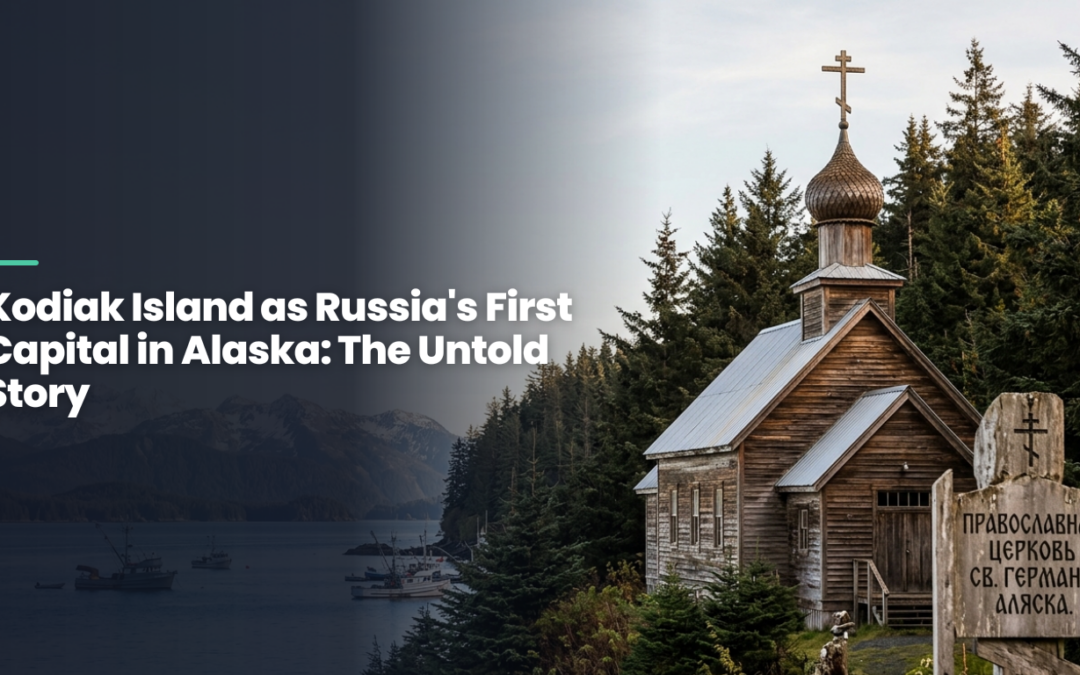
When you’re out on the water off Larsen Bay pulling up halibut or watching a brown bear work a salmon stream, it’s easy to forget that this same stretch of coastline once ran the entire Russian colonial enterprise in North America. The kodiak island russian capital history isn’t something most visitors expect to find here, but it shaped the place names, the churches, and even the fishing routes we use today. Here’s the story behind it, and why it’s worth a few minutes of your trip to think about.
Before Sitka: How Kodiak Became Russia’s First Capital
Most people who know a little Alaska history assume Sitka was always the seat of Russian America. It wasn’t. For roughly twenty years, that role belonged to Kodiak Island, and specifically to a small settlement most visitors today have never heard of.
Russian fur traders reached Kodiak in the early 1780s, drawn by sea otter populations that were, at the time, the most valuable fur resource in the world. What they built here became the administrative and commercial hub for Russian operations across the entire North Pacific.
The Founding of Fort St. Paul
In 1784, the trader Grigory Shelikhov established a permanent settlement at Three Saints Bay on the south side of Kodiak Island, not far from where our lodge sits in Larsen Bay today. This was the first permanent Russian settlement anywhere in Alaska, and it served as the launching point for Russian expansion up and down the coast.
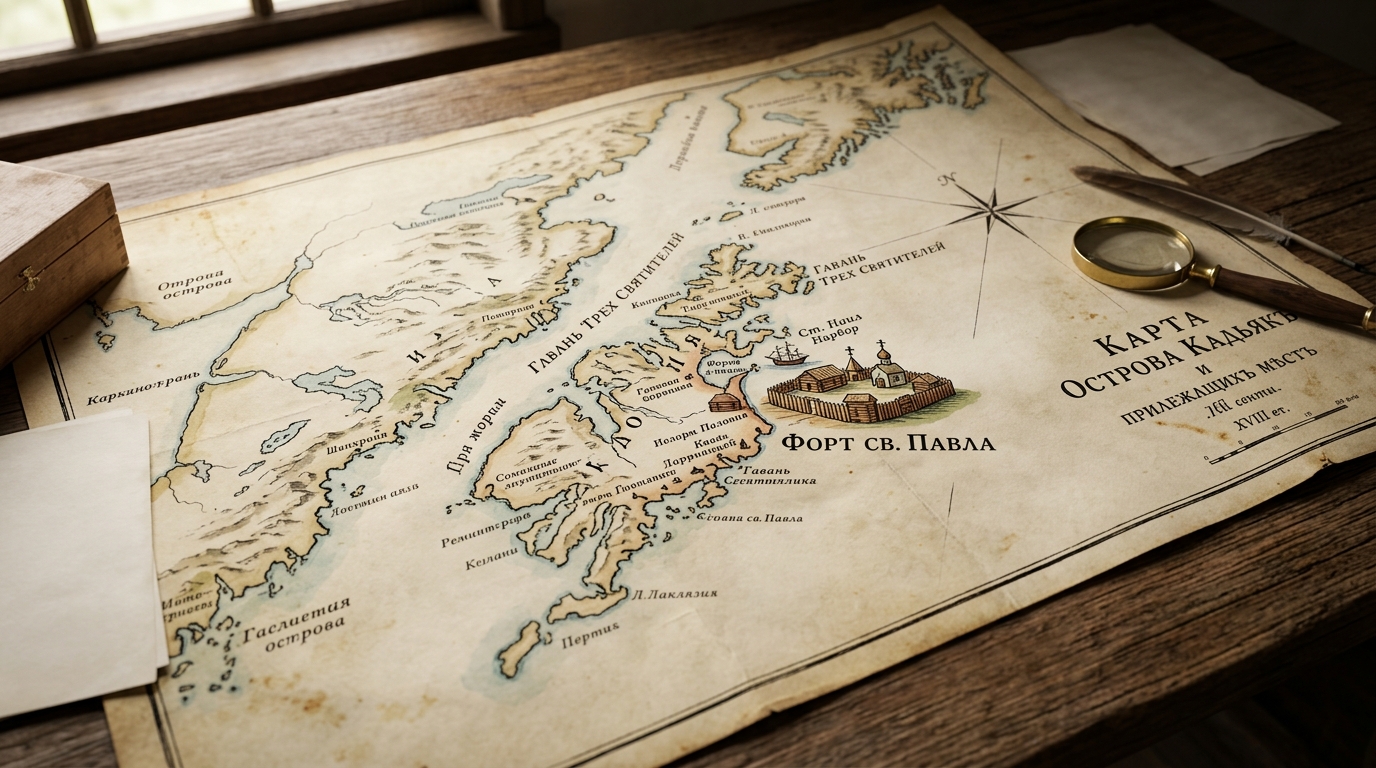
A few years later, the settlement relocated to what is now the city of Kodiak, where the harbor offered better protection and easier access for ships arriving from Siberia. That town became the de facto capital of Russian America, housing the offices of the Russian-American Company and serving as the base for governors overseeing territory that stretched from the Aleutians to Northern California.
Why Kodiak Island Was Chosen
The choice made practical sense. Kodiak sat close to rich hunting grounds, had a workable harbor, and was already home to Alutiiq communities with generations of experience navigating these waters and hunting sea mammals. The Russians relied heavily on that knowledge, often coercively, to run their fur operation.
Life Under Russian Rule
The Russian period on Kodiak was not a story of peaceful coexistence. Alutiiq hunters were conscripted into hunting parties that traveled as far as California, and entire villages were reorganized to serve the fur trade’s needs.
Disease, forced labor, and disruption to traditional subsistence patterns took a severe toll on the Alutiiq population during this period. If you want the fuller picture of what these communities endured and how they persisted, our earlier article on the history of the native Alutiiq tribes goes into that in more depth, including how villages like Larsen Bay trace directly back to this era.
Why the Capital Moved to Sitka
Kodiak’s run as capital ended in 1804 under Alexander Baranov, the chief manager of the Russian-American Company. Baranov shifted operations to what became Sitka, largely because it offered better positioning for trade with the growing number of European and American ships working the coast, and because it put the company closer to the otter grounds further south.
Kodiak didn’t disappear from the map after that, but it settled into a quieter role as a fishing and trading outpost rather than a seat of colonial power. That shift set the stage for the island’s eventual transition into the fishing grounds we know today.
Traces of Russian Kodiak You Can Still See Today
You don’t need a history book to notice the Russian imprint on this island. It shows up in everyday things guests encounter during their stay.
- Place names across the island, including many still used by local fishermen and pilots, trace back to Russian-era charting
- Russian Orthodox churches remain active in several Kodiak communities, a direct legacy of missionary work during the colonial period
- Alutiiq place names and Russian names sit side by side on modern maps, a layered record of who has called this island home
For a closer look at how these threads connect, and how they show up in the artifacts and stories preserved on the island, a visit to the Alutiiq Museum on Kodiak Island is worth building into your trip. It’s a short, practical stop that adds real context to everything you’ll see once you’re out on the water or hiking the hills above Larsen Bay.
A Land Shaped by More Than One Chapter
The Russian capital era is just one layer of Kodiak’s history. This island has also weathered natural disasters and wartime transformation, and both left their own marks worth knowing about before you arrive. If you’re curious about the volcanic ash that once buried the island, we cover that in our piece on the 1912 volcanic eruption that reshaped Kodiak. And for the island’s more recent past, our article on Fort Abercrombie and Kodiak’s World War II history looks at how the military transformed the island decades after the Russians left.
Experience This History Firsthand During Your Stay
Understanding the layers of history beneath Kodiak Island makes the place feel different once you’re actually here, whether you’re headed out on a halibut charter, watching for whales offshore, or hiking a trail that Alutiiq hunters and Russian traders once used themselves. We build our salmon, halibut, lingcod, rockfish, and Pacific cod charters around your goals for the day, and we’re happy to point you toward the wildlife viewing, bear viewing, or kayaking trips that pair well with a little exploring on land. Get in touch with us at Kodiak Island Resort and we’ll help you put together a Larsen Bay trip that covers both the fishing and the history that makes this island what it is.