
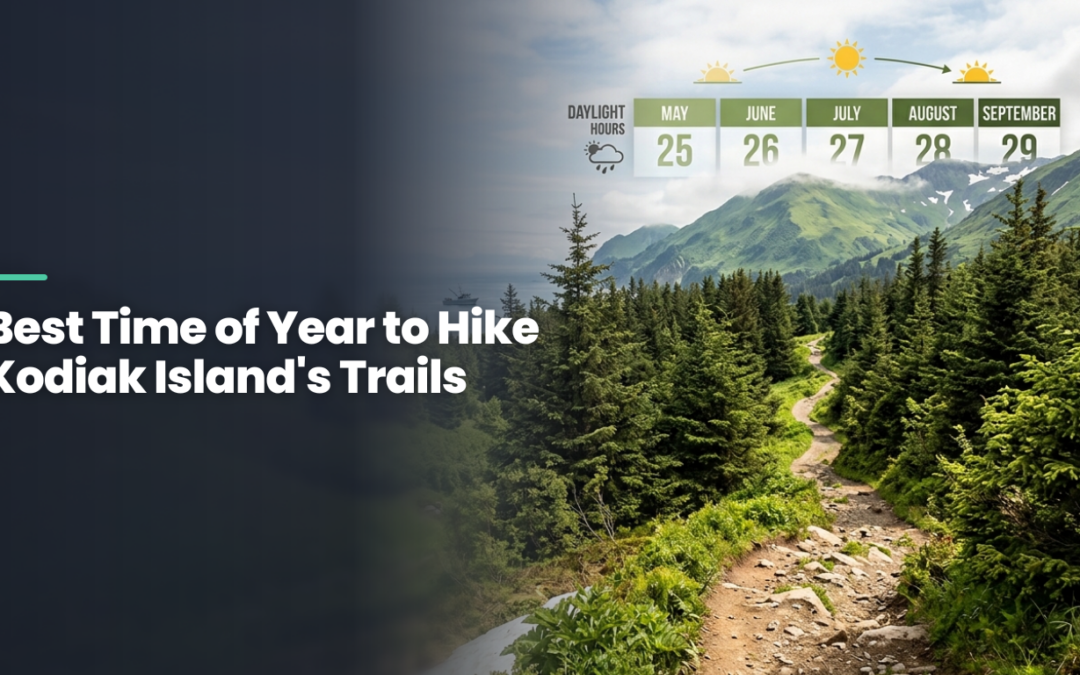
Planning a hike around your fishing charter takes a little more thought on Kodiak Island than it does in most places. Weather rolls in fast, daylight hours shift dramatically across the season, and trail conditions change week to week. If you’re wondering about the best time to hike Kodiak Island, the honest answer depends on what you want out of the trail, whether that’s dry footing, wildflowers, or a chance at spotting a bear from a safe distance.
We operate from mid-May through mid-September, and that window covers a surprising range of hiking conditions. Below is a season-by-season breakdown so you can pair your days on the water with the right hikes near Larsen Bay.
Mid-May to Early June: Cool, Green, and Quiet
Early season hiking on Kodiak means cooler temperatures, longer daylight, and trails that haven’t seen much foot traffic yet. Snow can still linger on higher elevation routes, so shoreline and lower forest trails are your best bet this time of year. The upside is fewer bugs and a landscape that’s just starting to green up after winter.
This is also a good stretch for anglers who want to split their days between fishing and hiking without feeling rushed, since daylight stretches well past 9 pm. If you’re new to the island’s trail system, our comprehensive guide to hiking trails on Kodiak Island breaks down which routes suit which skill levels, which is especially useful before the higher trails fully open up.
What to Expect
- Cooler temperatures, often in the 40s and low 50s
- Muddy sections on lower trails from snowmelt
- Minimal wildflower bloom, mostly greening grasses and early shoots
Mid-June to Mid-July: The Sweet Spot for Most Hikers
This stretch is when Kodiak Island hiking really opens up. Trails dry out, temperatures climb into a comfortable range, and the island’s famous wildflowers start putting on a show. If you’re trying to time a hike around peak color, it’s worth checking our breakdown of when wildflowers peak during your visit before you lock in your dates.
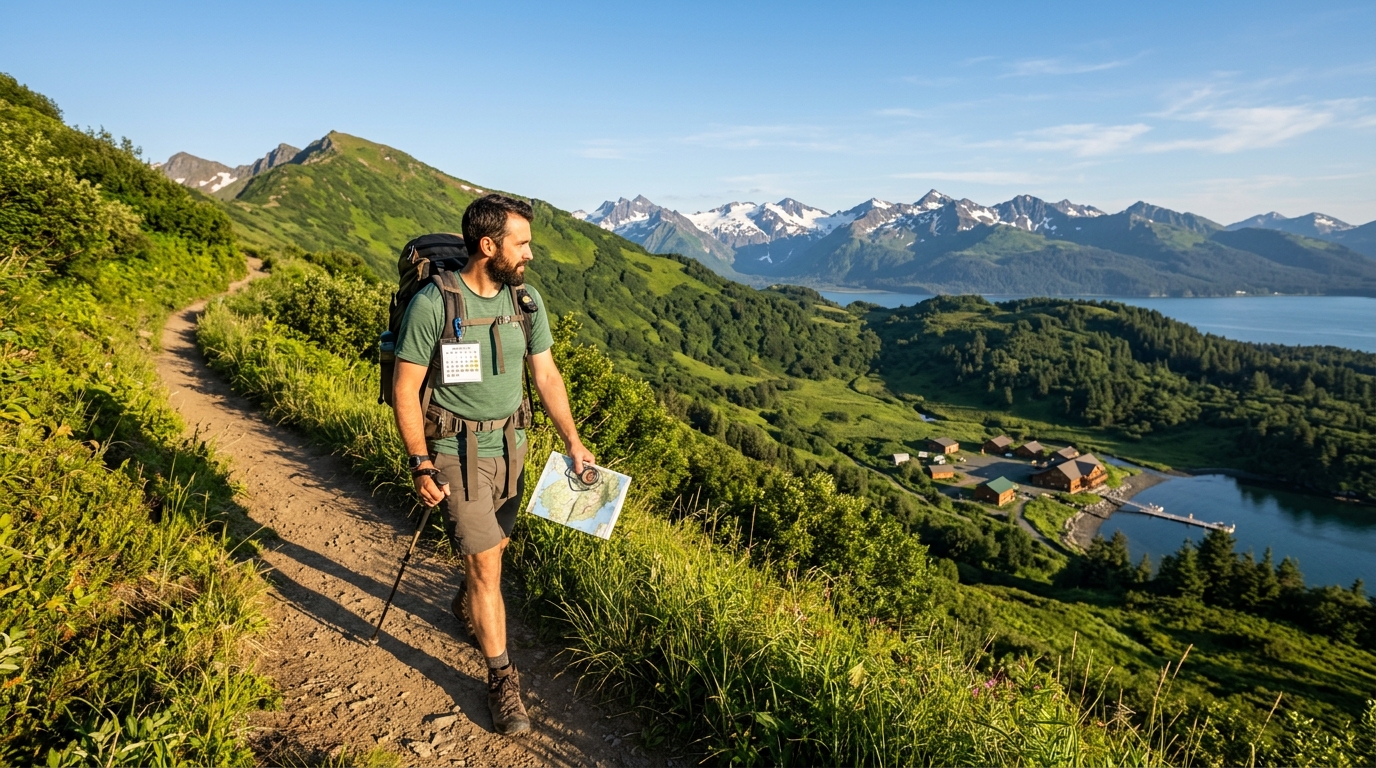
Salmon runs are also building through this period, which means guests often alternate a morning charter with an afternoon hike without feeling like they’re choosing between the two. This is generally the window we recommend for guests who want reliable trail conditions and don’t mind sharing the outdoors with more daylight-driven wildlife activity.
Why This Window Works
- Trails are largely dry and stable
- Long daylight hours, often 17 to 18 hours of usable light
- Wildflowers and greenery are near their most vivid
Mid-July to Mid-August: Peak Season, Peak Activity
By midsummer, Kodiak Island is at its most alive, both above and below the trail. Salmon are pushing upstream in numbers, which draws bears down to the rivers and creeks, and this is often the best stretch for combining a hike with genuine wildlife viewing. If that’s part of your goal, our page on hikes with the best bear and wildlife viewing chances covers specific routes where sightings are more likely.
Weather in this window tends to be the most stable of the season, though Kodiak is still Kodiak, meaning fog and light rain can show up without much warning. We recommend guests keep hiking plans flexible and build in a buffer day if a bear viewing trip or whale watching excursion is high on the priority list, since those experiences are often better paired with calmer weather windows anyway.
Considerations for Peak Season
- Higher chance of bear activity near salmon streams, which calls for extra caution
- More stable weather overall, but fog can still roll in quickly
- Trails see the most foot traffic of the season
Mid-August to Mid-September: Fewer Crowds, Sharper Air
As summer winds down, temperatures start to dip and the light takes on that golden, late-season quality that a lot of returning guests specifically ask for. Trails are still in good shape, but you’ll want warmer layers and a rain shell, since weather becomes noticeably less predictable heading into September. This is also when silver salmon fishing picks up, so many guests use this window to combine a strong fishing week with quieter hiking days.
Daylight shortens compared to peak summer, but there’s still plenty of time to fit in a hike before or after a morning charter. If this is your first trip to the island, it’s worth reading through what to know before hiking on Kodiak Island so you’re prepared for the shift in weather and terrain this late in the season.
Late Season Trail Notes
- Cooler temperatures, often dropping into the 40s by evening
- Increased chance of rain and wind, especially closer to mid-September
- Noticeably fewer other hikers on the trails
Matching Your Hike to Your Fishing Schedule
Most of our guests aren’t choosing between fishing and hiking, they’re trying to fit both into a limited number of days. The good news is that Kodiak’s trail network sits close enough to Larsen Bay that a half-day hike pairs easily with a half-day charter, whether that’s targeting halibut, salmon, lingcod, rockfish, or Pacific cod. Early risers often knock out a hike before breakfast and head straight to the boat, while others prefer to fish in the morning and unwind on a trail in the evening light.
If wildlife is the priority rather than fish, dedicated bear viewing and wildlife viewing trips can be scheduled on their own, leaving your hiking days open for a slower pace.
Let Us Help You Plan the Timing
Whether you’re chasing peak wildflower color, quieter trails, or the best odds of spotting a bear from a respectful distance, we can help you build a schedule that works around your fishing charters and adventure activities. Our guides know how conditions shift through the season and can point you toward the right trail for the week you’re here. Get in touch with us to start planning your Kodiak Island trip and we’ll help you match your hiking days to the fishing and wildlife experiences you’re after.