

If you’ve hiked for hours hoping to spot a bear, an eagle, or a whale and come back with nothing but sore legs, you already know that luck has less to do with it than location. The best Kodiak Island wildlife viewing hikes follow the same paths the animals do, near salmon streams, along coastal bluffs, and through berry patches that draw brown bears out of the timber. We guide both hiking and bear viewing trips out of Larsen Bay, and over the years we’ve learned which terrain gives hikers the best shot at seeing wildlife without turning the outing into a guessing game.
This guide covers the kind of trail features and timing that consistently produce sightings, along with how to hike them responsibly in bear country.
What Makes a Trail Good for Wildlife Viewing
Not every trail on Kodiak Island offers the same wildlife potential. The trails that consistently deliver sightings share a few traits: they run near water, they cross open meadows or bluffs with long sightlines, and they sit along the routes salmon use to reach spawning streams. Dense forest trails can be beautiful, but they limit visibility and reduce your odds of seeing anything before it sees you.
Coastal bluff trails tend to be the most productive for a mix of wildlife. From an elevated vantage point you can watch for bears working the shoreline, eagles perched in snags, deer moving through the brush, and occasionally whales or porpoises offshore. If you’re mapping out routes ahead of time, our overview of the best hiking trails on Kodiak Island for every skill level breaks down which routes fit which fitness levels and what kind of terrain to expect.
Where Bears Show Up Most Often on the Trail
Brown bears follow food, and on Kodiak that means salmon streams from mid-summer on and berry patches later in the season. Trails that parallel a stream during a salmon run are almost always your best bet for a bear sighting, since bears will feed there for hours at a time. If you want to understand just how big these animals get and why Larsen Bay is such a strong location for finding them, our article on what makes Kodiak brown bears the world’s largest covers their range and habits in more detail.
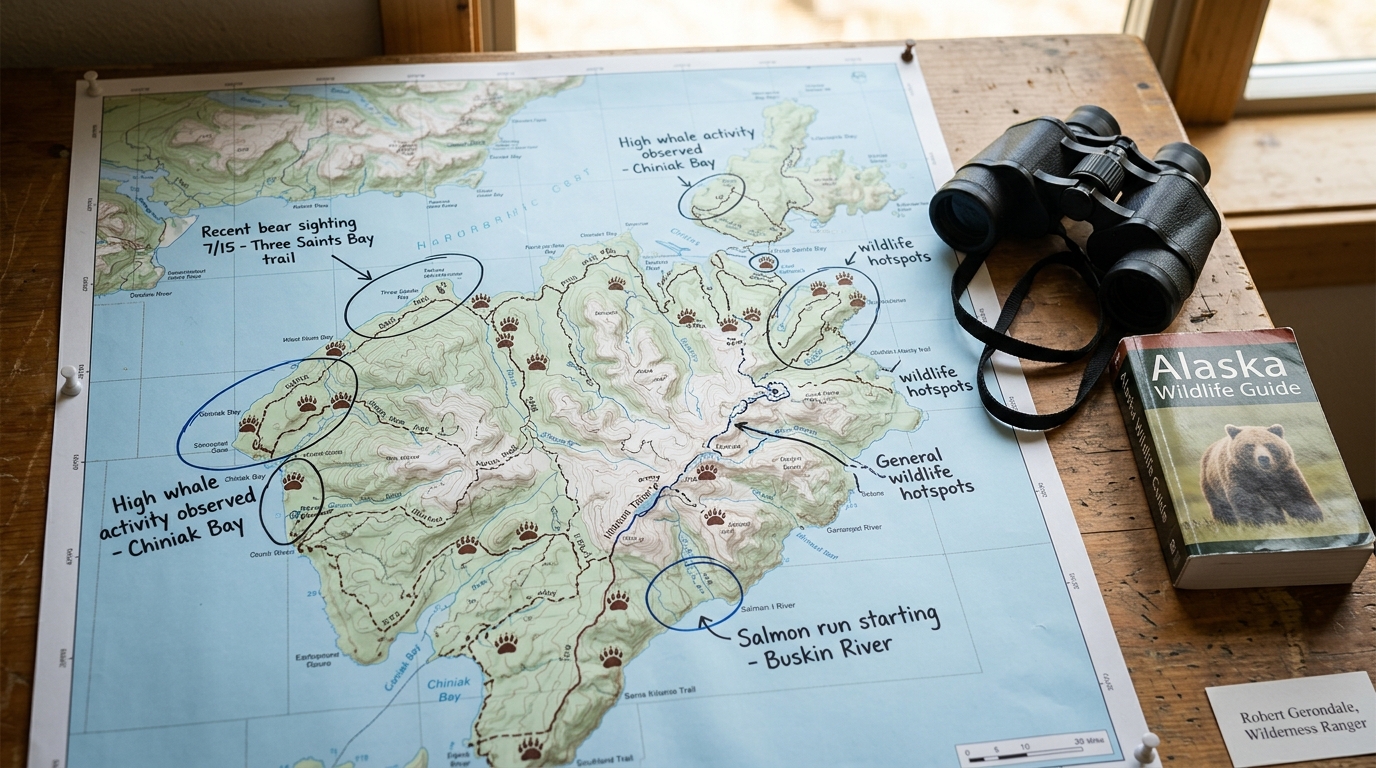
Berry patches are the other major draw. Salmonberries, blueberries, and elderberries ripen through the summer and pull bears out of dense cover into more open, visible terrain. Knowing which berries are ripening and where they grow tells you a lot about where bears are likely to be that week. We put together a full breakdown of the wild berries you’ll encounter on the trails, including which ones are edible and how they factor into bear safety.
Reading the Signs Before You See the Animal
Bear sign often shows up before the bear does. Fresh tracks in mud, flattened grass, or overturned rocks near a stream all suggest recent activity. Slowing down and paying attention to these details gives you time to react calmly rather than being caught off guard.
Wildlife Beyond Bears: What Else to Watch For
Bears get most of the attention, but Kodiak’s trails put you in range of a lot more. Bald eagles are common along the coast and rivers, Sitka black-tailed deer move through brushy slopes, and if your trail runs along the shoreline you have a real chance of spotting whales or sea lions offshore. These sightings often happen on the same hikes where bears show up, which is part of what makes coastal routes so worthwhile.
- Bald eagles perched near streams and shoreline snags
- Sitka black-tailed deer on open slopes and meadow edges
- Whales and marine mammals visible from coastal bluff trails
- Foxes and smaller mammals in brushy transition zones
Timing Your Hike for the Best Kodiak Island Wildlife Viewing Hikes
Timing matters as much as location. Our season runs mid-May through mid-September, and wildlife activity shifts noticeably across those months. Early season hikes tend to be quieter on the bear front but strong for deer and eagles, while mid to late summer brings bears down to the streams as salmon runs build.
Late summer into early fall also brings berry season into full swing, which pulls bears into more open terrain and often makes for easier, more relaxed viewing from a safe distance. If you’re planning a trip around a specific kind of sighting, it’s worth asking us what’s been active on the trails in the weeks before your arrival.
Hiking Safely Around Kodiak’s Wildlife
Hiking in bear country is a different mindset than hiking almost anywhere else. Staying alert, hiking in groups, making noise on blind corners, and keeping a respectful distance from any animal you spot are the basics that keep an encounter a good story instead of a problem. Wind direction, streamside brush, and berry season all change how cautious you need to be at any given time.
If you’re new to hiking on the island, our guide to hiking on Kodiak Island before you go covers gear, terrain, and the practical details that make a first trip smoother. It’s worth reading before you lace up, especially if this is your first time hiking in true bear country.
Hike, Watch, and Fish With Us in Larsen Bay
Whether you want to hike out to a bluff and watch for wildlife on your own pace, or join one of our guided bear viewing or wildlife viewing trips for a closer, more informed look, we can build a day around what you want to see. Many of our guests pair a hiking excursion with our whale watching trips or a kayaking outing along the shoreline to cover more ground and more habitat in a single visit. Get in touch with us at Kodiak Island Resort and we’ll help you plan a hike and wildlife viewing schedule that fits your trip.