

Kodiak Island’s coastline and river valleys are full of rock, but not all of it is worth stopping for. If you know where to look, Kodiak Island rockhounding can turn a walk between fishing trips into a genuine treasure hunt, with agates, jasper, and the occasional surprise turning up in the gravel. Here is a practical look at where to search around Larsen Bay and what you’re actually likely to find.
Where Rockhounding Happens on Kodiak Island
Kodiak is built from old marine sediment and volcanic rock that has been folded, uplifted, and ground down by glaciers and surf for millions of years. That geologic history is what scatters interesting stones across the island’s beaches and streambeds. If you want the fuller picture of how these rocks formed, our page on the geology behind Kodiak Island’s rocks, gems, and minerals breaks down the forces that shaped what you’re walking on.
Beaches and Shorelines
The beaches near Larsen Bay are the most accessible rockhounding ground on the island. Wave action does the sorting for you, tumbling and polishing stones and leaving the denser, harder material concentrated in certain bands along the tide line. Gravel beaches backed by eroding bluffs tend to produce the most, since new material keeps washing down with every storm and high tide.
Riverbeds and Creek Gravel
Away from the shore, the gravel bars along Kodiak’s rivers and creeks are worth a look, especially after spring runoff or a heavy rain has moved material downstream. These spots see far less foot traffic than the beaches, so material can sit undisturbed for a long time. Wading in shallow, slow-moving stretches is usually safer and more productive than fighting fast current.
What You Might Find
Kodiak Island rockhounding rarely turns up anything rare enough to sell, but it consistently produces stones that are satisfying to collect and display. Here’s what typically shows up:
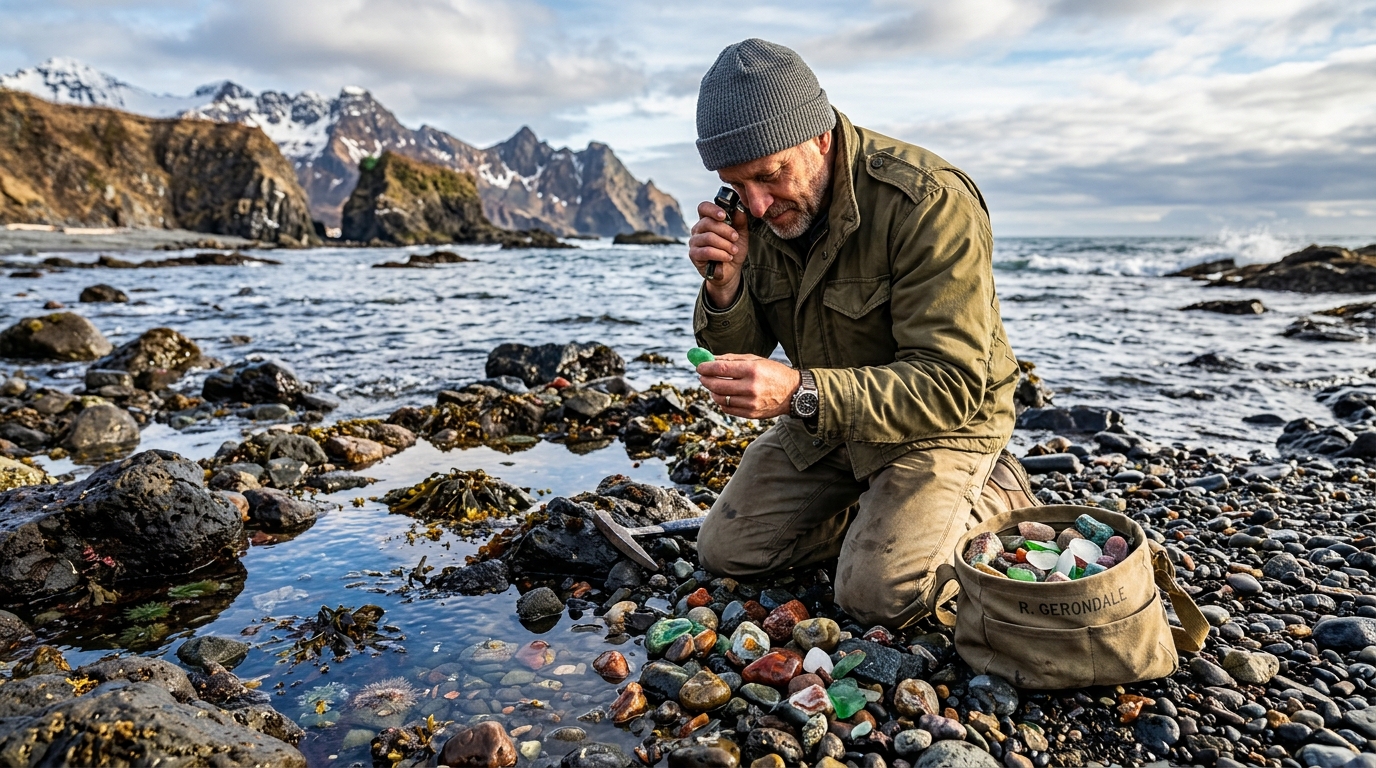
- Agates in shades of gray, honey, and translucent white, often banded
- Jasper in reddish and brownish tones, sometimes mixed into the same gravel bars as agate
- Basalt and other volcanic rock, smoothed and rounded by surf
- Occasional pieces of sea glass mixed in with the natural stone on beaches near old settlements
We’ve covered the specifics of agate and jasper hunting in more detail in our guide to agates, jasper, and sea glass found along Kodiak’s beaches, which is worth a read before you head out with a bucket.
What About Gold?
Kodiak has a documented history of small-scale gold prospecting, and it’s a question we hear often from visitors who’ve done their homework. The short answer is that gold does exist on the island, but finding it takes more specialized technique than casual rockhounding. If that’s part of what draws you here, our breakdown of what rockhounds should know about gold on Kodiak Island lays out the realistic picture before you get your hopes up.
Reading the Terrain Like a Local
Not every stretch of beach or riverbank is worth the same amount of time. A few habits make the difference between an aimless walk and an actual haul.
- Look for gravel, not sand. Fine sand beaches rarely hold much of interest because the material that matters has already been sorted elsewhere.
- Check just above the current high tide line after a storm, since that’s usually where the freshest material has been deposited.
- Wet stones show their color and pattern far better than dry ones, so a quick splash of water before you decide whether to keep something saves a lot of pocket space.
- Move slowly and scan in sections rather than walking fast and scanning everything at once. Most people miss good pieces simply by moving too quickly.
Planning a Rockhounding Outing Around Your Trip
Weather and tides matter more on Kodiak than they do almost anywhere else, and rockhounding trips work best when they’re built around both. Low tide exposes more beach and more gravel, so timing a walk to the tide charts is worth the extra planning. Trail conditions shift a lot across the season too, and our guide to the best time of year to hike Kodiak Island’s trails is a useful reference if you want to pair a rockhounding walk with a longer hike inland.
Because the resort operates from mid-May through mid-September, there’s a real window each season where daylight, weather, and tides line up well for spending an afternoon on the beach between fishing days. Guests often find that a short rockhounding walk is the perfect low-key complement to a morning spent out on the water chasing halibut or salmon.
Make Rockhounding Part of Your Kodiak Island Trip
Rockhounding pairs naturally with the hiking and beachcombing routes we already guide guests through around Larsen Bay, and it’s easy to build into a day that also includes bear viewing, wildlife viewing, or a kayaking excursion along the shoreline. If you’re planning a Kodiak Island fishing trip and want to add some time on the beaches or trails, get in touch with us and we’ll help you fit it around your halibut, salmon, lingcod, rockfish, or Pacific cod charters.