Long before anglers started booking charters out of Larsen Bay, Kodiak Island was one of the most heavily fortified places in Alaska. Concrete bunkers still sit tucked into the spruce forest above Kodiak town, and the story behind them is worth knowing if you want more from your trip than a cooler full of halibut. Understanding Kodiak Island WWII history gives context to a place that has shaped and been shaped by outsiders for centuries, from Russian fur traders to military engineers to the guides who now run these waters.
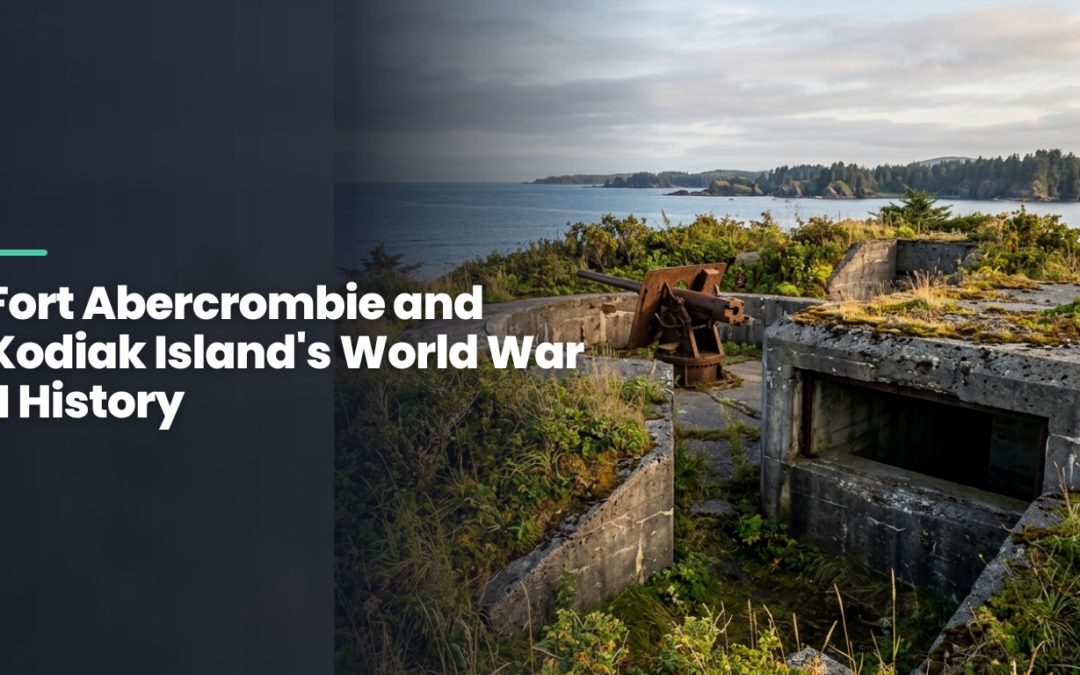
Fort Abercrombie is the clearest window into that chapter. It sits on a bluff above Miller Point, a few miles from Kodiak town, and it’s the best-preserved reminder of just how seriously the U.S. military took this island during the early 1940s.
Why Kodiak Island Became a Military Priority
After Pearl Harbor, military planners looked at a map of the North Pacific and saw a problem. Alaska sat between the continental U.S. and Japan, and Kodiak Island, with its deep, protected bays and position guarding the approach to the mainland, looked like a logical staging ground for either side. The U.S. Navy had already started building infrastructure on the island before the war even reached American soil, sensing the strategic value of a base this far out in the Pacific.
By 1941, Kodiak had become home to a naval air station, submarine base, and a network of coastal defense positions. When Japan invaded Attu and Kiska in the western Aleutians in 1942, those fears stopped being theoretical. Kodiak, sitting closer to the mainland than the western islands, became a critical link in the defensive chain meant to keep the fighting from reaching Anchorage or Seattle.
The Scale of the Buildup
At its peak, the military presence on Kodiak numbered in the thousands, a startling number for an island where Alutiiq villages and small fishing communities had defined life for generations. Roads, docks, ammunition bunkers, and gun emplacements went up quickly. Some of that construction still shapes the island’s infrastructure today, long after the uniforms left.
Fort Abercrombie: What’s Still There
Fort Abercrombie was built specifically to guard the entrance to Kodiak’s harbor from naval attack. Two 8-inch guns were installed on the headland, aimed out at the water, backed up by concrete bunkers, ammunition magazines, and a network of trails connecting observation posts. The fort never fired on an enemy ship, but its presence was part of a broader defensive posture that made an attack on Kodiak look costly enough to discourage.
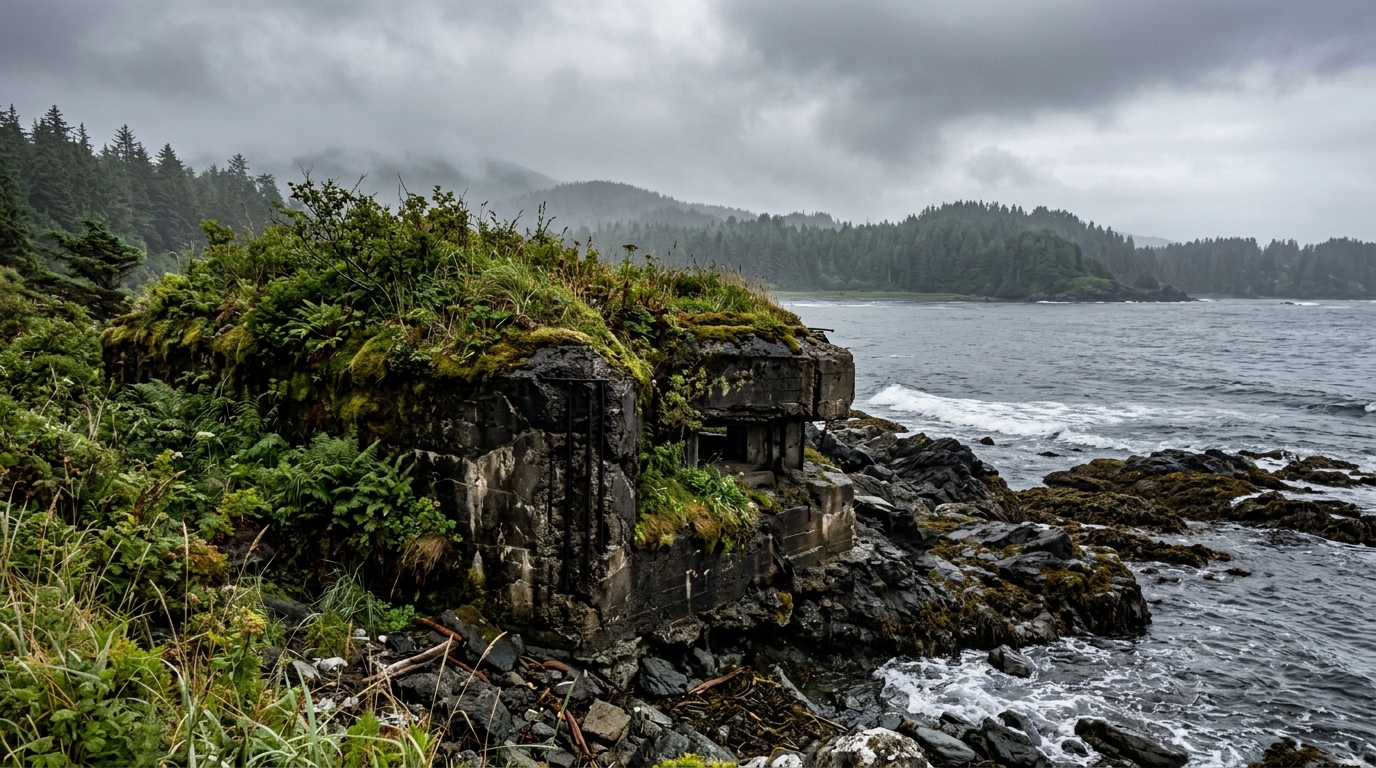
Today the site is preserved as a state historical park, and visitors can walk the same bluffs where soldiers once scanned the horizon. The concrete bunkers are mostly intact, half-swallowed by moss and spruce roots, which makes for a strange contrast if you’re used to picturing Kodiak purely in terms of bears and salmon runs.
What You Can See on a Visit
- Gun emplacements and concrete bunkers built into the hillside
- Remains of the ammunition magazine and support structures
- Hiking trails connecting old military roads to coastal viewpoints
- Interpretive signage explaining the fort’s role in the war
It’s a quiet place now, more likely to have deer moving through than any sign of the wartime activity that once filled it. That quiet is part of what makes it worth the stop.
Life on the Island During the War Years
The wartime buildup didn’t happen in isolation. It landed on top of communities that had already been shaped by earlier waves of contact, including the Russian fur trade and generations of Alutiiq life on the island. If you want the fuller picture of how those earlier eras set the stage, our earlier piece on the island’s Russian fur trade roots covers that ground in more detail.
For Alutiiq families in villages like Larsen Bay, the war years brought sudden change. Military personnel moved through areas that had been fishing and subsistence grounds for generations, and the relationship between the military and local communities was complicated, sometimes cooperative and sometimes disruptive. We’ve written more about how those long-standing patterns of life connect to the region today in our piece on the traditions that shaped Kodiak Island’s communities, which is worth a read if you want to understand Larsen Bay beyond its fishing reputation.
How the Landscape Still Shows the War
Kodiak’s WWII infrastructure didn’t disappear when the fighting ended elsewhere in the Pacific. Some of the roads built to move equipment and personnel became the backbone of the island’s modern road system. Old bunkers and pillboxes turn up in unexpected places if you know what you’re looking at, tucked into hillsides that have otherwise gone back to full wilderness.
The island has changed in other dramatic ways since then too. The 1964 earthquake reshaped coastlines, harbors, and entire communities on Kodiak, and that event is arguably as consequential to the island’s modern layout as the war years were. If you’re interested in the natural forces that have shaped this place, our article on how the 1964 earthquake reshaped the island is a good next stop.
Visiting Fort Abercrombie During Your Stay
Fort Abercrombie is an easy add-on for guests who want a break from fishing or a low-key activity on a travel day. The trails are manageable for most fitness levels, and the coastal views from the bluff are worth the walk on their own, war history aside. It pairs naturally with a hike along the same stretch of coastline, since the old military roads make for solid walking paths through spruce forest and along rocky shoreline.
Bring a jacket even in summer. The wind off the water at Miller Point doesn’t care what season it is, and the bunkers themselves stay cool and damp inside even on warm days.
Bringing It Together on Your Trip
Most guests come to Kodiak Island Resort focused on halibut, salmon, lingcod, rockfish, or Pacific cod charters, and that’s exactly what we build our days around. But the island rewards people who take an afternoon to look past the water too. Between guided fishing trips, we can help you plan time for wildlife viewing, whale watching, or a hike out toward sites like Fort Abercrombie, and if bears are on your list, you can experience bear viewing in Kodiak today as part of a well-rounded trip. Get in touch with us and we’ll help you put together a stay that covers both the fishing you came for and the layered history that makes this island more than just a great place to catch fish.