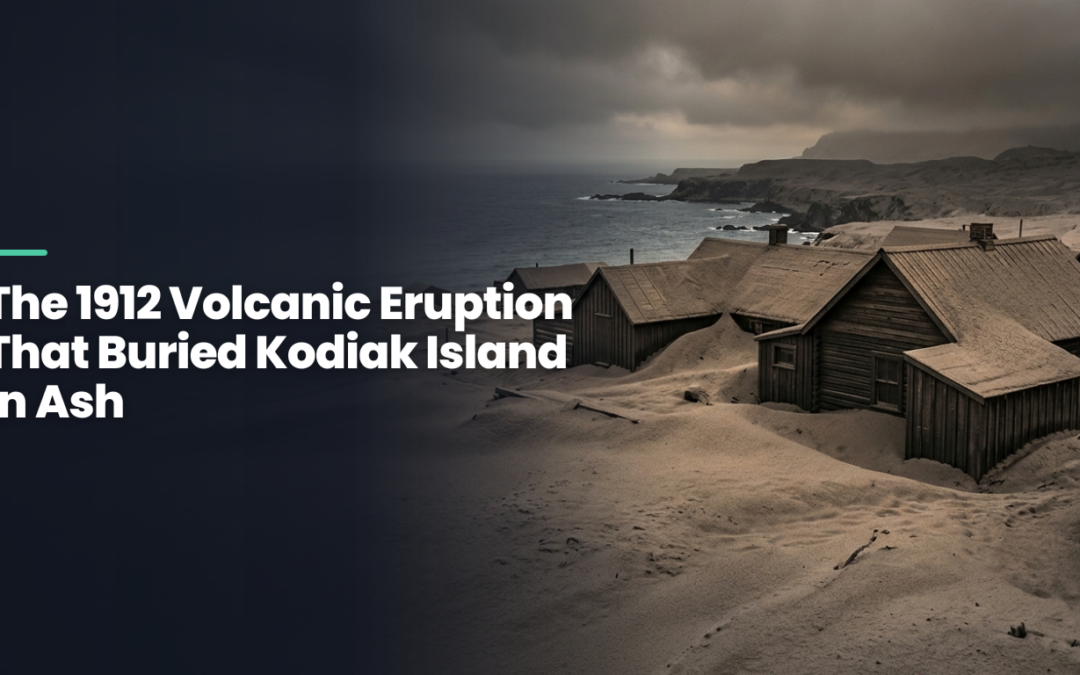
Anyone who spends a few days on Kodiak Island notices the land itself has a story to tell, from the pumice-flecked soil along the trails to the strange gray layers exposed in eroded riverbanks. Understanding kodiak island volcano history helps explain why the terrain looks the way it does, and why the wilderness around Larsen Bay feels so raw and unspoiled. The eruption that shaped much of this landscape happened in 1912, and its effects reached far beyond the volcano itself.
What Happened at Novarupta in 1912
In June 1912, a volcano called Novarupta erupted on the Alaska Peninsula, roughly 100 miles from Kodiak Island. It was one of the largest volcanic eruptions of the 20th century anywhere on earth, releasing more volume of material in a few days than Mount St. Helens released in its entire 1980 eruption. The blast created what is now known as the Valley of Ten Thousand Smokes, a landscape of ash and pumice deposits so deep that steam vents continued to hiss from the ground for decades afterward.
The eruption itself did not happen on Kodiak Island, but the prevailing winds carried enormous volumes of volcanic ash directly toward it. Within a day or two, the island that would later become home to our lodge in Larsen Bay was buried under a blanket of ash thick enough to collapse roofs and choke rivers.
Kodiak Island Volcano History and the Ashfall That Followed
Residents of Kodiak town, more than 100 miles from the eruption site, reported total darkness for days. Ash fell so heavily that people described it as a thick, gritty snow that made breathing difficult and turned daylight into something closer to dusk. Some accounts from the time describe ash accumulations of a foot or more in low-lying areas, enough to bury gardens, bend tree branches to breaking, and force families indoors with wet cloths held over their faces.
The ashfall did not just darken the sky. It settled into streams and bays, altering water clarity and, for a time, disrupting the salmon runs that Alutiiq villages and early canneries depended on. Fine volcanic ash is abrasive and can clog gills, and reports from that season describe fish kills in some drainages. For an island where subsistence and commercial fishing were already the backbone of daily life, that kind of disruption was not a small inconvenience.
Life in Larsen Bay and Kodiak Villages During the Eruption
Larsen Bay and the other Alutiiq villages scattered across the island had already weathered centuries of change by 1912, from Russian fur trading pressure to shifting fishing economies. The eruption added a sudden, dramatic disruption on top of that longer history. Families in coastal villages sealed windows and doors as best they could, covered wells to keep ash out of drinking water, and waited out days of near total darkness before the skies began to clear.
If you want the fuller picture of how this community came to exist and endure, our earlier piece on the Alutiiq villages and tribes affected by the eruption walks through the specific settlements and the people who called them home long before and long after 1912. It’s a useful companion to this one, since the eruption is really just one chapter in a much longer story of resilience on this island.
How the Ash Reshaped the Land You’ll Explore Today
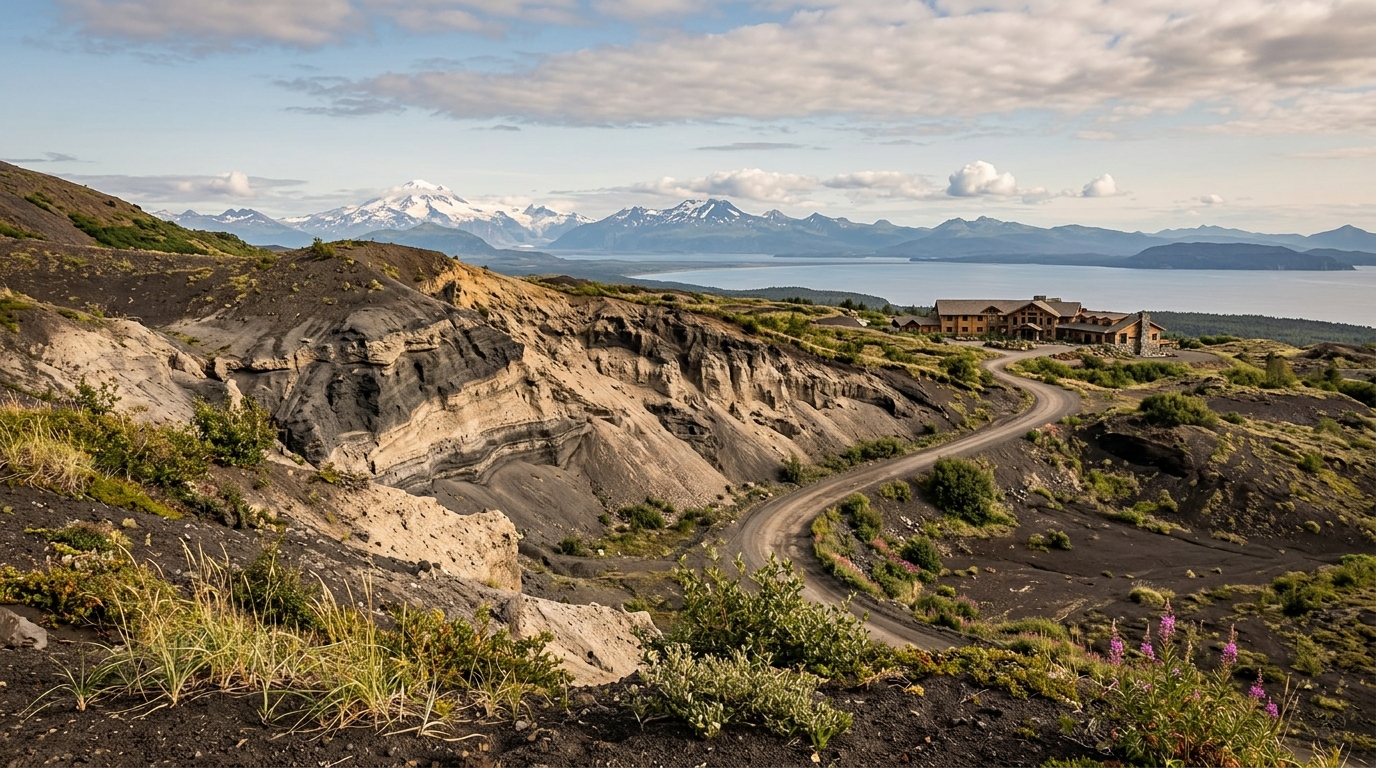
The physical evidence of the 1912 eruption is still visible if you know where to look. Ash layers, sometimes called tephra, are exposed in cutbanks along rivers and in the soil profiles that hikers pass on Kodiak’s trails. Botanists have documented how the ashfall temporarily buried tundra vegetation and altered soil chemistry, and some of the patchy, uneven plant growth you’ll notice on certain hillsides today traces back to that event.
The eruption also had a quieter, longer-term effect on the island’s ecosystem. Ash deposits changed nutrient cycling in some soils and streambeds, and researchers have tied shifts in vegetation patterns on parts of Kodiak and the Alaska Peninsula directly back to 1912. When our guides take guests out for hiking or kayaking excursions around Larsen Bay, the terrain underfoot is, in a real sense, still telling that story more than a century later.
Why This Matters for Wildlife Viewing
The eruption’s disruption of salmon runs in 1912 was temporary, but it’s a reminder of how tightly connected this island’s wildlife is to its waters and land. Today the salmon runs that feed Kodiak’s brown bears and support our fishing charters are healthy and abundant, but the history is worth knowing before you head out on a bear viewing trip or a wildlife viewing excursion. It gives context to just how resilient this ecosystem has proven to be.
A Landscape Still Recovering, Still Wild
Kodiak Island has absorbed more than one major natural upheaval in the last century. The 1964 earthquake and tsunami reshaped coastlines and villages decades after the ashfall settled, and that event deserves its own telling, which you can find in our article on how the 1964 Alaska earthquake changed Kodiak Island forever. Between volcanic ash, seismic upheaval, and the more recent human history of military presence during World War II covered in our piece on Fort Abercrombie and Kodiak Island’s World War II history, this island has a track record of enduring disruption and coming back wilder than ever.
For readers who want the broader arc connecting all of this, from early Alutiiq settlement through Russian fur trading and into the modern era, our overview of Kodiak Island’s history from Russian fur trading onward ties these events together into one continuous story. Knowing that history adds real depth to a trip out here, well beyond just the fishing.
Fish and Explore the Same Waters That Shaped This History
We think understanding what this island has been through makes the fishing and the scenery mean more once you’re actually here. If you want to see the terrain and waters shaped by this history firsthand, our halibut, salmon, lingcod, rockfish, and Pacific cod fishing charters put you right on the nutrient-rich waters around Larsen Bay, and our bear viewing, wildlife viewing, whale watching, hiking, and kayaking trips get you into the landscape itself. Reach out to us at Kodiak Island Resort and we’ll help plan a trip built around what you want to see and catch.