
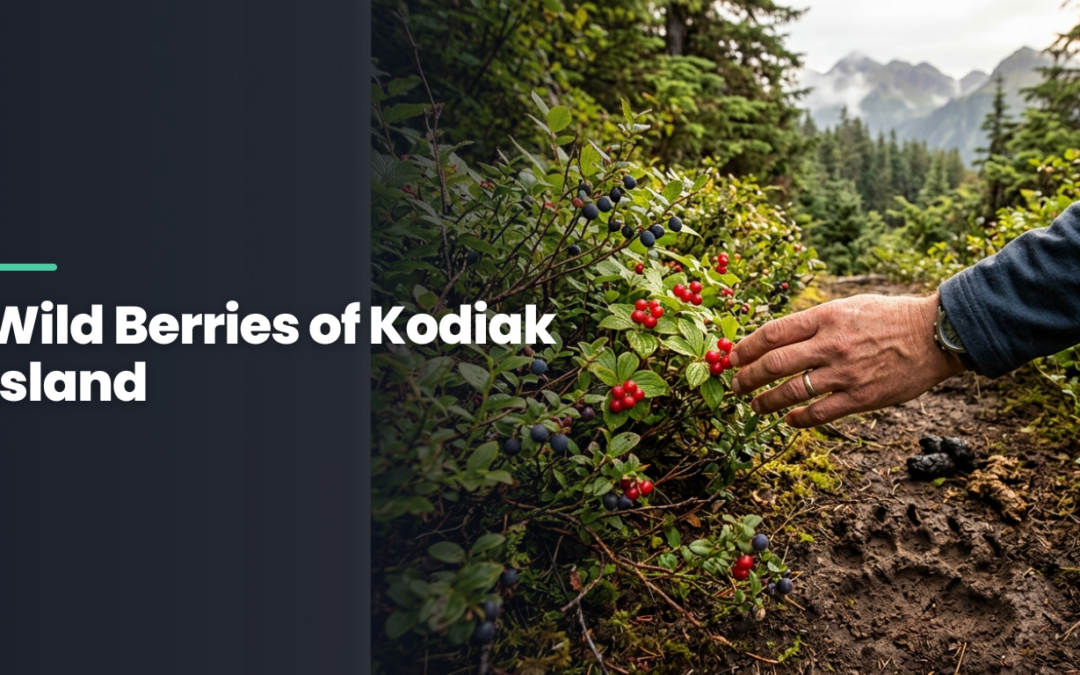
By late July, the trails around Larsen Bay start turning color, and it isn’t just the fireweed. Kodiak Island wild berries ripen fast and heavy through the summer, and guests on our hiking and wildlife trips often ask what’s safe to sample and what’s strictly for the bears. Here’s what we’ve learned after years of walking these same paths.
Why Berries Matter on Kodiak Island
Berries are a major food source for Kodiak brown bears heading into fall, which means berry patches are also prime wildlife viewing territory. If you’re hiking or kayaking near thick brush in August or September, you’re likely near a food source that bears know about too. Understanding the berry season helps you read the landscape the way our guides do, and it’s part of why timing matters on the best hiking trails on Kodiak Island.
Common Berries You’ll See on the Trails
Salmonberries
Salmonberries are usually the first to ripen, showing up in June and carrying into July. They range from pale gold to deep red and grow on thorny canes along stream banks and forest edges. The flavor is mild and slightly tart, and they’re one of the more reliably edible berries you’ll find on our trails.
Blueberries
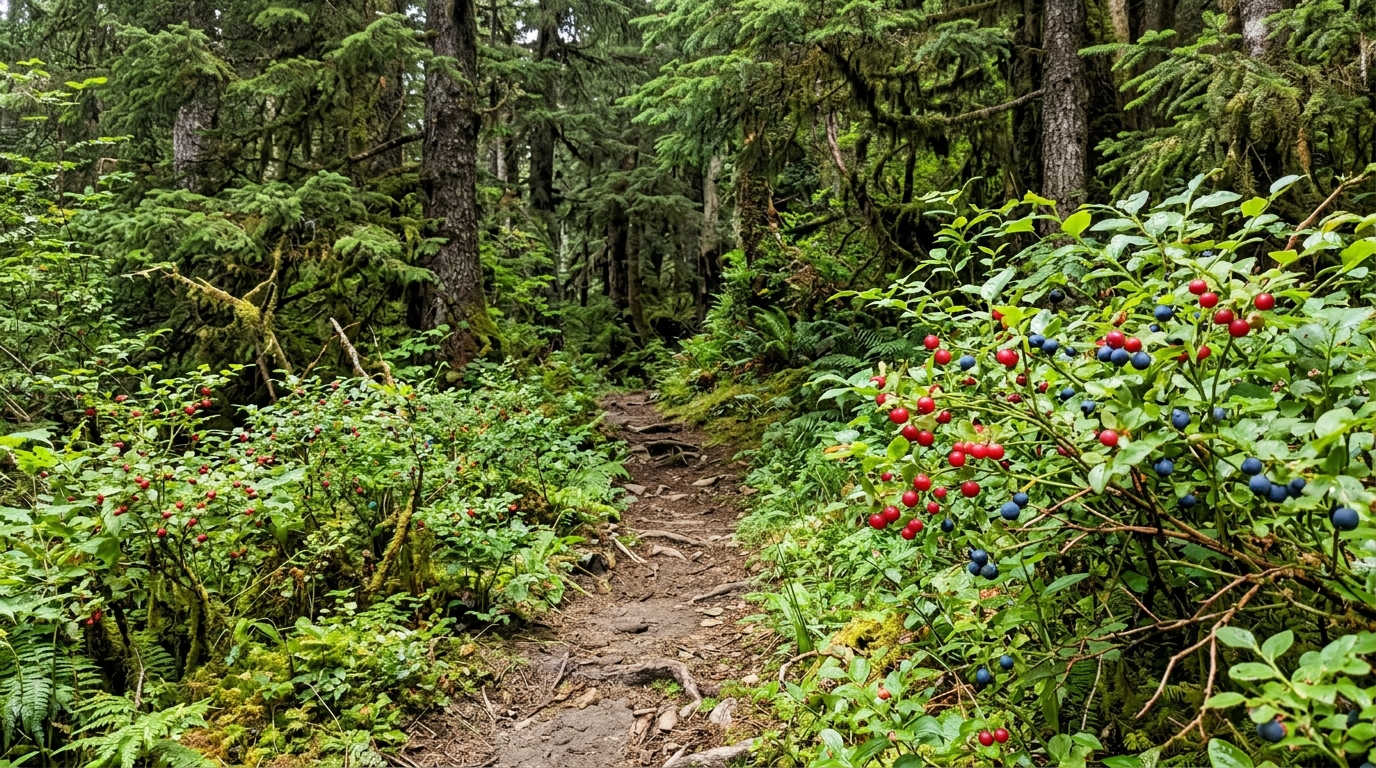
Alaska blueberries grow low to the ground in open muskeg and along drier hillsides, ripening from late July into September. They’re smaller than store-bought varieties but have a concentrated, sweet flavor. These patches are also a favorite bear feeding spot late in the season, so we keep an eye out when guiding groups through open berry ground.
Crowberries
Crowberries grow in low mats, often in the same alpine and tundra areas where you’ll find blueberries. They’re dark, almost black, and have a mild, slightly bland taste on their own, though local foragers sometimes mix them with sweeter berries. You’ll spot them most easily on higher, more exposed sections of trail.
Elderberries
Red elderberries show up in shaded, wetter areas, often near the tree line. Unlike the berries above, elderberries are not something we recommend eating raw, since the raw fruit, seeds, and other plant parts can cause stomach upset. We point them out on hikes mainly as a plant to recognize and leave alone.
Kodiak Island Wild Berries and Bear Safety
The single most important thing to know about foraging here is that you are not the only one interested in the berries. Bears will feed heavily in productive patches for hours at a time, and a thick stand of salmonberry or blueberry bushes can hide a feeding bear until you’re quite close. This is why our guided hikes move through berry-heavy terrain with intention, using noise, spacing, and route choice to avoid surprising an animal that’s focused on eating.
- Never approach a berry patch quietly or alone if you’re unfamiliar with the area.
- Make noise as you move through dense brush, especially near streams.
- If you see fresh bear sign, scat, tracks, or flattened vegetation, near a berry patch, give it a wide berth.
- Leave elderberries alone rather than guessing which parts are safe.
If bear viewing is actually your goal rather than an incidental risk to manage, we run dedicated trips built around it. Our guides know the seasonal feeding areas and can put you in a position to watch safely rather than stumble into an encounter, which is really the whole idea behind knowing where to see Kodiak brown bears safely.
Where to Find Berries on a Guided Hike
Berry patches tend to cluster in predictable spots: forest edges, old clearings, muskeg flats, and the transition zones between spruce forest and open tundra. If you’ve read our breakdown of what the forests look like on Kodiak Island, you already have a sense of where those edge habitats occur. Salmonberries favor the shadier, wetter margins near streams, while blueberries and crowberries prefer the open, sunnier ground higher up. Guests interested in the full range of plant life on the island, not just berries, also enjoy our rundown of the wildflowers and plants along the trails, since many of the same wildflowers bloom right alongside the berry bushes earlier in the season.
A Few Notes on Foraging Responsibly
We encourage guests to enjoy a handful of berries on the trail when they’re clearly identified and clearly ripe, but we don’t encourage large-scale picking during a short trip. The patches support real wildlife through a short feeding season, and Kodiak’s weather and terrain change quickly enough that we’d rather keep the group moving safely than linger over a bucket of berries. If you’re unsure whether something is edible, treat it as a look-don’t-eat situation and ask your guide.
Plan Your Kodiak Island Hiking and Wildlife Trip With Us
Whether you want to spend a morning walking berry-lined trails or an afternoon watching brown bears feed at a distance, our guided hiking and bear viewing trips are built around what our guests actually want to see. We also run wildlife viewing and whale watching excursions for anyone who wants to round out a Kodiak Island trip beyond fishing. Get in touch with us and we’ll help you put together an itinerary that fits your pace, your interests, and the time of year you’re visiting.